Oil sands sulphur
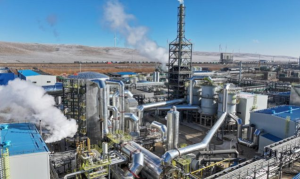
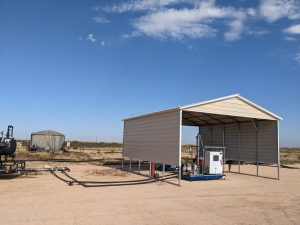
With the decline of Venezuela’s production, Canada’s oil sands now represent 90% of all oil sands output, and a significant share of North America’s sulphur production.
Prayon has opened a new sodium hexametaphosphate (SHMP) production unit at its Engis complex in Belgium. The €30 million investment is designed to strengthen the company’s position in the food and technical phosphates market. The new 10,000 tonnes per annum (t/a) capacity Engis unit complements Prayon’s existing SHMP unit at its Les Roches-de-Condrieu site in France and will double the company’s SHMP’s output capabilities.
• Market sentiment has shifted decisively from bearish to bullish as the conflict in the Middle East has triggers a significant price rally.
Grupa Azoty has launched DuoS® , a new nitrogen–sulphur fertilizer. Its formulation is based on ammonium sulphate, ammonium nitrate and anhydrite and includes two forms of nitrogen – nitrate and ammonium; two sulphur sources – ammonium sulphate and anhydrite; and calcium to support crop resilience and the quality of produce. The new nitrogen–sulphur fertilizer with added calcium is designed to improve nutrient use efficiency and reduce leaching and other nutrient losses. It is recommended for pre-sowing and top dressing on winter and spring cereals, winter rapeseed, sugar beet, potatoes, legumes, grassland, as well as vegetables and fruit crops. Grupa Azoty says it is introducing DuoS® in the current season as part of a strategy to develop its fertilizer business and focus on specialty products.
The Kuwait Oil Company (KOC) has awarded global oilfield services firm SLB a five-year integrated contract worth about $1.5 billion for the next phase of development at Kuwait’s Mutriba oil field. The contract covers design, development and production management work and builds on SLB’s existing subsurface studies of the Mutriba field. It includes development of high-pressure, high-temperature reservoirs with sour conditions, expanding SLB’s scope as the project moves into more technically complex stages. SLB says that the award reflects its long-standing partnership with KOC and gives the company end-to-end responsibility for planning and execution as field development progresses.
First Phosphate Corp. says that it has finalised an agreement for a C$16.7 million non-repayable contribution from the Government of Canada via Natural Resources Canada’s Global Partnerships Initiative. The company says that the funding will accelerate the development of its phosphate project in Bégin-Lamarche by developing the technical and engineering parameters – including processing circuits and equipment – needed to validate the ability to produce a phosphate concentrate that meets the quality requirements of the lithium iron phosphate (LFP) battery market. The work will be conducted based on parameters established under the contract between First Phosphate and its definitive offtaker.
Conflict in the Middle East has halted all vessel traffic through the Strait of Hormuz, effectively paralysing a region that accounts for 48% of global seaborne sulphur trade. As a result, the sulphur spot market has ground to a halt, with prices notionally holding unchanged in the $490-515/t f.o.b. range simply due to a lack of activity. No spot offers were reported out of the Middle East.
Sulphur recovery units in petroleum refineries and natural gas processing plants utilise incineration as a final treatment step for tail gas, ensuring that residual sulphur compounds are converted to less harmful emissions. Elmo Nasato of Nasato Consulting Ltd compares the two sulphur plant incinerator options – thermal incineration and catalytic incineration – including key considerations for policymakers, businesses, and environmental advocates.
The 8th SulGas® Mumbai sulphur recovery and gas treating conference and exhibition, organised by Three Ten Initiative Technologies LLP, took place on 5 and 6 February 2026. We report on some of the key topics on the agenda.
Efficient sulphur recovery is essential for modern refineries to meet stringent environmental regulations and support sustainability goals. Fluor examines the key design considerations, smart design strategies and flexible sulphur block configurations that are essential in achieving an overall optimised design. Together, these strategies enhance efficiency, reduce emissions, improve reliability, and provide flexibility for changing crude qualities, ensuring compliant and economically robust refinery operations.