Nitrogen+Syngas 403 Sep-Oct 2026
16 September 2026
Safety in digitised ammonia plants
Digitalisation brings with it a fresh set of issues as well as opportunities for safety management.
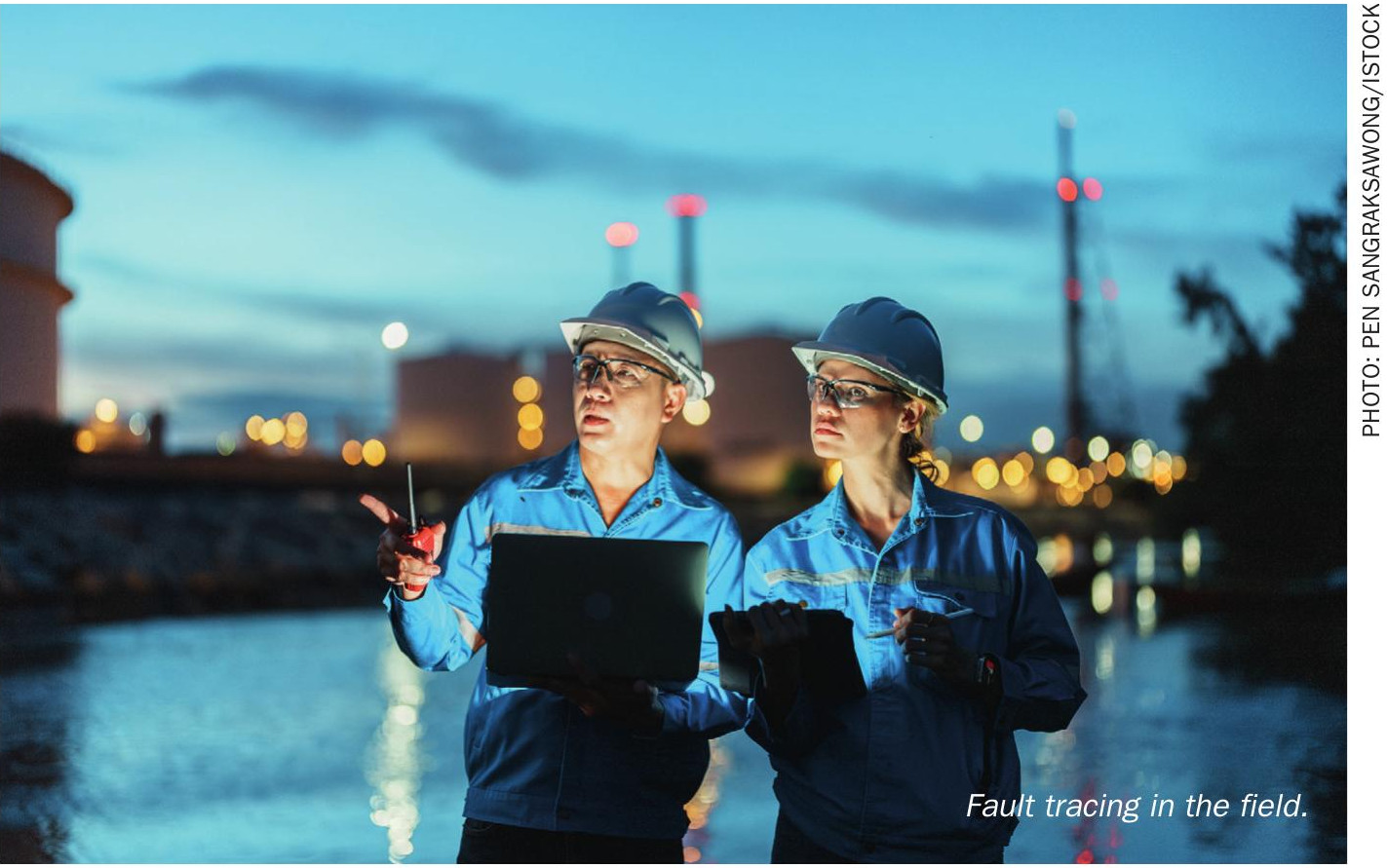
Digitalisation is changing the way ammonia plants are operated, maintained and monitored. Advanced process control, connected sensors, predictive-maintenance tools, digital twins, remote diagnostics and artificial-intelligence-enabled analytics can give operators more timely visibility of plant performance. They can help identify equipment degradation, detect abnormal conditions earlier and make operating procedures more consistent. However, the safety question is whether each new digital capability makes hazardous scenarios easier to prevent, detect, control or mitigate without creating unacceptable new dependencies.
The strongest approach is to treat digitalisation as part of the plant’s overall process-safety management system. Digital tools can improve safety performance, but their implementation must preserve independent protection layers, support competent operator decision-making and account for operational-technology cybersecurity risks.
Ammonia plants
Ammonia’s toxicity means that storage, transfer, refrigeration and loading systems all require effective detection, containment, isolation and emergency-response arrangements. The production process also introduces additional risks. Conventional ammonia plants typically involve natural-gas reforming, hydrogen production, nitrogen separation, compression and high-pressure synthesis. These stages can involve flammable gases, elevated temperatures and pressures, and equipment such as compressors, furnaces, reactors, heat exchangers and relief systems. Equipment malfunction or control failure can develop into a wider process upset if safeguards do not perform as intended. These hazards establish the baseline against which digital systems should be assessed.
Safety improvement
Connected instrumentation and continuous monitoring can enhance awareness of process conditions. Fixed gas-detection systems, for example, can provide rapid indication of abnormal ammonia concentrations. When sensors are correctly selected, positioned, calibrated and maintained, they can support alarm systems, ventilation controls, isolation actions and emergency response. Digital platforms can also make detection data easier to trend, helping operations teams identify recurring problems or weak signals before they become more serious.
Condition-monitoring systems offer another potential benefit. Compressors, pumps, turbines, valves and other critical equipment can be monitored using vibration, temperature, pressure, acoustic or electrical data. Analytical tools may help identify abnormal patterns that would be difficult to see through periodic inspection alone. For ammonia plants, this can support maintenance planning and reduce the likelihood that an unrecognised mechanical problem develops into a process interruption or loss-of-containment event.
Advanced process control can also help reduce operating variability. A stable process is generally easier to manage than one repeatedly moving close to operating constraints. Better control of pressure, temperature, flow and composition may help operators keep equipment within defined limits and identify deviations sooner. Yet the role of advanced control should be clearly bounded: it is an operational aid, not a replacement for safety-instrumented functions, pressure-relief systems or emergency shutdown arrangements.
Digital twins can support both engineering and operations. A well-maintained model of a plant or process unit can be used to test operating scenarios, examine process interactions, improve training and evaluate planned changes before implementation. Simulator-based training may be particularly valuable where operators need to practise abnormal and emergency scenarios that cannot safely be recreated in a live facility. Research on digital twins and process-safety methods indicates potential for these tools to supplement hazard studies and operational decision support, though plant-specific validation remains essential.
New risks
Every additional connection, software interface and data stream can create a new failure mode. A sensor may drift or fail. A data historian may be unavailable. A model may be based on incomplete or unrepresentative data. A remote dashboard may present a simplified view that obscures local operating context. These are not arguments against digital systems, but they are reasons to design them for uncertainty and failure.
One concern is automation bias: the risk that people place excessive confidence in a recommendation generated by an algorithm or automated system. Operators must understand what a digital tool can and cannot infer. A predictive-maintenance model can flag potential degradation, but it cannot remove the need for engineering judgement, inspection and an appropriate maintenance response. Similarly, anomaly-detection tools may identify unusual process behaviour, but the underlying cause must still be investigated.
The availability and quality of data are central. An analytics system may appear sophisticated while relying on poorly maintained field instruments or inconsistent operating data. If a sensor is miscalibrated, an automated system may generate false alarms, miss a genuine event or recommend an inappropriate action. Data validation, calibration, maintenance and clear ownership of data quality should therefore be treated as safety-critical disciplines where the information supports a protective decision.
The same principle applies to remote operations. Centralised expertise and remote diagnostics can help a site access specialist support more quickly. But local operators must retain sufficient situational awareness, authority and capability to manage an abnormal event. Digital systems should be designed so that critical actions remain possible when external connectivity, cloud services or remote support are unavailable.
Independent layers of protection
A facility should not depend on one connected platform to control the process, issue alarms, advise the operator and execute protective shutdown. If a common failure affects that platform, the plant could lose multiple defences at the same time. Independent layers may include the basic process control system, alarms and operator intervention, safety-instrumented functions, emergency shutdown systems, pressure-relief devices, physical containment and emergency-response arrangements.
For a digital project, this means asking practical questions at the design stage:
• Does the new system affect a safety-critical control loop, alarm or shutdown function?
• Is it sufficiently independent from the systems it monitors or supports?
• What happens if it becomes unavailable, provides incorrect information or is compromised?
• Can operators continue to operate the plant safely in a degraded mode?
• Has the modification been assessed through formal management of change?
Alarm management
More data does not automatically mean better decisions. A digitised facility can generate a much larger volume of notifications, alarms and performance indicators than a conventional plant. If these are poorly designed, operators may face alarm floods during upset conditions, making it harder to identify the few warnings that require immediate action.
Alarm systems should therefore have a defined philosophy, rationalisation process and ongoing performance review. Alarms need a clear purpose, a realistic response time and an identified operator action. Critical warnings should remain visible and comprehensible during high-workload events. Digitalisation may provide richer visualisation and prioritisation, but it should not conceal important alarms behind complex interfaces or excessive filtering.
The human-factors implications become more pronounced where monitoring is remote or where automation performs routine decisions. Operators need training not only in how to use new interfaces, but also in how to recognise their limitations. They should practise managing situations involving unavailable data, communication loss, instrument failure and conflicting recommendations.
Cybersecurity
In a digitised ammonia plant, cybersecurity is inseparable from physical safety. A cyber incident can affect operator visibility, change configuration settings, interrupt communications, disable access to data or interfere with control-system availability. The consequence is not simply loss of information; it may be reduced ability to detect, control or respond to a hazardous situation.
A proportionate operational-technology security programme should include an accurate asset inventory, network segmentation, tightly controlled remote access, identity management, monitoring, secure configuration, tested back-up arrangements and incident-response procedures. Vendor access and third-party connections require particular scrutiny because they may provide paths into operational networks.
Importantly, cyber incident exercises should involve operations, engineering, maintenance, safety and information-security teams. A response plan should cover scenarios such as loss of historian access, unavailable remote support, compromised workstations and loss of communications between systems. Safe manual or local operating arrangements should be clear, current and practised.
Reinforcing resilience
The objective should not be maximum connectivity. It should be resilient, understandable and safe operation. A useful digital system makes weak signals easier to identify, supports better maintenance decisions, reduces avoidable variability or improves emergency preparedness. It remains effective – or fails safely – when data, communications or software do not perform as expected.
For ammonia producers, the most credible digital-safety strategy combines technology with established process-safety disciplines: hazard identification, functional safety, management of change, mechanical integrity, alarm management, operator competence, emergency preparedness and cybersecurity. Digital tools can strengthen each of these areas, but they should be evaluated on their real contribution to risk control rather than their novelty.
In that sense, the central message is straightforward. Digitised ammonia plants can be safer plants, but only where digital capability is engineered into a wider system of independent safeguards, capable people and robust operational resilience.