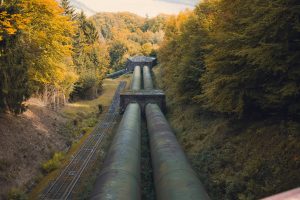
ANALYSIS: High gas prices risk long-term impact on European fertiliser industry
High natural gas prices are pushing European fertiliser producers to halt or curtail production, mirroring what seen in 2022 at the start of the Ukraine war.


High natural gas prices are pushing European fertiliser producers to halt or curtail production, mirroring what seen in 2022 at the start of the Ukraine war.
Russia’s Yefremovazot plans to build a chemical production complex in Yefremov in the country’s Tula region, domestic news agency Interfax reported on 5th October. The proposed facility will produce ammonia, urea, monoethylene glycol (MEG) and methanol. The plans were outlined in public consultation documents for a pipeline connecting the site to gas major Gazprom’s domestic […]
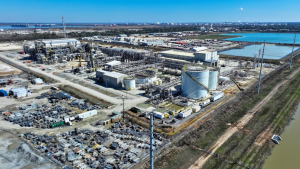
Owner Woodside Energy has signed up to the pilot phase of the Ammonia Certification System run by trade body the Ammonia Energy Association.
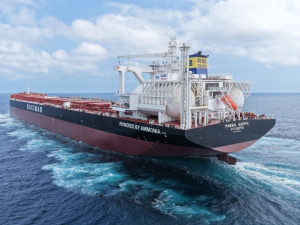
CMB.TECH’s Mineral Europa has begun its maiden voyage to Australia. The Antwerp-based maritime group described the 210,000 dwt ship as the world’s first ammonia-powered dry bulk vessel.
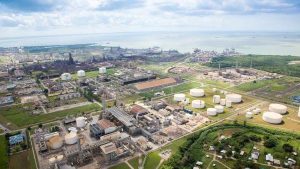
Nutrien Ltd has announced that it will “indefinitely” shut down its Trinidad Nitrogen operations at the Point Lisas site due to ongoing natural gas constraints and uncertainty over gas supplies. The company says that, following an “extensive review” of alternatives, it has determined that this is “the optimal path” to enhance free cash flow and […]
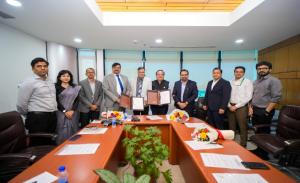
State run companies Coal India Limited (CIL) and Hindustan Urvarak and Rasayan Ltd (HURL) have signed a memorandum of understanding (MoU) to explore setting up a coal gasification-based ammonia-urea plant at HURL’s Sindri site in Jharkhand state. HURL currently operates an ammonia-urea plant with 2,200 t/d of ammonia and 3,850 t/d of urea capacity at […]
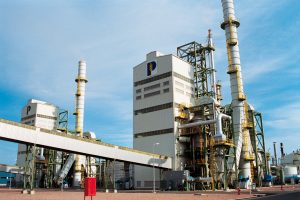
Profertil SA has awarded Saipem, working in partnership with Techint Engineering & Construction, to provide technical evaluation and design services for a planned expansion of its fertilizer complex in Bahia Blanca, Argentina. Announced on September 29, the project involves a new ammonia-urea plant with a final urea capacity of 4,450 t/d. It will integrate […]
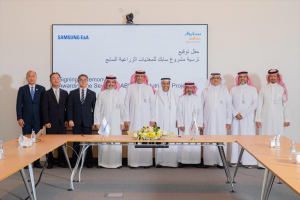
SABIC Agri-Nutrients Company (SABIC AN), Saudi Arabian fertilizer producer, has taken final investment decision on its SAN-7 project in Al Jubail. The development will add 1.2 million t/a of ammonia capacity and 2.6 million t/a of urea capacity. The EPC contract has been awarded to Samsung E&A Co., Ltd. for approximately $3.5 billion, with construction expected to start in Q4 2026.
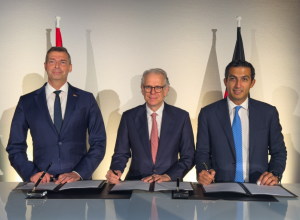
Fertiglobe, Covestro and MB Energy have signed a memorandum of understanding to assess an ammonia-import supply chain through a proposed terminal at Blumensand in Hamburg, Germany.

Digitalisation brings with it a fresh set of issues as well as opportunities for safety management.