Fertilizer International 534 Sep-Oct 2026
13 September 2026
The rise of predictive maintenance
FERTILIZER TECHNOLOGY SHOWCASE
The rise of predictive maintenance
Brett Binnekade of Bagtech International highlights how the implementation of predictive maintenance with artificial intelligence (AI) is improving the efficiency and reliability of fertilizer blending and bagging plants.
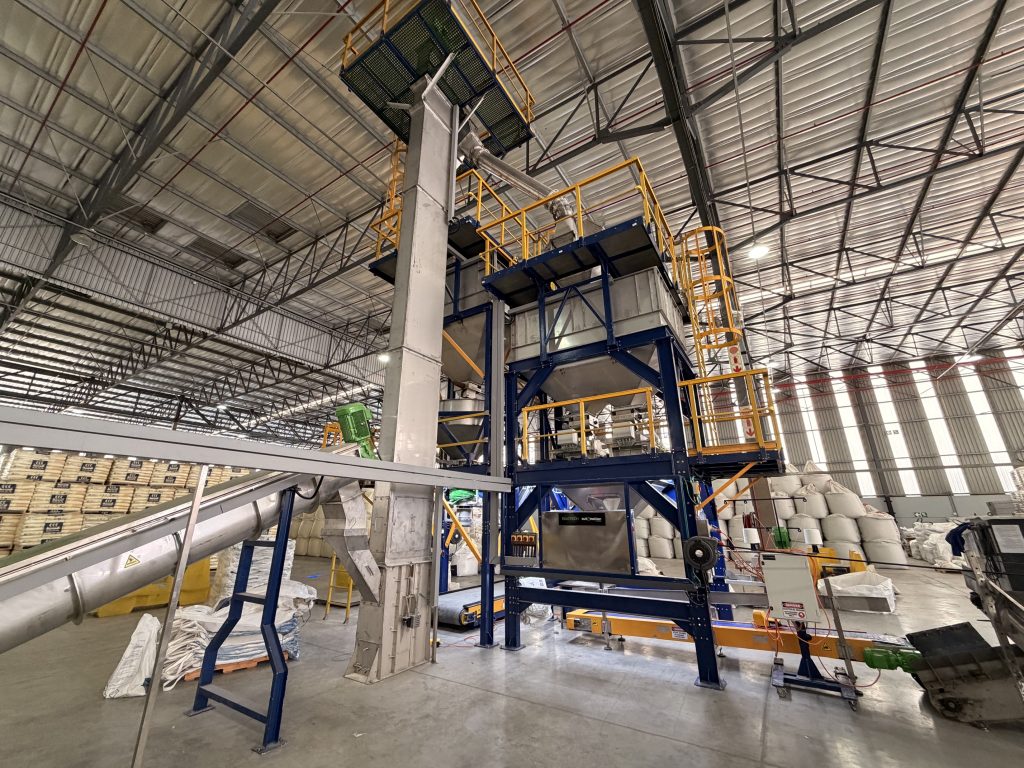
Bagtech International’s customised blending, coating and bagging machines are equipped with ‘Industry 4.0’ online control systems. PHOTO: BAGTECH
Fertilizer blending plants typically involve multiple stages including raw material handling, blending, bagging and distribution. Motors, gearboxes, conveyors, weighing devices, mixers and packaging lines must all work together in perfect harmony – to meet precise nutrient formulations and packaging standards.
Even minor mechanical issues can stall the production of blends, disrupt the supply chain and jeopardise product uniformity. Many blending lines are also run in ‘just-intime’ mode with zero stock holding, raising the stakes even higher.
Why predictive maintenance?
Historically, two basic approaches to fertilizer plant maintenance have prevailed:
• Firstly, reactive maintenance where repairs occur after failure. This approach can lead to extended downtime and safety risks, especially when a single component’s breakdown causes a production line stoppage.
• Secondly, preventive maintenance based on scheduled checks or fixed usage intervals. This pre-empts some failures but can cause unnecessary downtime and replacement of parts, if maintenance intervals are set too conservatively. Conversely, if intervals are too long, unexpected failures can then occur.
Overall, unplanned downtime or suboptimal maintenance scheduling can be financially crippling for plant operators, given the tight operational window for fertilizer blending and bagging, particularly during peak agriculture seasons. This has led to rising interest in predictive maintenance.
Definition and core principles
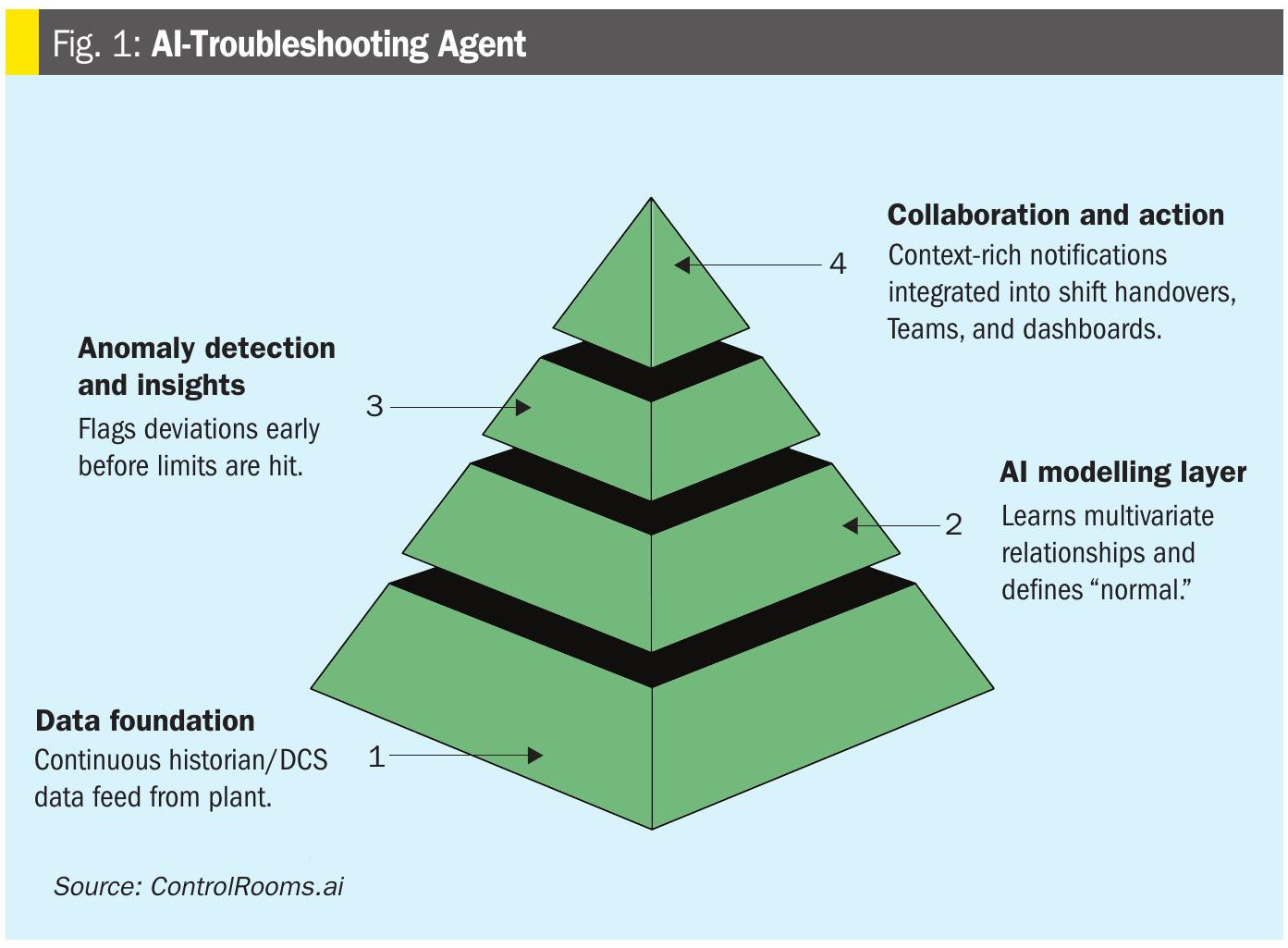
Predictive maintenance uses real-time and historical data, alongside artificial intelligence (AI) and machine learning models, to predict potential equipment failures before they happen. Instead of relying on rigidly timed maintenance checks, it schedules maintenance using accurate condition-based insights. These are derived from:
• Sensor data: vibration, temperature, acoustics and other parameters continuously measure equipment health.
• Operational data: current and voltage signals from variable speed drives (VSDs), plus load and throughput information.
• Predictive algorithms: advanced analytics detect anomalies and forecast the remaining useful life of critical components.
By identifying subtle performance deviations, predictive maintenance empowers operators to service machinery at precisely the right time.
Benefits for fertilizer blending plants
Predictive maintenance can deliver a range of operational improvements at fertilizer plants, including:
• Reduced downtime: anticipating problems means scheduling repairs during planned outages, mitigating abrupt production stoppages.
• Improved equipment utilisation: components are replaced only when necessary, extending their operational life.
• Consistent quality: optimally functioning mixers, weighers and bagging lines maintain precise nutrient ratios and package weights.
• Cost savings: lower parts consumption, fewer emergency repairs and stable production schedules all drive down costs.
• Enhanced safety: early fault detection mitigates the risks associated with running failing machinery.
Next-level condition monitoring with AI
AI and machine learning can also translate data into actionable insights. While condition monitoring has existed in some form for decades, AI-based predictive maintenance significantly elevates its capabilities. Large volumes of sensor and operational data, gathered from neural networks or support vector machines, can be continuously monitored and analysed to detect evolving failure patterns. In this way, AI can catch early warning signals that may be too subtle for standard threshold-based monitoring systems.
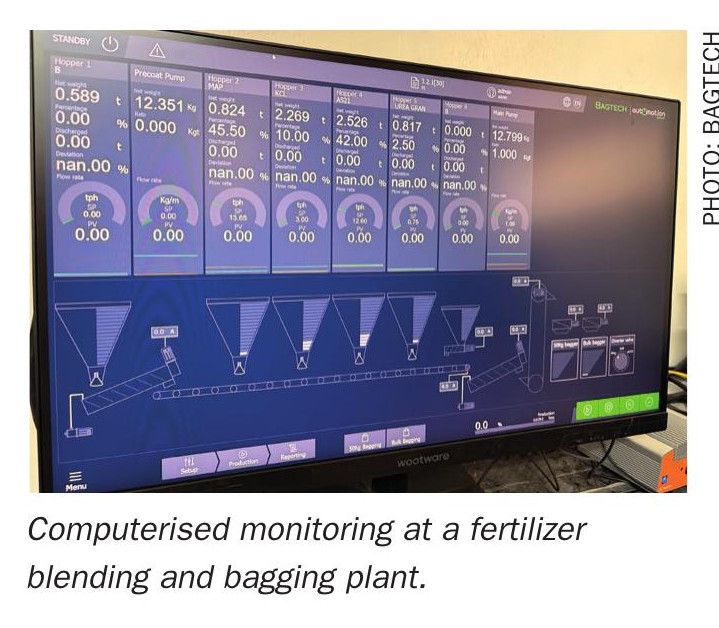
Data integration and processing
A successful predictive maintenance system relies on robust data. These need to be collected, transmitted, stored and modelled.
• Sensor and drive data collection: fertilizer plants can deploy sensors on motors, gearboxes, and conveyors to measure variables such as vibration, temperature and pressure. Additionally, Bagtech collects data directly from variable speed drives (VSDs). By monitoring real-time current and voltage trends, this provides important information about motor load, electrical spikes and inefficiencies.
• Data transmission and storage: modern plants often rely on programmable logic controllers (PLCs) and supervisory control and data acquisition (SCADA). These systems transmit sensor and drive data to databases or cloud platforms for processing.
• Machine learning models: in machine learning, historical data associated with past failures can be used to train the models, enabling them to recognise the symptoms of future failures. These models then generate alerts or recommendations based on trends that deviate from normal baselines.
Challenging blending plant conditions
Despite the promise of AI, operators must overcome a number of environmental hurdles at fertilizer blending plants.
• Dust and corrosion: fertilizers are often hygroscopic and corrosive. Sensors and equipment therefore need to be rugged. Frequent cleaning or calibration may also be necessary.
• Variable operating conditions: blending different fertilizer grades changes mechanical loads – requiring the AI model to adapt to different operating states accordingly.
• Legacy equipment: integrating new sensors and data-gathering technologies into older machinery can be complex. Wireless industrial internet of things (IIoT) solutions can ease this process, although consistent connectivity must be ensured.
Essentials for an AI-driven approach
Predictive maintenance strategies hinge on:
• Modular sensor kits: easily deployed vibration, temperature and other sensors on critical blending and bagging components.
• Drive-based data: capturing current, voltage, torque and speed signals from variable speed drives to identify anomalies without installing additional dedicated sensors in certain areas.
• AI models tailored to fertilizer operations: years of fertilizer process knowledge inform predictive algorithms, making them highly relevant to blending, bagging and material handling steps.
• User-friendly dashboards: real-time alerts, condition analytics and maintenance schedules are centrally displayed, providing straightforward insights for operators.
Practical implementation
The implementation of predictive maintenance at a fertilizer blending and bagging plant requires the following steps:
• Sensor and data strategy
• Connectivity and processing
• Algorithm development
• Workforce training.
“Predictive maintenance uses real-time and historical data, alongside AI and machine learning models, to predict potential equipment failures before they happen.
CASE STUDY: MOTOR MONITORING WITH VARIABLE SPEED DRIVE (VSD) DATA
In a pilot project targeting key blending motors, Bagtech utilised both vibration sensors and VSD data. By correlating current and voltage trends with vibration signatures, the system identified early-stage bearing wear and alignment issues.
When deviations appeared in motor current draw at certain load points, the AI module cross-referenced vibration data to confirm potential faults. Maintenance personnel received timely alerts, enabling them to replace bearings before a catastrophic breakdown.
This proactive intervention increased the blender’s uptime, improved product consistency and reduced repair expenses.
Companies can adopt a dual approach for collecting sensor data. While dedicated sensors remain crucial for detailed vibration and temperature monitoring, the mining of VSD data can maximise information on existing plant systems. This strategy keeps hardware costs manageable and accelerates the introduction of predictive maintenance through:
• The identification of critical assets: motors driving conveyors, mixers, and bagging machines are prime targets, along with gearboxes and high-wear components.
• Sensor deployment: for components showing frequent failure or extreme operational conditions, direct vibration or temperature sensors provide detailed ‘granular’ data.
• VSD integration: by reading current, voltage and torque signals from drives, the system can detect changes that suggest mechanical or electrical stress.
For data connectivity and processing, operators can choose a cloud-based approach, ideal for large, geographically dispersed operations, or an edge-based approach for real-time results on-site. In either case, the data need to flow seamlessly into the analytics engine, where AI models detect anomalies. Key considerations include:
• Network reliability: fertilizer plants often operate in harsh or remote environments, making robust networking crucial.
• Scalable architecture: as more equipment is added or new data streams become available, the system needs to be scaled-up without performance issues.
• Data security: safely managing intellectual property, operational integrity and cybersecurity risks is paramount, especially when external networks or cloud solutions are involved.
For algorithm development, Bagtech starts with supervised learning, using historical records of failures to label data. Over time, semi-supervised or unsupervised methods can uncover subtle, previously unidentified fault indicators. Regular retraining ensures models remain current when operational conditions shift, new fertilizer grades are processed, or equipment undergoes modifications.
Workforce training is essential because predictive maintenance only succeeds if maintenance staff trust and understand the system’s insights. Training can be provided to help operators:
• Interpret alerts: recognise the severity of an alert and understand recommended actions.
• Perform proactive repairs: conduct interventions ahead of failures, extending component lifecycles and preventing line stoppages.
• Document outcomes: input feedback into the system, refining machine learning models with each real-world event.
Predictive maintenance – benefits and returns
Predictive maintenance offers blending plant operators a plethora of production improvements, due to its ability to:
• Minimise downtime
• Optimise maintenance costs
• Maintain product quality and safety
• Strengthen competitive position.
Predictive maintenance allows operators to schedule interventions during planned breaks or off-peak production periods. This reduces unplanned outages by as much as 30%, enabling manufacturers to meet demanding production schedules more reliably.
INDUSTRY 5.0 — A PERSONAL VIEW FROM FRED COELHO, CEO, BAGTECH INTERNATIONAL
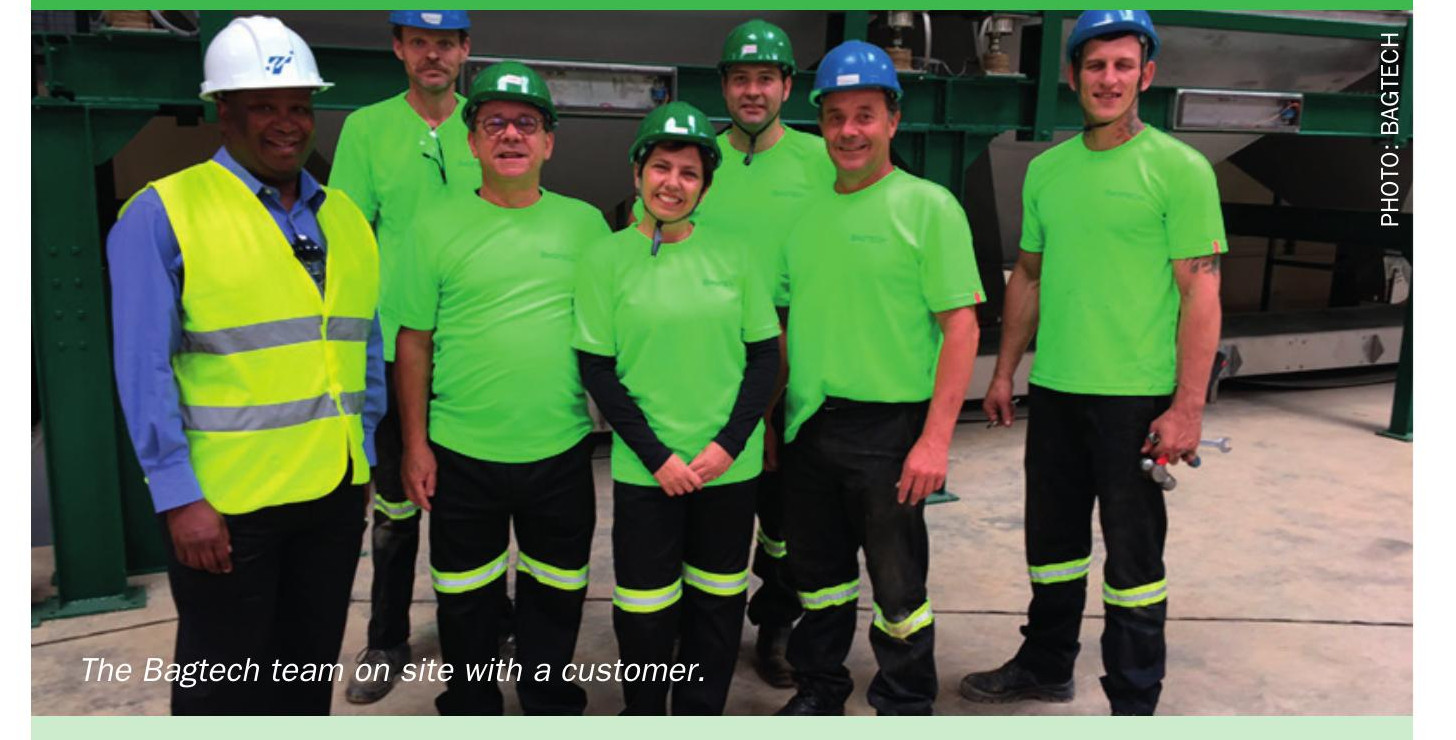
A few years ago, we spoke about how Bagtech International was integrating Industry 4.0 into our fertilizer blending and bagging plants – focusing on automation, data visibility, traceability and smarter plant control (Fertilizer International 504, p38).
At the time, it meant:
• Advanced PLC/SCADA integration
• Real-time production data
• Remote diagnostics
• Intelligent dosing and weighing systems
• Improved plant efficiency through smarter design.
Today, that foundation is firmly in place. But the conversation has shifted. We are now moving beyond Industry 4.0 – into Industry 5.0.
For us, Industry 5.0 is about:
• Human-machine collaboration – empowering operators, not replacing them
• AI-driven predictive maintenance and plant optimisation
• Cloud-based production intelligence and customer data portals
• Sustainable engineering through efficient material use and energy optimisation
• Smarter lifecycle support across Africa and beyond.
It’s as much about resilience, intelligence, and human-centred engineering as it is about automation. Ultimately, incorporating Industry 5.0 into the blending plants we build also means they operate as future-ready production systems.
Predictive maintenance achieves cost savings in several ways, including fewer emergency repairs, decreased spare-part inventory and improved labour allocation. Plant maintenance driven by real-time conditions has two key benefits. Firstly, it avoids replacing components prematurely and, secondly, it prevents the early signs of imminent failure being missed. Consequently, total maintenance expenses can drop by as much as 15-30%, depending on plant size and complexity.
Product quality is affected by inaccurate blending. This can occur when materials are fed at inconsistent rates – due to motor or gearbox stress, product build-up or blockages. Predictive maintenance, by detecting such irregularities early, stabilises production, preserving the precise nutrient formulations demanded by modern agriculture.
“AI and machine learning can translate data into actionable insights. While condition monitoring has existed in some form for decades, AI-based predictive maintenance significantly elevates its capabilities.
Additionally, preventing equipment failure helps maintain a safer working environment, aligning with strict safety and environmental regulations.
Finally, predictive maintenance translates into a more consistent, high-quality product output and fewer supply chain disruptions, both essential for customer satisfaction. In a market where fertilizer supply timing can affect crop yields, reliability offers blending plant operators a formidable competitive advantage.
The future of maintenance – going beyond prediction
Predictive maintenance itself is a stepping stone to more advanced approaches to maintenance involving:
• Digital twins and prescriptive maintenance
• Augmented reality (AR) and connected workers
• Integration of activities up and down the value chain.
In future, digital twins – virtual replicas of physical equipment – could be used to simulate machine behaviour by integrating sensor and VSD data with physics-based models. This would then enable advanced ‘what-if’ analysis. If a mixer motor shows impending wear, for example, operators could use a digital twin to model the impact of slowing production throughput and adjust blending sequences until repairs can be scheduled.
As AI techniques evolve, prescriptive maintenance will accurately pinpoint maintenance windows and provide details on the likely cost implications and/or production risks.
In future, AR headsets could allow maintenance personnel to receive real-time instructions, visualise hidden components, and share live equipment data with remote experts. This would help to reduce repair times and errors, particularly for intricate blending towers or large-scale bagging lines.
Predictive maintenance data from blending plants could also inform upstream and downstream activities in different parts of the value chain. This would allow fertilizer producers to coordinate shipments with distributors, based on predicted plant throughput, helping to optimise fertilizer supply chains by improving on-time delivery and reducing storage or handling costs.
Conclusions: the pathway to resilient fertilizer blending
As global demand for fertilizer grows, balancing efficiency, reliability and product quality has become ever more critical.
Predictive maintenance driven by AI, and powered by robust data from sensors and variable speed drives, offers a transformative approach. Fertilizer blending plants that implement these strategies can reduce their downtime, trim operational costs and consistently deliver products that meet stringent nutrient specifications.
Through real-time condition monitoring, actionable analytics and well-prepared maintenance teams, fertilizer manufacturers can seize new efficiencies and opportunities. In a climate where achieving maximum throughput and reliability is paramount, predictive maintenance stands out as both an operational advantage and a strategic imperative.
By embracing AI-powered solutions, fertilizer blending and bagging plants can secure their future in an increasingly demanding agricultural landscape, one where data and technology converge to optimise productivity and drive sustainable growth.