• Skip to main content

    Sulphur 425 Jul-Aug 2026
    EuroChem starts up major sulphuric acid plant in Kazakhstan

    Written by Natalie Noor-Drugan


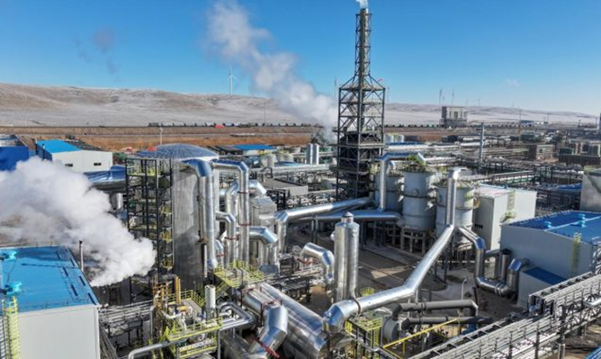
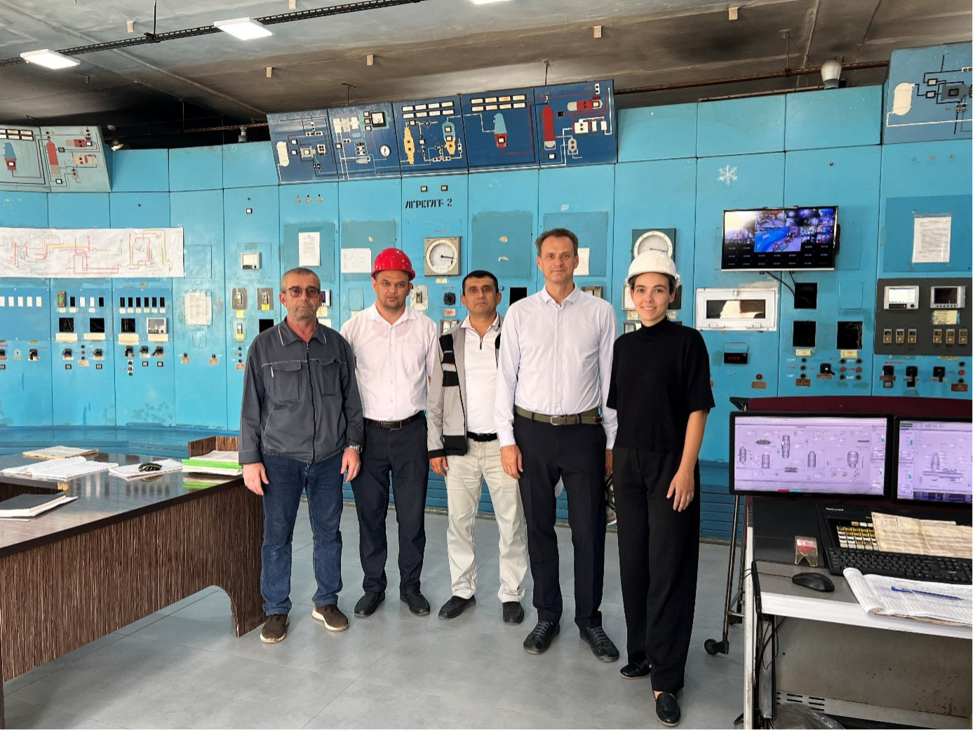
    Russia’s EuroChem has brought online a new sulphuric acid plant in Kazakhstan’s Zhambyl Region, creating one of the country’s largest sulphuric units with a design capacity of 800,000 t/y. The output will supply EuroChem’s integrated chemical complex now under construction as well as serve domestic sulphuric acid demand in Kazakhstan.
    Phase II advances EuroChem’s $1 billion Kazakhstan build-out

    The start up marks Phase II of EuroChem’s large-scale, three stage investment programme in Kazakhstan. In Phase I, the company commissioned a phosphate ore mining and processing complex with a capacity of 840,000 t/y, while Phase III – due in 2027 – will add a chemical complex for mineral fertilizers and industrial products, taking total production from the site to over 1 million t/y.

    Full cycle fertilizer platform for Central Asia

    Once all three phases are complete, the Zhambyl site will become one of the few full cycle chemical production platforms globally, integrating raw material extraction, processing and finished product manufacture on a single site. EuroChem expects output from the complex to supply customers not only in Kazakhstan, but also in other Central Asian markets, China and Europe.

    Kazakhstan aligns project with industrial strategy

    The project sits under Kazakhstan’s Unified Industrialization Map and is closely tied to national objectives on manufacturing and diversification. Minister of Industry and Construction Yersaiyn Nagaspayev said the initiative “is fully aligned with the strategic goals set by the President of the Republic of Kazakhstan to develop the manufacturing industry, diversify the economy and ensure the country’s economic self-sufficiency,” calling it “a prime example of strengthened industrial cooperation and strategic partnership between our nations.” He added: “I am confident that once the project reaches its full capacity, it will make a substantial contribution to the economic development of Kazakhstan.”

    EuroChem targets high tech, agro linked growth

    EuroChem stresses that the complex uses “state-of-the-art high-tech solutions that guarantee quality and safety,” and says it plans to keep investing in production capacity and in its partnership with Kazakhstan’s agro industrial complex. “EuroChem intends to continue investing in the development of its production facilities and strengthening its partnership with the agro-industrial complex of Kazakhstan,” said Igor Georgiadi, CEO of EuroChem Karatau.

    Latest in Europe

    Gazprom and PhosAgro sign new five-year sulphur deal

    Russian gas producer Gazprom and fertilizer giant PhosAgro have signed a new five-year agreement for the supply of sulphur, according to a report from Interfax on 5 June. The deal, signed at the St. Petersburg International Economic Forum (SPIEF), will see Gazprom continue to supply the key raw material for PhosAgro’s phosphate fertilizer production. The document was signed by Gazprom Deputy Chairman Vitaly Markelov and PhosAgro CEO Alexander Gilgenberg.

    Gouda Refractories Group acquires Revestimientos Refractarios

    Gouda Refractories Group has acquired Revestimientos Refractarios (RR), based in Madrid. Founded in 1979, RR specialises in the installation of refractory materials, serving customers across a wide range of industries, including petrochemicals, (waste to) energy, cement, and other industrial sectors. It is a trusted partner for the installation of refractory materials, hexmesh, anchoring, engineering, technical assistance, project management, inspections and supervision for shutdowns and turnarounds across the European Union. The company has a long history of cooperation with Gouda Refractories, which has intensified in recent years and which, due to a natural moment of succession, has led to this acquisition.

    Waste to energy demonstration plant completed

    Compact Syngas Solutions (CSS) says that it has completed work on a government funded demonstration project which aims to be “the next generation of waste-to-energy plants”. The new £4 million ($5.4 million) MicroHub plant, developed as part of the Department for Energy Security and Net Zero’s (DESNZ) Hydrogen BECCS Innovation Programme, produces hydrogen and electricity from biogenic waste while capturing carbon emissions using water scrubbing. Unlike traditional methods that use chemical solvents like amines, CSS’s system uses water to remove carbon dioxide from syngas, which the company says is a safer and more sustainable solution.

    NextChem completes Ballestra acquisition

    MaireGroup says that its NextChem subsidiary has completed the acquisition of the Ballestra group, a leading player in the licensing, design and engineering of processing plants, as well as in the supply of proprietary technologies and equipment for the chemical industry. NextChem says that the integration of Ballestra significantly strengthens its technology portfolio in phosphate and potassium fertilizers and completes its coverage of the full NPK (nitrogen, phosphorus and potassium) spectrum. At the same time, it provides access to new segments with high growth potential, particularly in chemistry for the production and circularity of strategic materials needed to develop and expand electrification, where Nextchem is already present with metals recovery technologies following the recent acquisition of ETEK.