Sulphur 424 May-Jun 2026
26 May 2026
Welcome to MEScon Connect: Central Asia
CONFERENCE PREVIEW
Welcome to MEScon Connect: Central Asia
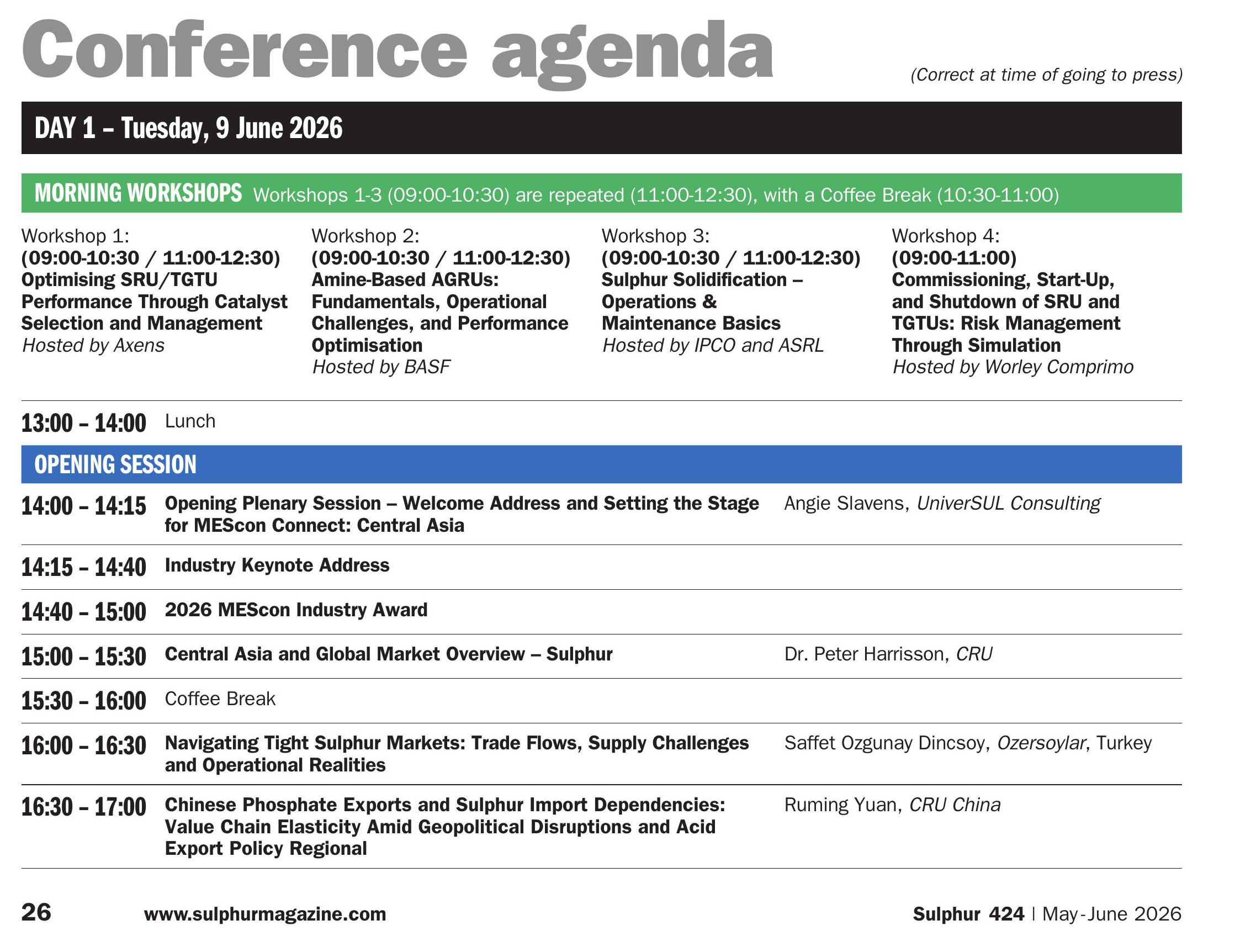
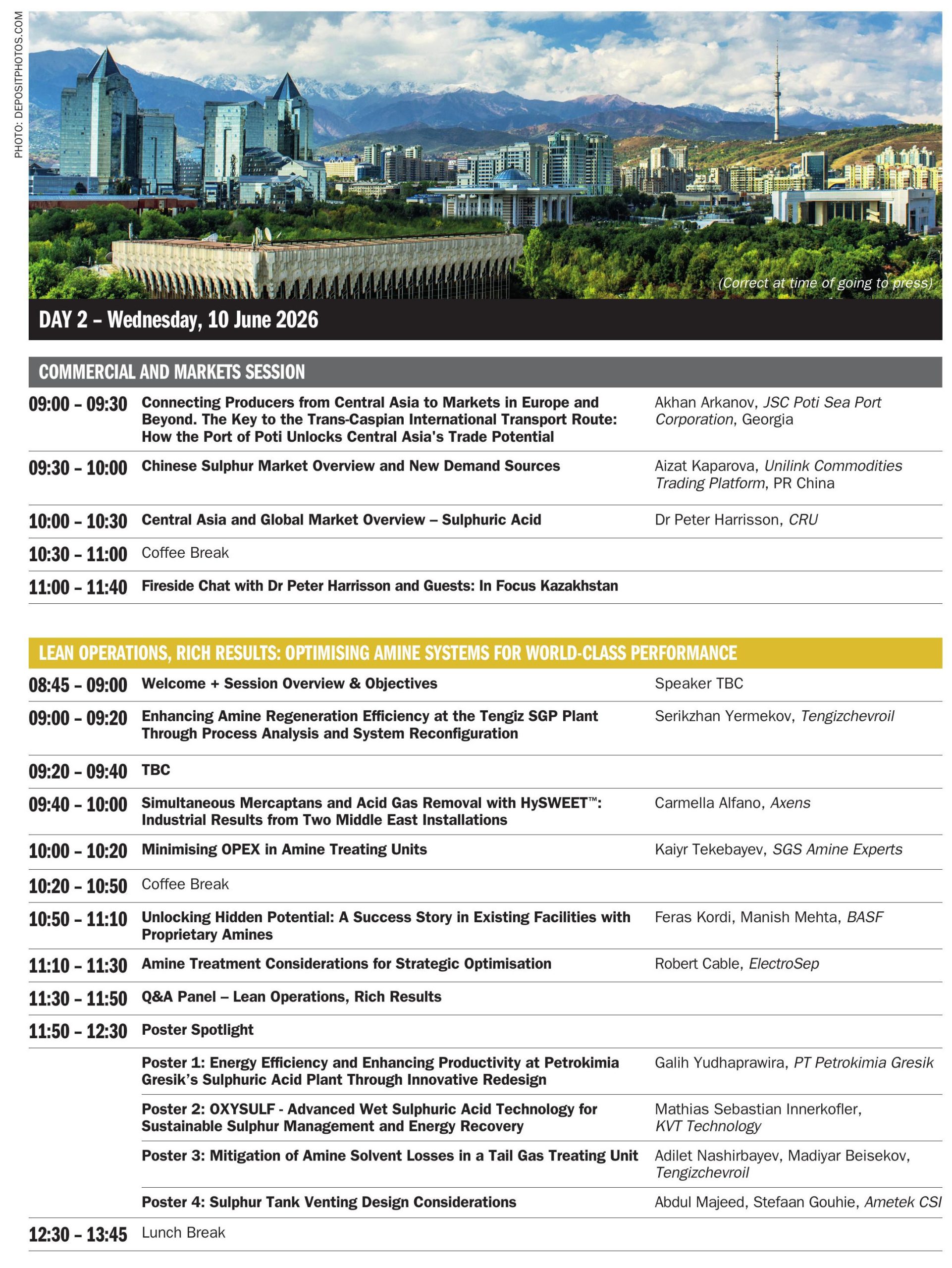
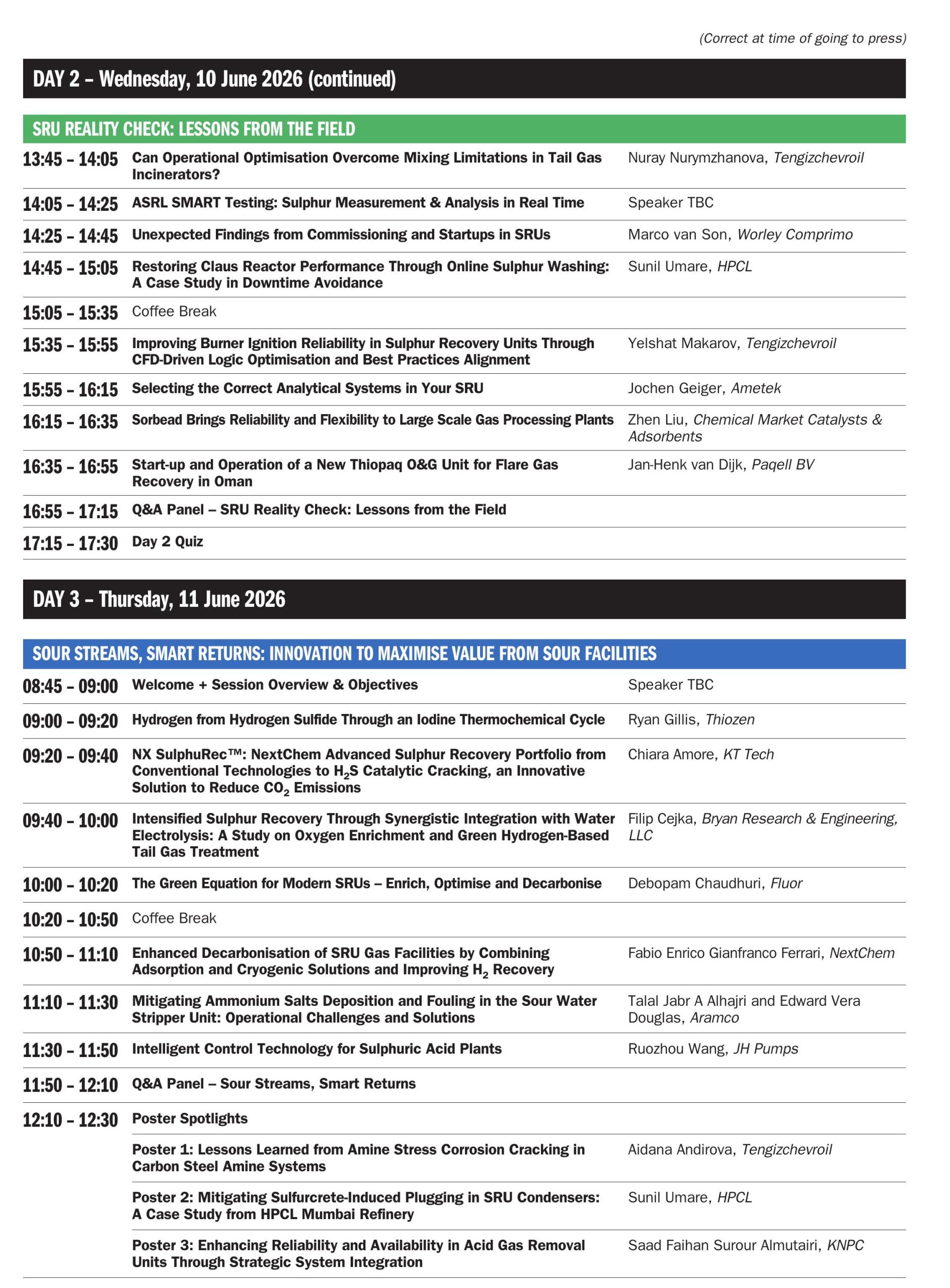
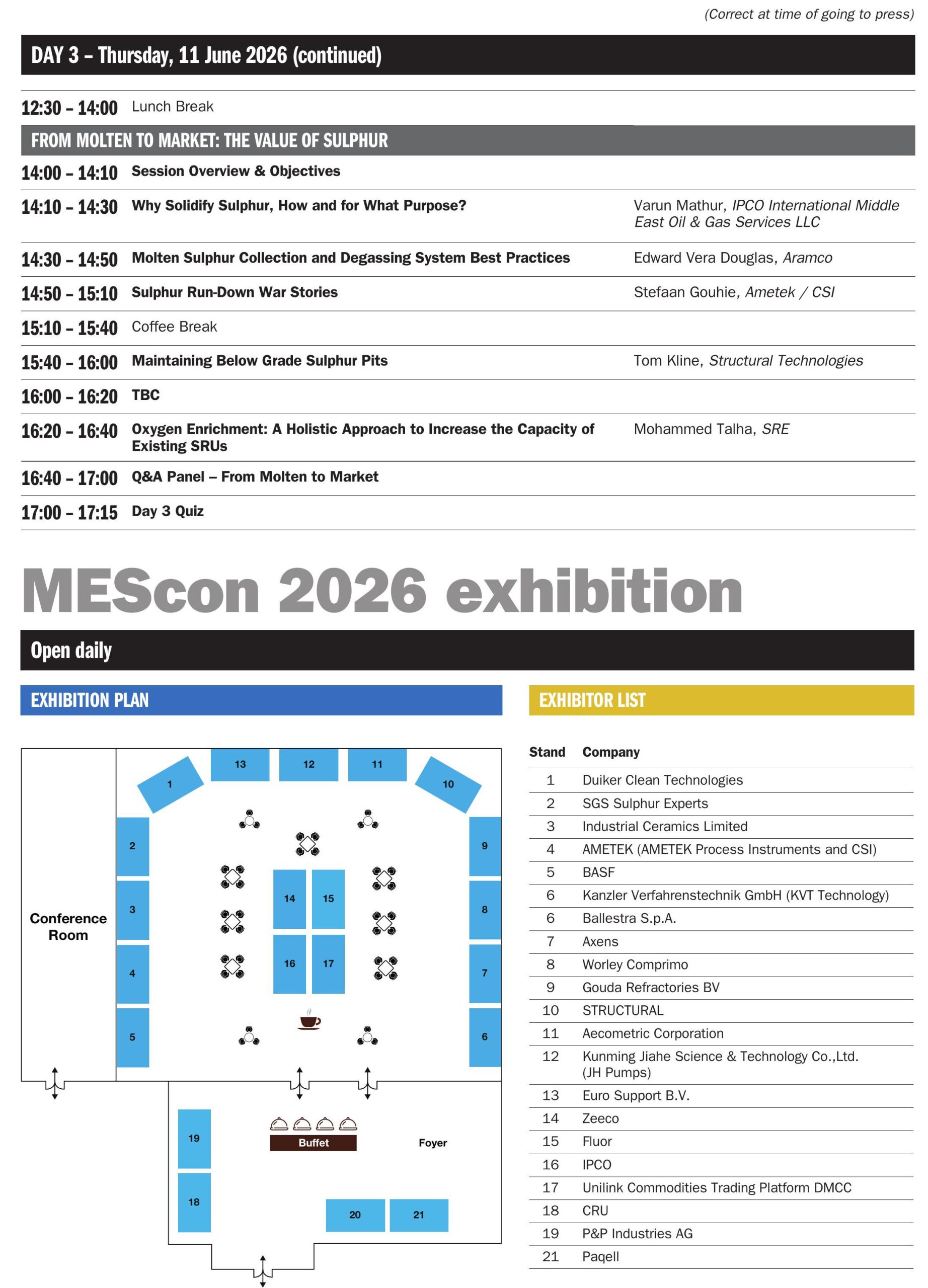
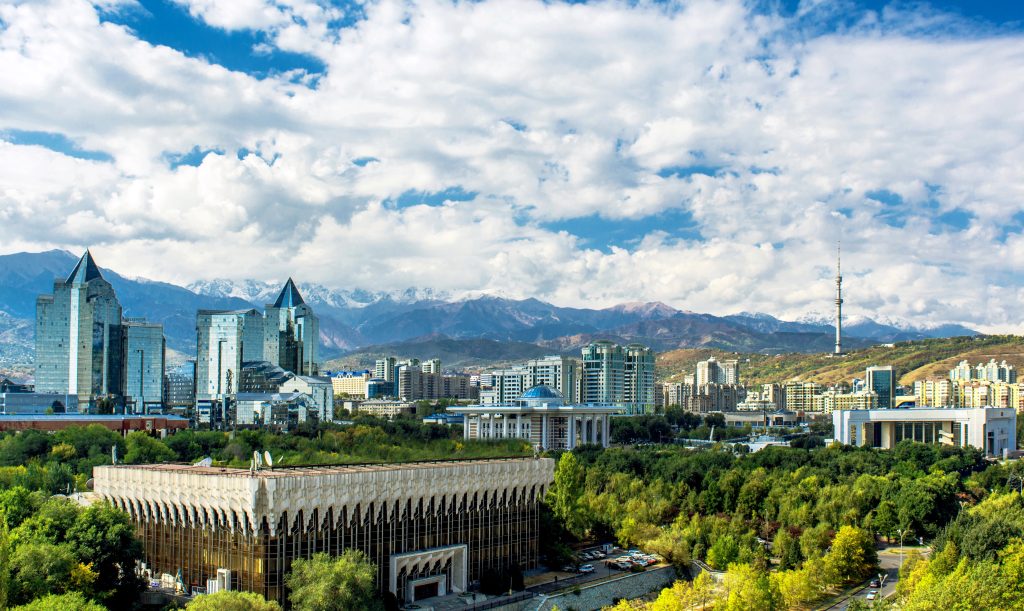
CRU and UniverSUL Consulting are expanding the reach of the Middle East Sulphur Conference (MEScon) with the launch of MEScon Connect: Central Asia 2026, taking place from 9–11 June, at the InterContinental Almaty hotel, Kazakhstan.
For the first time in 12 years, MEScon is moving beyond the Middle East with the launch of MEScon Connect: Central Asia, extending the event’s reach and strengthening the community it brings together.
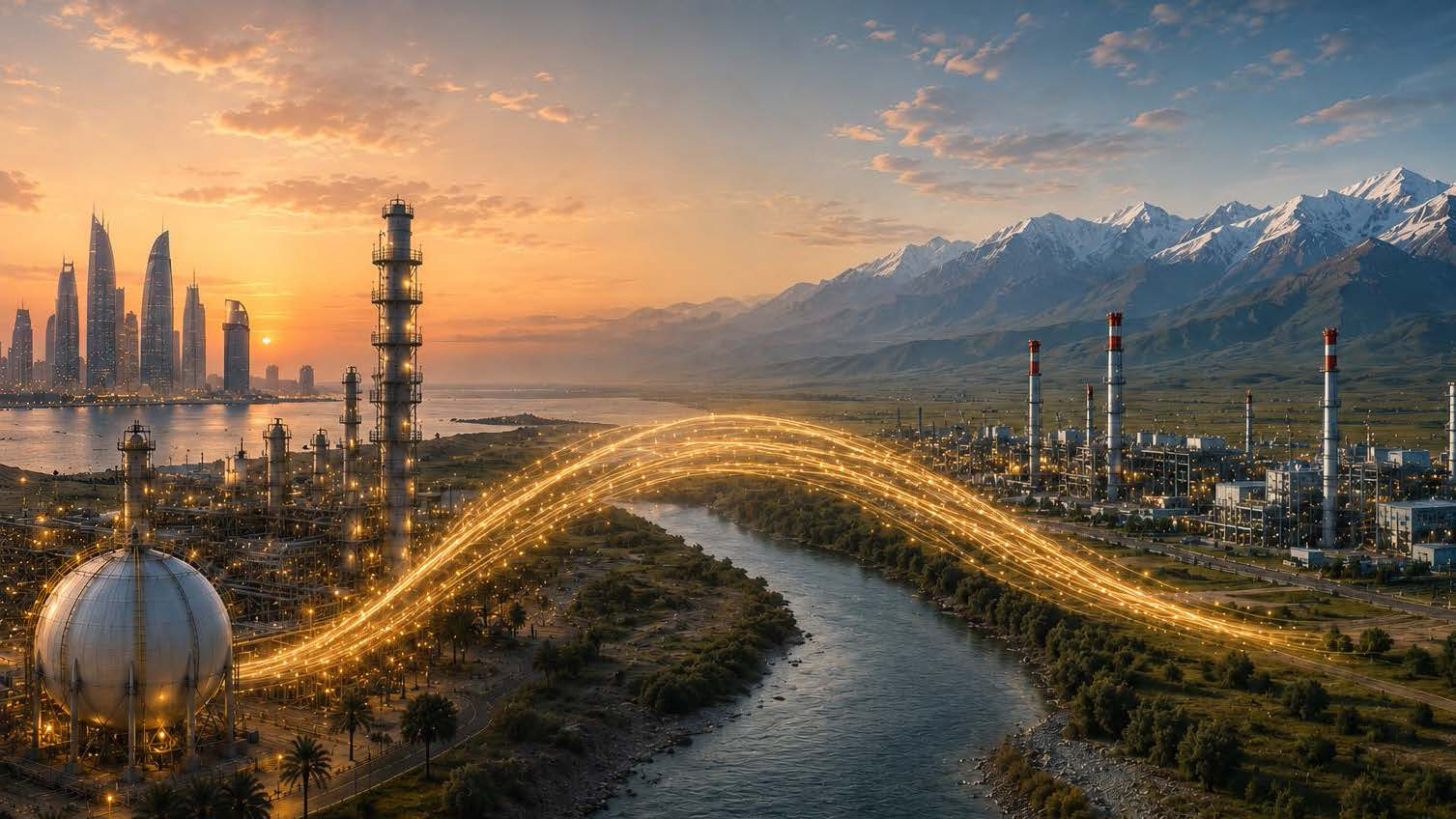
Hosted in Kazakhstan, the conference will connect a broader network of operating companies, technology providers, and buyers from across Central Asia and China, while keeping the Middle East at the heart of MEScon. The move reflects the region’s importance to the global sulphur market and its strong technical and commercial links to both the Middle East and China. As the world’s second-largest sulphur-producing region, Central Asia is an ideal location to broaden the conversation and bring new perspectives into the MEScon community.
Ahead of the conference, Willis Thomas, Head of CRU+, spoke with Peter Harrisson, Principal, Sulphur & Sulphuric Acid Markets, to discuss the event and the reasons behind choosing Kazakhstan as the 2026 location.
Willis: Pete, I know you’re about to head to MEScon, which is normally the Middle Eastern Sulphur Conference held in the Gulf, but this year I understand it’s in Kazakhstan. Can you tell me a little more about the move and why it has changed?
Peter: We’ve run MEScon for a number of years in Abu Dhabi, and it has attracted a significant share of local producers, as well as a strong technical audience.
This year, we are hosting it in Kazakhstan as a geographical shift in focus, while maintaining the same ethos: attracting the technical side of the market, pushing for operational excellence, and providing a forum for the commercial side of the sulphur market as well.
Central Asia, as a broader group of countries, is highly significant to the sulphur industry. It shares many of the same challenges around production economics, production processes, logistics, and geography – all topics we have also explored at MEScon in Abu Dhabi.
The event is designed to attract a broad local audience from both production and consumption. The focus is not only on the supply side of sulphur production, but also on demand and end uses.
Given its geography, the conference is well placed to bring in the wider industry from across Central Asia and China. That includes the supply side, predominantly from gas, but also phosphate operations, uranium operations, other metals production, and a range of downstream industries.
So it is really about connecting the full sulphur value chain, with a technical focus and a commercial perspective. Geography also presents a major challenge for the region. Being landlocked creates real difficulties when shipping products internationally, and logistics is always a major issue in sulphur – one that Central Asia faces especially acutely.
Willis: Can you give me some context on how significant Central Asia is on the producer side?
Peter: The Middle East remains dominant in the industry. But while the scale is different, the technologies and product sources that generate sulphur in Central Asia are very similar to those in the Middle East.
Both regions have significant sour gas production, along with the challenges that come with rising sulphur content in feedstock. The technology transfer and production scale involved are two of the reasons Kazakhstan makes such good sense as a location for the event.
In terms of absolute scale, Kazakhstan has been exporting around 7% to 8% of global trade in recent years. Turkmenistan and other countries in the region add a similar amount. So this is not a region with a negligible share of trade.
That is important, because while the volume is growing, so too is the potential. Progress on new production developments has been relatively slow, but the opportunity is significant, and there have historically been some very large projects that could come forward in the region.
Willis: What has been slowing the Central Asian production boom? Clearly there is a lot of potential there. Is it mainly logistics, or is something else holding it back?
Peter: It has been a combination of logistics, geopolitics, and a general trend of slower investment appetite in the region.
What Kazakhstan has been able to do more recently is attract growth on the demand and end-use side. Uranium operations, the phosphate and fertilizer industries, and several other sectors have all seen growth, but the supply side has moved much more slowly.
To give you some context, the last major operation commissioned there took nearly 15 years from inception to delivery.
That underlines the complexity of the region. You need a long-term mindset and real persistence to get projects over the line. In the Middle East, investment conditions have generally enabled that to happen more easily, with greater confidence and a stronger appetite for certainty. In Central Asia, by contrast, uncertainty has likely remained too high to support the level of capital investment needed to drive production growth.
Recent sulphur trade disruption
Reporting on the current disruption to sulphur trade ahead of the conference Peter stressed that since the start of the conflict in the Middle East, and the closure of the Strait of Hormuz, there has been significant disruption to sulphur trade flows.
The Middle East region contributes around 45% of global sulphur exports with the majority of this volume passing through the strait of Hormuz. Trade flows were cut immediately but production has continued in many locations throughout the conflict. Qatar and Kuwait have idled capacity because of damage to facilities, but the UAE and Saudi Arabia have continued to operate most capacity, although at lower than typical utilisation rates.
This has prompted a build up of inventory, both on land and loaded onto vessels in the Gulf.
The initial consumer response to the loss of this trade availability was to rely on inventory but the longer the conflict has continued demand reductions have become necessary. The sharp, and continued, increase in sulphur prices has also triggered affordability related demand cuts. Consumers have plans in place to cut consumption in China, Indonesia, Morocco and Brazil. More decisions to show or idle demand capacity become more likely the longer the conflict persists.
A resolution to the conflict and the return of vessel movements though the Strait of Hormuz would bring additional sulphur volumes back to the market. However, an immediate return to the pre-conflict market environment is unlikely. Supply and exports flows will take 4-6 weeks to bring back online with, and importers will need to wait 30-45 days of shipping time to receive cargoes. Damaged capacity in the Middle East will take 3-5 years to bring back online in some cases with the conflict also impacting projects, which have been unable to progress during the war. Supply in 2027 will be lower than it was expected to be and the global sulphur market is likely to remain in a deeper deficit for longer.
Join us in Almaty, Kazakhstan from 9–11 June. To discover more and be part of MEScon Connect: Central Asia, visit the website: https://events.crugroup.com/middleeastsulphur