Sulphur 425 Jul-Aug 2026

13 July 2026
MEScon Connect: Central Asia 2026
MEScon Connect: Central Asia 2026 marked the first MEScon event held outside the Middle East, bringing together more than 200 delegates in Almaty to strengthen ties across the global sulphur industry. The conference combined technical, commercial and market sessions, highlighting Central Asia’s growing role in sulphur production, logistics and export connectivity. Angie Slavens of UniverSUL Consulting reports on the key highlights.
Bridging regions. Building connections.MEScon Connect: Central Asia 2026 marked an important milestone in the evolution of the MEScon community. For the first time, a MEScon event was held outside the Middle East, bringing the conference to Almaty, Kazakhstan and extending the reach of the MEScon platform into another of the world’s most important sulphur-producing regions. The event took place 9-11 June, creating a new forum for dialogue and collaboration between Central Asia and international industry stakeholders.
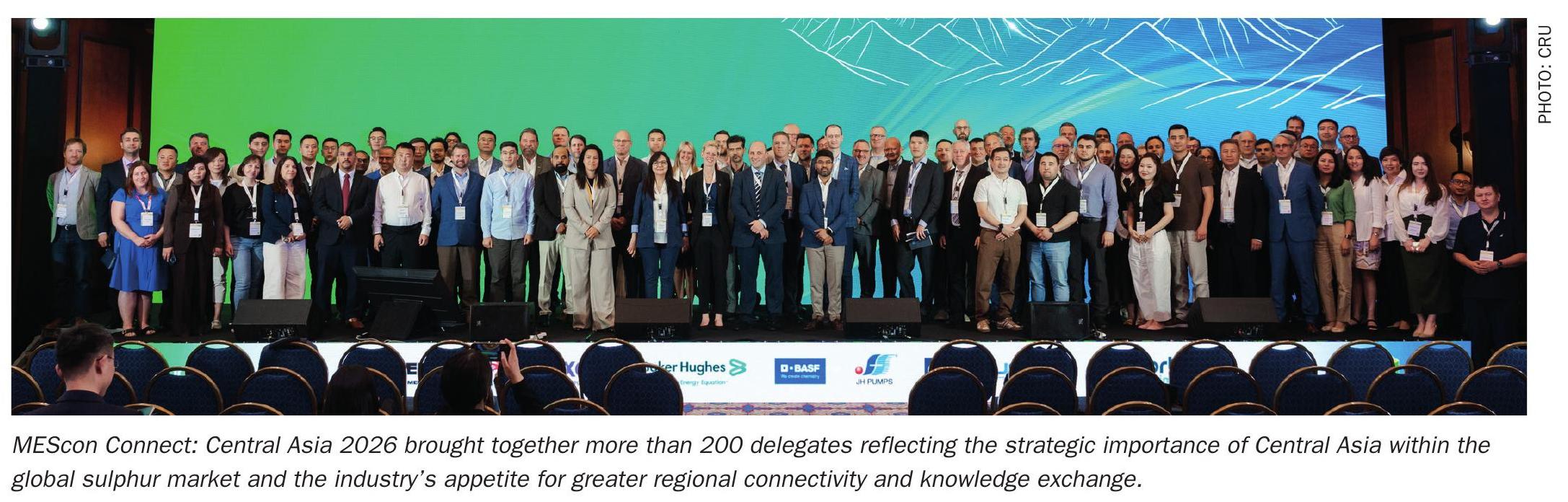
With over 200 delegates representing operating companies, licensors, EPC contractors, suppliers, consultants, traders, academia, and industry media, the strong participation reflected both the strategic importance of Central Asia within the global sulphur market and the industry’s appetite for greater regional connectivity and knowledge exchange. Recognising the region’s unique position within global sulphur trade flows, the programme also placed greater emphasis on commercial, logistics, and market-related topics, reflecting the growing importance of transportation, export routes, and market access to producers across Central Asia.
Under the theme Bridging Regions. Building Connections., the conference brought together professionals from across Central Asia, China, the Middle East, Europe, and North America to explore common challenges, share practical experiences, and discuss emerging opportunities across the sulphur value chain. Reflecting the conference’s commitment to connecting regions and communities, the entire event was translated in real time into Russian and Chinese using AI-powered translation technology. Delegates were given access to live translations through the conference app, enabling broader participation and interaction among attendees from different regions.
Day 1 – Workshops
MEScon Connect opened on the morning of June 9 with a series of practical, operator-focused workshops designed to promote hands-on learning and knowledge exchange across the sulphur value chain.
Axens explored strategies for optimising SRU and TGTU performance through effective catalyst selection, management, and troubleshooting. BASF focused on the fundamentals and operational challenges of amine-based AGRUs, highlighting practical approaches to improving reliability and performance. IPCO, with input from ASRL, delivered a workshop on sulphur solidification and handling, covering technologies, operations, maintenance, and logistics considerations. Meanwhile, Worley Comprimo used its Immerse dynamic simulator to place delegates in a realistic control room environment, demonstrating best practices for SRU and TGTU commissioning, start-up, shutdown, and upset response.
The workshop format encouraged active participation and discussion, setting the tone for the collaborative atmosphere that would characterise the remainder of the event.
Day 1 – Opening the conversation
MEScon Connect: Central Asia 2026 officially opened on the afternoon of June 9. Delegates from across Central Asia, China, the Middle East, Europe, and North America gathered in the main ballroom to explore this year’s theme: Bridging Regions. Building Connections.
The conference opened with a short video highlighting the importance of sulphur to both the region and the world, as well as the unique role MEScon plays in bringing the industry together. Combined with the presentations that followed, it reinforced the critical contribution sulphur makes to energy production, agriculture, mining, and countless other industries, while underscoring the importance of maintaining a strong and connected global sulphur community.
Following the opening video, Angie Slavens of UniverSUL Consulting took to the stage to set the scene for the conference. Her presentation explored the evolution of MEScon from its origins as MESPON in 2014 to today’s global community, while examining the continued growth of sulphur production worldwide and the strategic importance of Central Asia as one of the world’s largest sulphur-producing regions. The presentation highlighted the common challenges and opportunities shared by Central Asia and the Middle East, including world-scale sulphur recovery facilities, extensive sulphur handling infrastructure, and growing export activity. Bringing MEScon to Kazakhstan represented an opportunity to strengthen connections between these regions while expanding the network of sulphur professionals worldwide.
Sponsors and exhibitors were then invited to the stage and recognised for their support of the inaugural MEScon Connect event. Delegates subsequently gathered for a commemorative group photograph, capturing the enthusiasm and sense of community that characterised the inaugural MEScon Connect event before dispersing for the afternoon networking break.
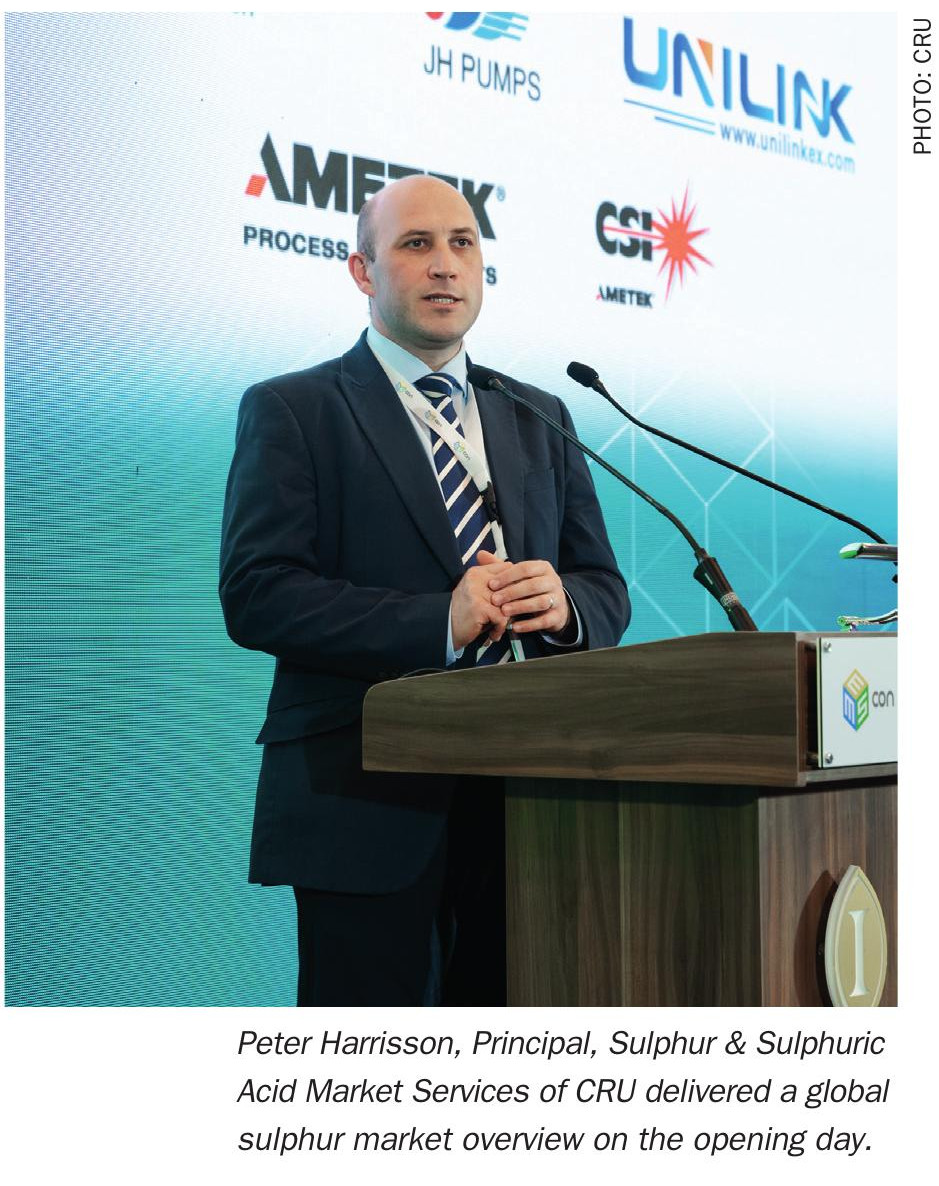
The opening market outlook session continued with a series of commercial presentations that provided valuable context for the technical program. Peter Harrisson of CRU delivered a global sulphur market overview, examining tightening supply-demand fundamentals, record sulphur prices, and evolving trade flows. Particular attention was given to the impact of the ongoing conflict in the Middle East, which has disrupted production and export logistics in a region responsible for nearly half of global sulphur trade. The presentation also highlighted the growing influence of the metals sector on sulphur demand and the increasingly important role that Central Asia plays within the global sulphur value chain. Additional presentations from Unilink and CRU explored regional market developments, logistics challenges, and emerging opportunities across Central Asia and neighbouring markets.
The day concluded with a lively networking reception in the exhibition area, where delegates had the opportunity to reconnect with industry colleagues, establish new relationships, and continue discussions initiated during the opening session.
Day 2 – Operational excellence in practice
The second day of the conference opened with two parallel tracks, allowing delegates to select between technical and commercial content based on their interests and professional responsibilities.
The first technical session, Lean Operations, Rich Results: Optimising Amine Systems for World-Class Performance, focused on the critical role of sour gas treating upstream of sulphur recovery. Presentations from TCO, Axens, SGS Amine Experts, ElectroSep, BASF, and ASRL explored opportunities to improve amine system performance, reduce operating costs, enhance regeneration efficiency, and improve analytical monitoring capabilities.
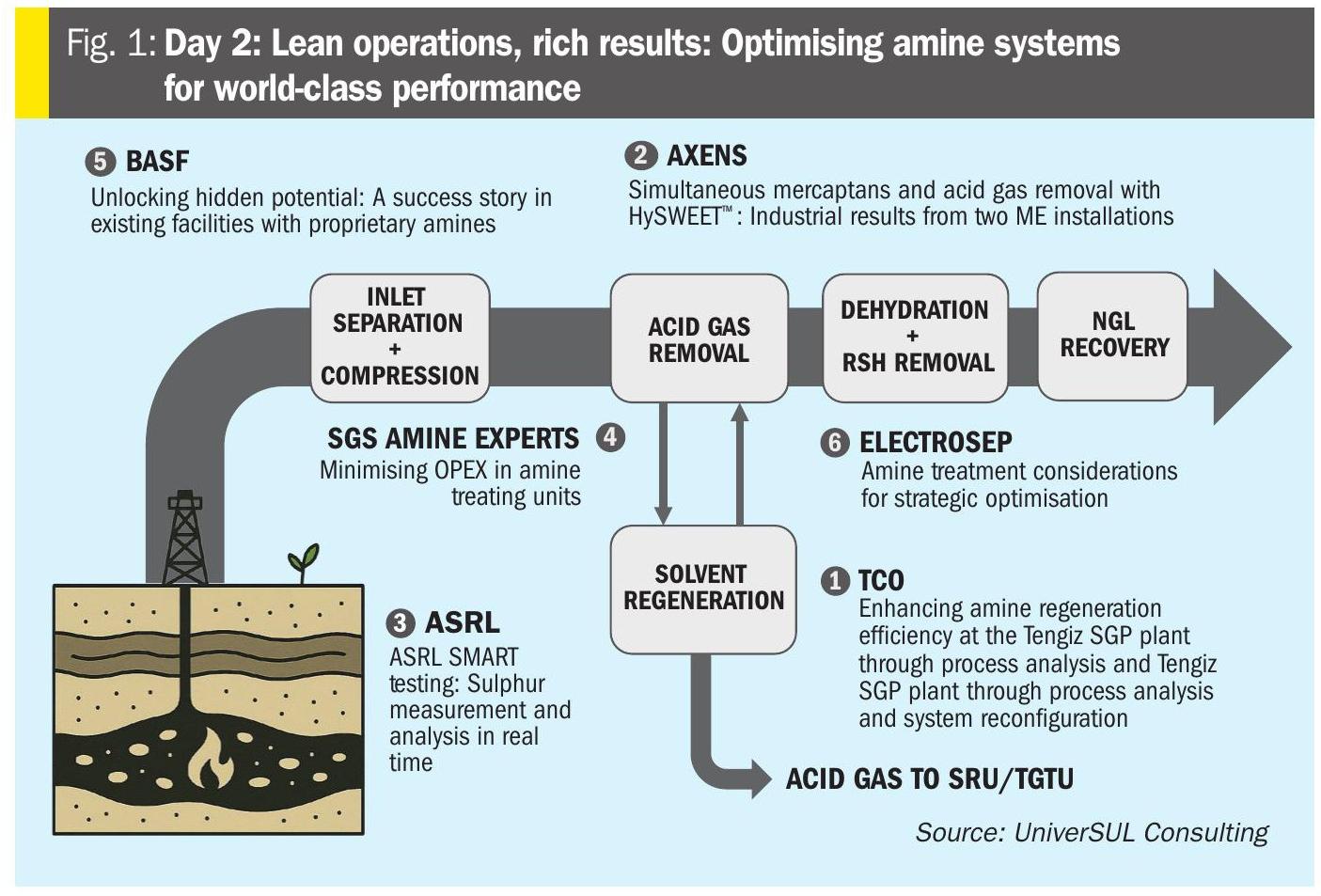
A particularly engaging presentation from TCO demonstrated how process analysis, simulation, and system reconfiguration can unlock significant improvements in amine regeneration performance while increasing overall plant capacity. Axens presented industrial results from its HySWEET™ technology, demonstrating simultaneous mercaptan and acid gas removal in gas treating applications, while BASF and ElectroSep highlighted solvent optimisation and amine management strategies.
Running simultaneously to the technical program, the dedicated Commercial and Markets Track examined the business side of the sulphur industry. Presentations from Ozar Sulfur, APM Terminals Poti, and CRU explored sulphur trading, logistics, transportation infrastructure, export routes, and market connectivity across Central Asia and beyond. Discussions highlighted the growing importance of the Trans-Caspian “Middle Corridor” and the strategic role that Central Asia can play in connecting eastern and western markets.
Following lunch, technical delegates reconvened for SRU Reality Check: Lessons from the Field. This session focused on practical operating experience and lessons learned from the field. Presentations from TCO, Worley Comprimo, Paqell, BASF, and Ametek addressed startup experiences, burner reliability, analytical systems, catalyst performance, tail gas incineration, and troubleshooting strategies.
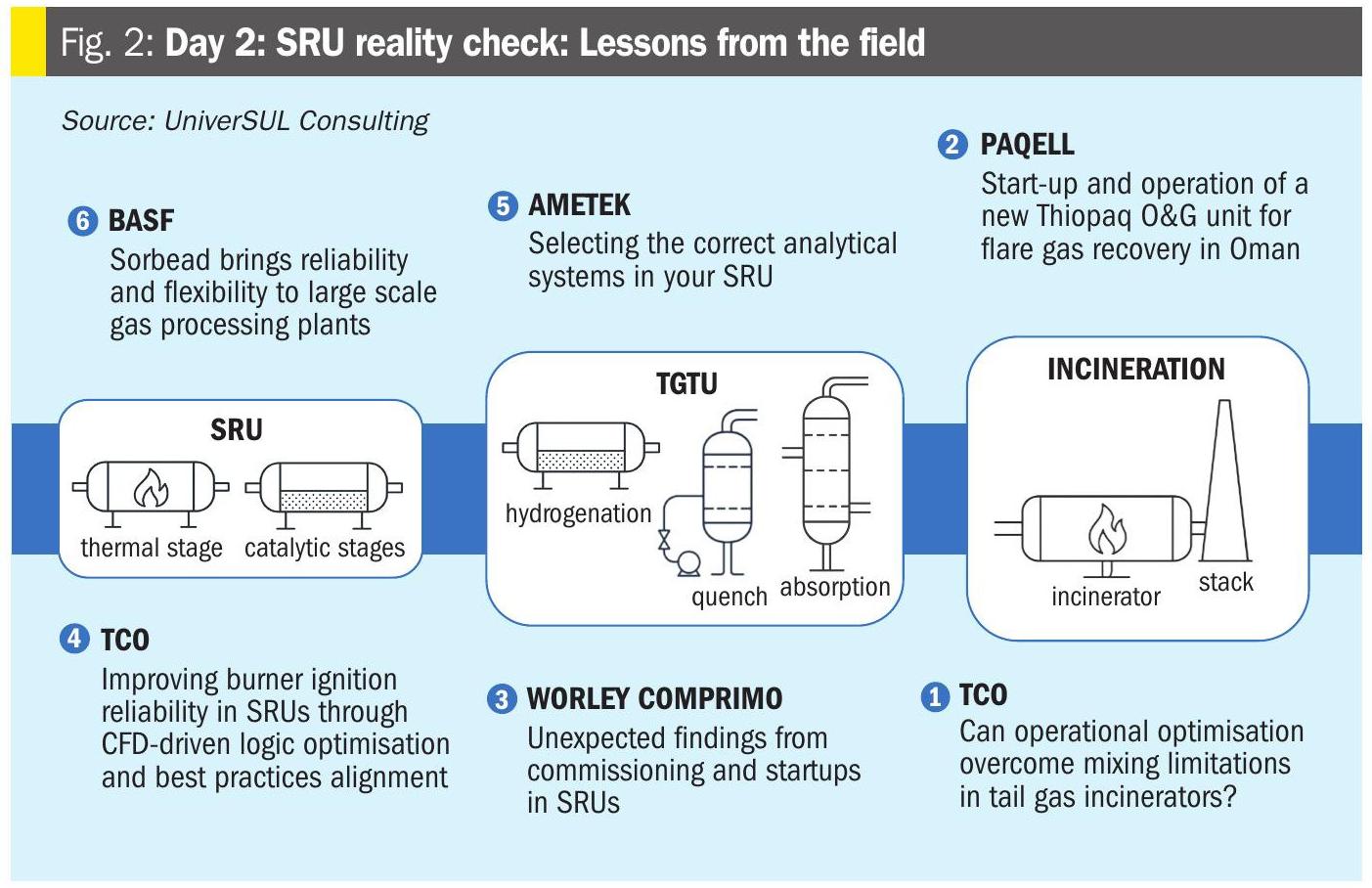
The session generated lively discussion, with many of the topics resonating strongly with delegates facing similar operational challenges in their own facilities.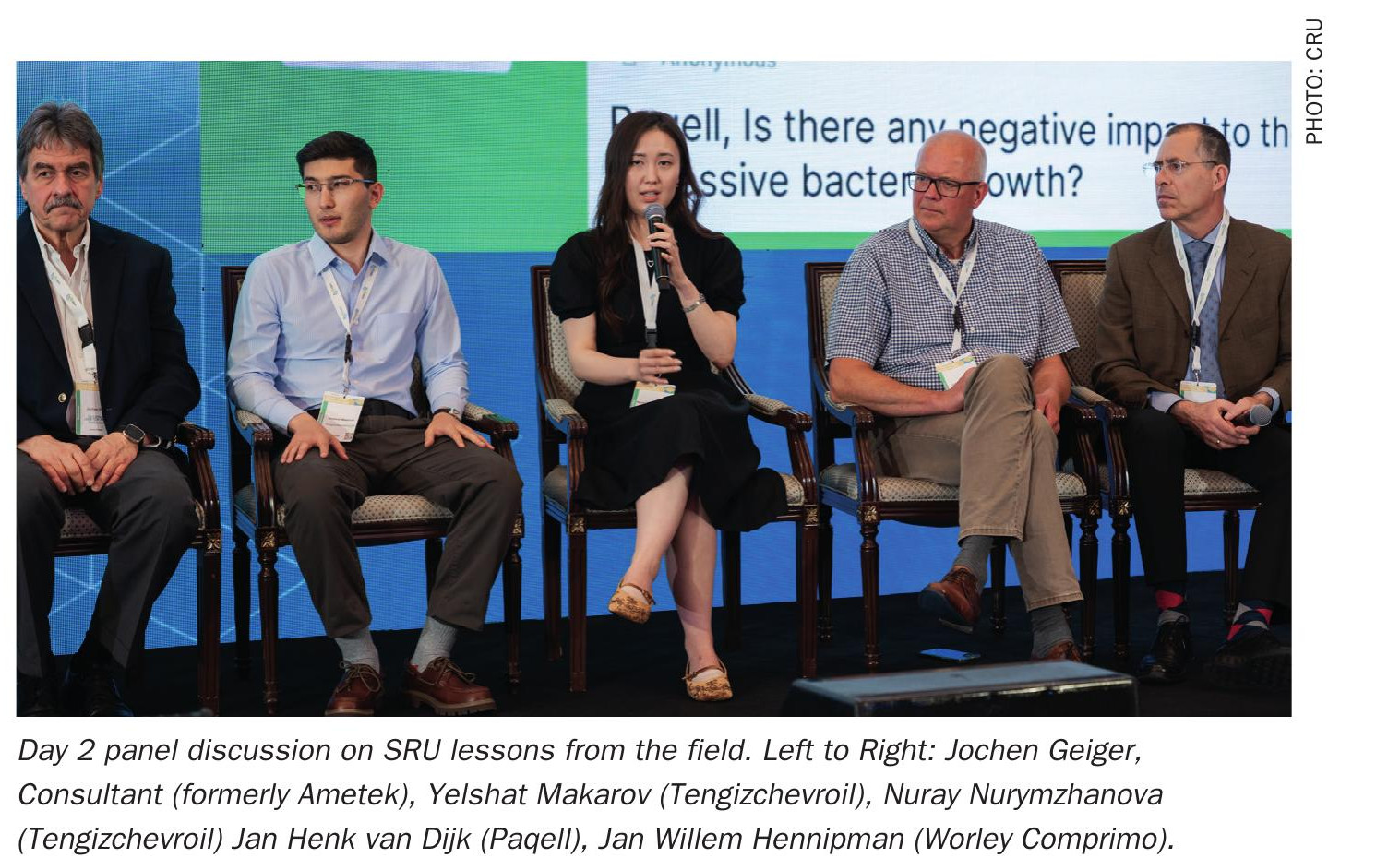
The ever-popular MEScon quiz returned at the end of the day, with Carmella Alfano of Axens emerging victorious and taking home a set of AirTags. Day 2 concluded with another reception in the exhibition area, offering delegates further opportunities to strengthen relationships and continue building connections across the global sulphur community.
Day 3 – Innovation and the value of sulphur
The final day of MEScon Connect focused on emerging technologies, innovation, and the future value of sulphur.
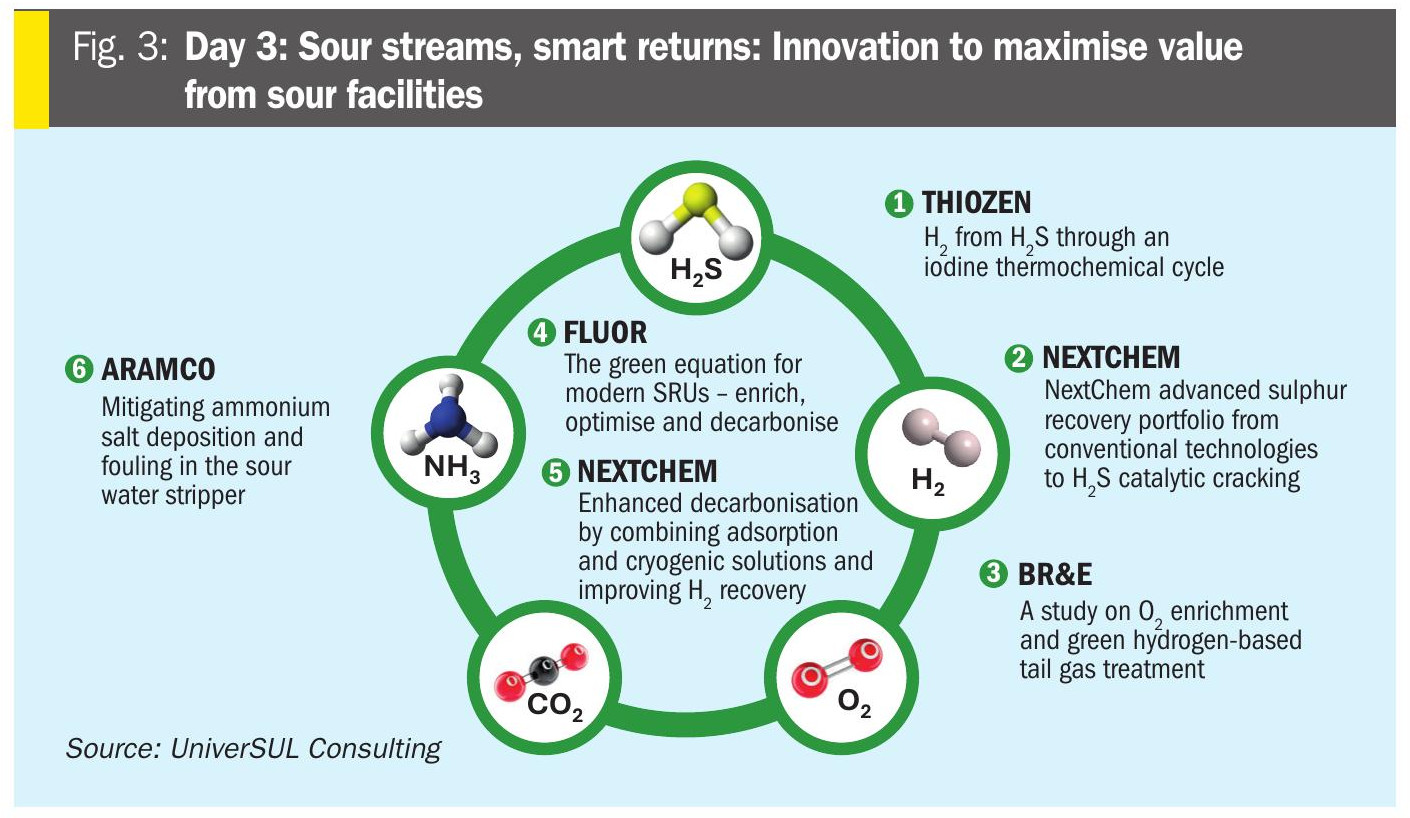
The morning session, Sour Streams, Smart Returns: Innovation to Maximise Value from Sour Facilities, explored opportunities to extract greater value from sour gas operations while supporting broader sustainability and decarbonisation objectives. Presentations from Thiozen, NextChem, BR&E, Fluor, and Aramco challenged traditional thinking by exploring how sour streams can become sources of additional value through hydrogen production, energy recovery, and advanced processing technologies. A recurring theme throughout the session was the industry’s gradual transition from viewing sulphur recovery solely as an environmental compliance requirement toward recognising the broader opportunities associated with sour gas processing.
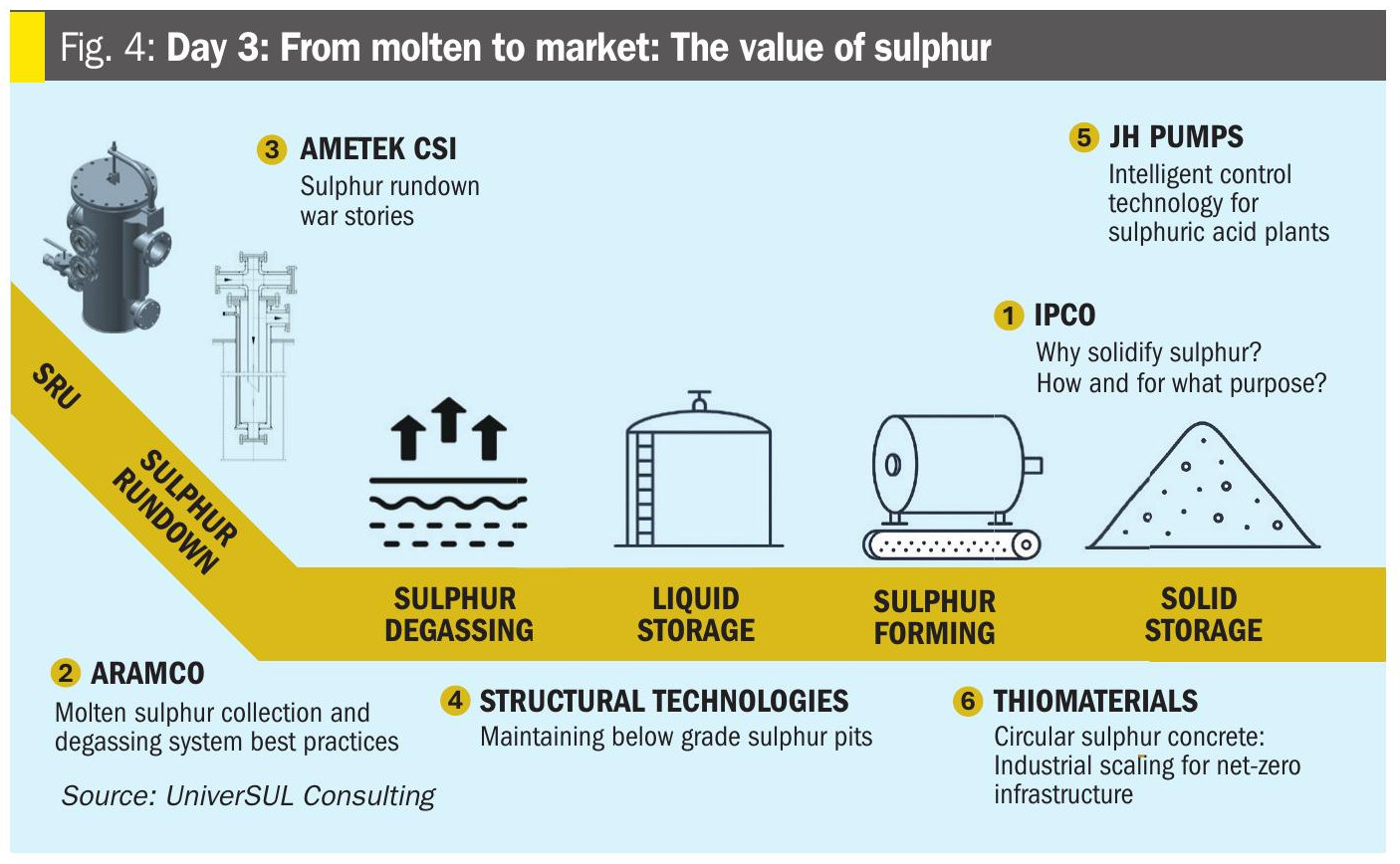
The afternoon session, From Molten to Market: The Value of Sulphur, shifted attention to sulphur handling, storage, transportation, and utilisation. Presentations from IPCO, Aramco, Ametek CSI, Structural Technologies, JH Pumps, and ThioMaterials explored sulphur degassing, rundown systems, sulphur pit maintenance, sulphuric acid production, and emerging sulphur-based construction materials. The session was particularly relevant to the Central Asian audience given the region’s extensive sulphur production, storage, and export infrastructure. Discussions highlighted the importance of product quality, operational reliability, environmental stewardship, and innovation throughout the sulphur handling chain.
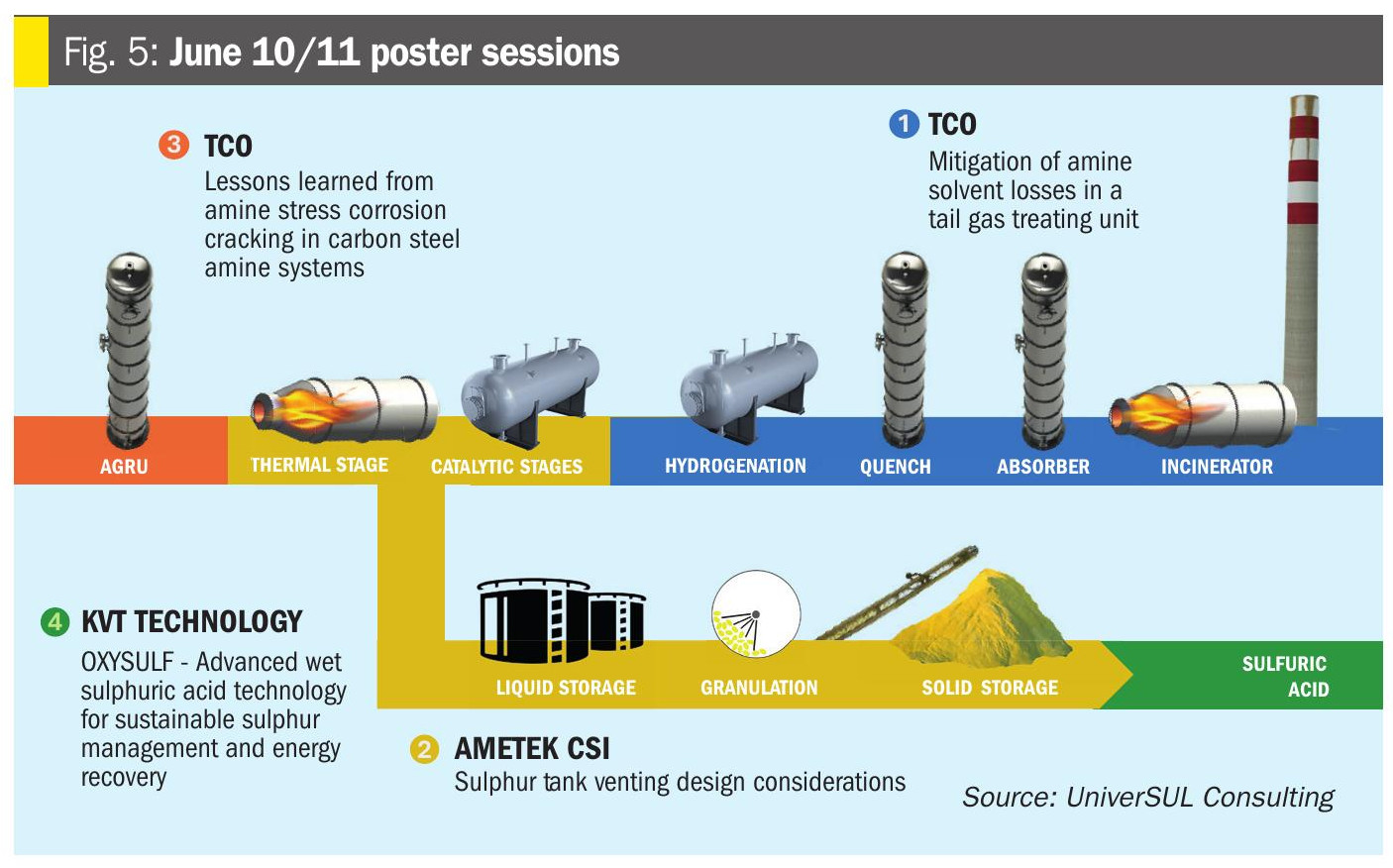
Across Days 2 and 3, MEScon also continued its distinctive Poster Spotlight format, a feature unique to the conference. Each poster author was given five minutes on the main stage to introduce their work to the full audience before moving to dedicated digital displays in the exhibition area for one-on-one technical discussions during networking breaks. The unique approach combines the visibility of an oral presentation with the interaction and technical depth of a traditional poster session, creating an ideal platform for younger professionals and for topics that benefit from more detailed technical exploration. This year’s posters included two contributions from TCO covering amine solvent losses and stress corrosion cracking in amine systems, alongside presentations from AMETEK CSI on sulphur tank venting design considerations and KVT Technology on advanced wet sulphuric acid technologies for sustainable sulphur management and energy recovery.
The conference concluded with the final MEScon quiz and a new record for the event. For the first time in MESPON/MEScon history, the same participant achieved the highest score on both quiz days. After winning the Day 2 quiz, Carmella Alfano of Axens once again earned first place on Day 3. Having already claimed victory on Day 2, Carmella graciously passed the prize to second-place finisher Illius Aksanov of SLB, who took home a Bluetooth speaker.
The conference concluded with the presentation of the inaugural MEScon Connect Scavenger Hunt awards. Eight delegates achieved the maximum score of 240 points, with the winners selected by random draw. Aidana Andirova of Tengizchevroil (TCO) received the operating company prize, while Francis Bernard of ASRL received the non-operating company prize.
Building connections across regions
MEScon Connect: Central Asia 2026 successfully demonstrated the value of extending the MEScon community beyond its traditional Middle Eastern base. The event brought together professionals from many of the world’s most important sulphur-producing regions and created meaningful opportunities for collaboration across geographic, organisational, technical, and commercial boundaries. By combining operational experience, market insight, and regional perspectives, the conference highlighted the benefits of a more connected global sulphur industry.
Particularly encouraging was the strong participation from regional operating companies and the high level of engagement shown by young Kazakh engineers and technical professionals throughout the conference. Their enthusiasm, technical capability, and willingness to exchange ideas highlighted the strength of the next generation of industry leaders and underscored the value of creating opportunities for them to engage with peers and experts from around the world.
As delegates departed Almaty, they left with new contacts, fresh perspectives, and a renewed appreciation for the value of collaboration across the global sulphur industry. MEScon Connect 2026 demonstrated that while challenges may differ from region to region, the opportunities to learn from one another are universal.