
Water-soluble fertilizer growth dash
Water-soluble fertilizers are the standout performer in a new assessment of global specialty fertilizer demand by the International Fertilizer Association (IFA).


Water-soluble fertilizers are the standout performer in a new assessment of global specialty fertilizer demand by the International Fertilizer Association (IFA).

Controlled-release fertilizers (CRFs) can help food processors and consumer packaged goods (CPG) companies cut their Scope 3 emissions.

Karl Wyant, Nutrien's Director of Agronomy, discusses practical ways for improving potassium uptake by crops.

Ilya Motorygin of GG Trading says fertilizer trading is performing an essential function currently – in a market disrupted by supply earthquakes.
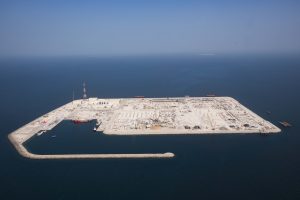
Sulphur production continues to expand in the Middle East and East and South Asia both from new refineries and major sour gas projects.
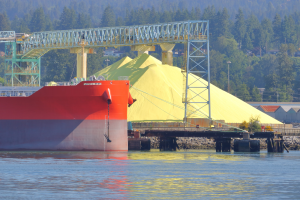
Policy decisions and geopolitical shocks are now the dominant drivers of sulphur and phosphate fertilizer markets, overriding more traditional seasonal fundamentals. The conflict in the Middle East, including the escalation around Iran, has tightened sulphur availability and lifted costs sharply, while China’s export restrictions continue to restrict global phosphate supply.
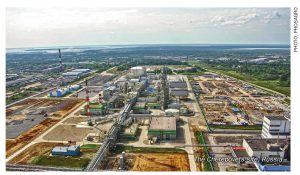
Multiple drone strikes have hit the industrial city of Cherepovets in Russia's Vologda Oblast region, according to Russian news agency TASS. The area contains PhosAgro's largest phosphate fertilizer production site. Cherepovets has a production capacity of around 700,000 t/a NPK and around 814,000 t/year DAP/MAP, according to CRU data, making it the largest phosphate fertilizer production site across Europe and the CIS. The site also contains several sulphuric acid plants with a combined capacity of 4.5 million t/a, making it Russia's largest production hub for the acid. This entire volume is consumed domestically.
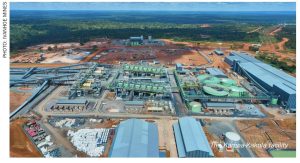
Canada-based Ivanhoe Mines stands to benefit from any sulphuric acid shortage caused by prolonged closure of the Strait of Hormuz now that the company is running a copper smelter, according Co-Chairman Robert Friedland. The 500,000 t/a direct-to-blister smelter at company-operated Kamoa-Kakula mine in the Democratic Republic of Congo produced its first anodes at the turn of the year.

The Zambian government has introduced a new permit system to manage the export of sulphuric acid, which came into effect on 27 March, 2026, according to an announcement from the Ministry of Commerce, Trade and Industry. The move comes at a time of significant exceptionally high prices and sourcing challenges in the global sulphur market, adding another layer of tightness for regional consumers. The Ministry stated that the measure is designed to correct a "critical market imbalance" and ensure supply for the country's domestic industries. The system aims to safeguard local downstream sectors that rely on the acid, while still ensuring that the needs of the export market are met, it said.

CRU’s Phosphates+Potash Expoconference was held in Paris in mid-April, with the Iran crisis uppermost in everyone’s mind. Margins are under pressure, sulphur has become a strategic constraint, and the phosphates investment pipeline is thin. CRU Principal Consultant Humphrey Knight examined the fallout from the closure of the Strait of Hormuz, noting that fertilizers have been hit harder than most bulk commodities. A large share of exportable sulphur and traded urea normally originates in, or passes through, Gulf producers. The effective closure of the strait has squeezed the traded part of these markets, where international prices are set, and pushed benchmarks up sharply. The global phosphate market is structurally tight, and the combination of Chinese export policy and Middle East logistics has pushed the traded segment into a much more fragile state.