Fertilizer International 532 May-Jun 2026

27 May 2026
Practical methods for improving potassium use efficiency (KUE)
PHOSPHATE AND POTASH SUSTAINABILITY

Practical methods for improving potassium use efficiency (KUE)
Under certain conditions, only 30-60% of potassium applied as fertilizer ends up in the crop with the rest being lost to competing factors. These include ‘tie-up’ by clays, potassium fixation, sodium antagonism, leaching in sandy soils, drought induced deficiency, and erosion and runoff. In this article, Karl Wyant, Director of Agronomy at Nutrien, explains the concept of potassium use efficiency (KUE) and discusses practical ways for improving potassium uptake by crops.

Crop essential potassium
Potassium (K) is a cornerstone of plant physiology and crop nutrition. As one of the ‘big three’ plant nutrients, alongside nitrogen (N) and phosphorus (P), it is commonly applied as fertilizer to help improve crop yield and quality.
Adequate potassium nutrition is critical for:
• Photosynthesis and carbohydrate production.
• Transport of sugars and carbohydrates from leaves to harvestable products, such as grain or fruit.
• Maintaining the water balance of the plant via the regulation of the opening and closing of leaf stomata, cell turgor pressure, and overall water use efficiency.
• Resistance to disease, drought, and lodging.
• Seed size, grain fill, and fruit size.
• Activation of enzymes involved in critical crop biochemical reactions, including photosynthesis, respiration, and the synthesis of proteins and carbohydrates.
• Helping plants cope with various environmental stresses, such as salinity, extreme temperatures, and nutrient imbalances.
• Nutrient uptake by plants, including a strong synergy with nitrogen and an influence on the movement within the plant of other nutrients, such as calcium (Ca) and magnesium (Mg).
K availability
Soils supply potassium to the growing crop via the uptake of K+ ions by the roots. Despite its abundance in most arable soils, potassium needs to be available in an accessible form that plants can extract to satisfy their growth demands. Soils typically contain four different ‘pools’ or types of potassium1 (Figure 1):
• Solution K
• Exchangeable K
• Non-exchangeable K fixed by clays
• Non-exchangeable K locked within minerals.

While crops primarily access potassium from the soil solution and exchangeable K, these two pools together represent only a small fraction of the potassium present, typically 1.1-2.2% of total soil K.
Crops remove potassium from farmland when the harvest leaves the field. Over time, therefore, repeated crop removal will deplete these plant-available pools – unless there is adequate fertilization to replace the ‘lost’ K.
While soils can eventually restore plant-available potassium supply by releasing fixed K, this process is slow relative to the high rate of plant demand during the growing season. As a result, potassium deficiency can occur – and limit crop yield and/or crop quality – when the background release of K in plant-available form (from soil colloids, clays, and minerals) is insufficient to meet crop needs. In this situation, external potassium sources need to be supplied to prevent potassium deficiency.
What is KUE and how to measure it?
In a perfect world, 100% of the applied fertilizer – e.g., every kg/ha of muriate of potash (MOP, 0-0-60) – would be used by the crop to produce yield in the same year it was applied. Yet this clearly does not occur in practice due to inefficiencies that can interfere with crop uptake. In this article, we will name the various pathways that ‘compete’ with crops for the potassium from fertilizer applications, so growers can work with a crop advisor to try and avoid these.
“Competition for potassium can decrease uptake efficiency. Only 30-60% potassium fertilizer might end up being used the crop, for example, with the rest lost to the competition.
Valuably, potassium use efficiency, KUE, can be used to measure exactly how much of the potassium that goes onto fields as fertilizer actually ends up being used by crops. The simplest and most common way of measuring KUE is to divide total yield (e.g. kg/ha of wheat) by the potassium applied (kg K/ha).
This approach, which is also called partial factor productivity (PFP), tells you how much yield is being produced per unit of applied potassium. It is able to tell growers how productive their cropping system is relative to the potassium application. The PFP for potash fertilizer use is calculated using the following formula:

The higher the resulting PFP number, the more yield growers are producing per unit of applied potassium fertilizer. This method of measuring KUE is frequently used as the information is readily available on many farms and easy to access.
Factors that reduce KUE
Now, let us turn our attention to the processes that compete with the crop for potassium. Six factors, as shown in Figure 2, can decrease the uptake efficiency of your crop and lower your KUE score. Only 30-60% potassium fertilizer might end up being used the crop, for example, with the rest lost to the competition2.

The higher you can drive your uptake percentage, then the higher your KUE will be. Improving KUE often requires addressing the ‘competition’ factors shown in Figure 2 head-on with a fertilization management programme.
Potassium ‘tie-up’ by clays
Soils differ in their texture due to the relative amounts of sand, silt, and clay present. The distribution of these three constituents affects several important soil properties. Clay dominated soils tend to have a high cation exchange capacity (CEC), for example. While the CEC is an indicator of a soil’s ability to store positively charged nutrients (cations), the release rate for these nutrients back to the soil solution is inversely related to the CEC value.
In practice, this means that high clay soils will release stored potassium back to the soil solution at a slower rate, relative to sandy soils. Clay types such a kaolinite and smectite (Figure 3, middle and bottom) can temporarily ‘tie-up’ potassium from fertilizer applications and decrease efficiency by only slowly releasing it back to the soil subsequently for plant use.
Potassium Fixation
This type of competition for potassium, while rare, has a longer lasting detrimental impact on the efficiency of fertilizer programmes. Certain clay types, such as vermiculite, possess an exceptional ability for potassium fixation by scavenging potassium cations from the soil – including those derived from applied fertilizers – and making these unavailable for plant use (Figure 3, top).

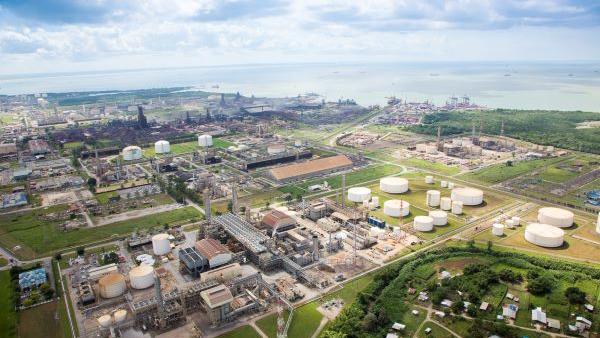
A survey in California’s San Joaquin Valley (main photo) has shown that potassium fixation capacity is typically associated with the presence of high vermiculite levels in granite-derived soils3. Fixed potassium, because it is no longer available for plant use during the growing season, can have a serious impact on fertilizer use efficiency.
Leaching
Sandy soils, being low in organic matter and having a low CEC, are generally poor at storing nutrients. They also have high nutrient release rates back to the soil solution. Consequently, potassium fertilizers applied to sandy soils are prone to leaching and removal from the root zone, especially during periods of low plant K uptake. Although rare, excessive rainfall or irrigation on sandy farmland can therefore reduce KUE by competing with the crop for potassium and physically removing applied K fertilizers below the root zone, preventing uptake by the crop.
Dry soils
Around 20% of potassium is transported to the plant through soil moisture in a process called mass flow4. During mass flow, dissolved nutrients move towards plant roots carried by the flow of water as the plant takes up water from the soil. Essentially, when a plant pulls water through transpiration, that water stream brings nutrients along for the ride.
In contrast, excessive soil dryness throughout the rooting zone, by reducing mass flow, can prevent potassium from reaching the plant and reduce fertilizer use efficiency (Figure 4). Consequently, drought can reduce KUE by preventing applied potassium fertilizers from reaching the crop in a timely manner.

Antagonisms with sodium
This form of competition applies to growers struggling with excessive sodium in irrigation water or soil. Under these circumstances, excess sodium can compete with the potassium fertilizer plan by interfering with the ability of crops to acquire this nutrient. The antagonistic effects of sodium on potassium uptake have been studied in detail5. Essentially, excess sodium reduces KUE in two ways: firstly, by making it difficult for potassium to be taken up by the crop and, secondly, by increasing potassium leakage from crop roots.
Runoff and erosion
Potassium can be lost from the agricultural system through various pathways, including erosion and runoff. Erosion transports soil particles, potentially carrying potassium with them, and may lead to the loss of topsoil – and with it your investment in potassium fertilizer. Runoff from fields can carry potassium and other nutrients into nearby surface water bodies. Either way, runoff and erosion can both reduce KUE.
Improving KUE
Having identified the factors responsible for potassium competition, it should now be possible for growers to manage these, minimise their impact and get more of their applied nutrients into the crop where they belong. Where to begin? Well, much of the competition for potassium, as described above, can be identified through routine soil testing and by taking sound advice from a local crop advisor.
By using an updated soil report, growers and their advisory teams can be on the lookout for conditions that reduce KUE (e.g., high clay content) so they can manage these appropriately. This usually involves increasing the amount of potassium fertilizer applied on a crop to account for any ‘tie-up’ by clays. In other situations, implementing erosion and runoff controls can be effective at keeping more potassium fertilizer on the field.
If strong potassium fixation is suspected, local geological and soil series reports can be invaluable for growers wishing to understand field conditions that could be competing for potassium. Other opportunities for improving KUE include modifying how fertilizers are applied (broadcast versus band). Adopting practices that increase the residence time of crop residues on the field can also help provide potassium to the next crop.
Broadcast versus banding
Broadcasting fertilizer helps to spread nutrients uniformly across the soil surface, making it efficient for covering large areas quickly. But it can also lead to greater nutrient losses through runoff or fixation. The banded application of fertilizers, in contrast, places nutrients in concentrated zones near the seed or root zone6. This improves nutrient use efficiency by reducing soil contact and limiting tie-up by clays, with this being particularly beneficial for potassium (Figure 5).

Crop-specific potassium requirements
Crop-specific potassium requirements are an essential consideration in nutrient management. Different crops have varying K needs at different growth stages and fertilizer plans should therefore be adjusted to optimise crop production versus applied potassium (Figure 6). It is important to remember that both over and under application of potassium fertilizer will result in a lower KUE for the field.

Crop residues and organic matter
Incorporating crop residues (the unharvested parts of plants that remain on the field) and organic matter back into the soil can release potassium and improve its availability for subsequent crops. Potential K release from residues should therefore be factored into a fertilizer management plan to ensure potassium is not over/ under applied (Table 1).

Summing up
As reviewed here, competition for potassium can reduce the use efficiency of your potassium fertilizer applications and decrease KUE. Growers who are concerned about improving potassium uptake in the crop, and keeping potassium out of the hands of the competition, should consider contacting a local crop advisor to assess their soil sample data and help develop a field specific management plan. Once the competition is formally identified, potassium fertilizers can be better managed on your farm and increase fertilizer use efficiency. ■
References
Further reading
eKonomics, 2024. Potassium Toolkit. Available from: https://nutrien-ekonomics.com/agronomics/toolkits/potassium/ [Accessed 1/4/2026]
Ryoung, S., 2014. Strategies for Improving Potassium Use Efficiency in Plants. Molecules and Cells, 37 (8), 575-584.