Oceania

AFC locks in Gladstone urea offtake as Australia still scrambles for imports

Written by Natalie Noor-Drugan


Australian Fertilizer Corporation has signed exclusive 10-year offtake agreements covering 100% of the planned 220,000 t/a output from its proposed Gladstone Urea Facility, in a deal the company values at more than AUD 2.4 billion ($1.56 billion) over the initial term.

The agreements cover domestic and international buyers in the agricultural and technical-grade automotive urea markets and give AFC full offtake coverage ahead of project financing and development.

Import gap remains exposed

The announcement lands just days after the Australian government said it had secured another three shipments totalling about 98,500 tonnes of urea for farmers under its Fuel and Fertiliser Security Facility, taking the programme’s total additional urea secured to around 340,000 tonnes.

That underlines the supply gap AFC is targeting: the company said Australia currently imports all of its urea requirements, while the government said around 1.4 million tonnes of urea have already been cleared through Australia’s biosecurity system since the escalation of the war in the Middle East in February 2026.

Gladstone project pitch

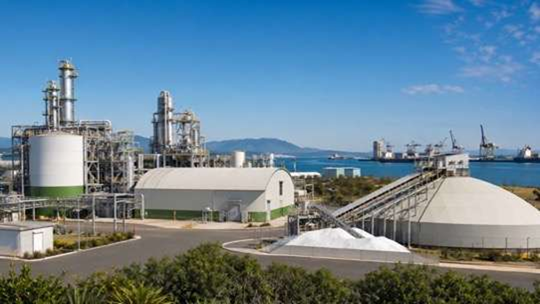
AFC said the Gladstone plant would produce 220,000 t/a of technical-grade urea for both fertilizer and automotive emissions reduction markets, with the project framed as a domestic supply-security play as well as an industrial investment.

Chief executive Stein Haugan said the offtake package shows “strong market demand for Australian-made technical-grade urea” and added: “Every tonne of urea produced in Gladstone is a tonne that does not need to be imported.”

Circular carbon angle

The company said the project would use a circular carbon economy model, converting underutilised carbon resources including mining by-products, end-of-life tyres, biomass and municipal materials into fertilizer products.

AFC said the facility would create about 800 construction jobs and 50 permanent operating roles once commissioned, positioning the project as both a regional manufacturing investment and a supply-chain resilience measure for Australian agriculture.

Latest in Oceania

Australia fast-tracks Murchison green ammonia project

Australia’s federal government has selected the Murchison Green Hydrogen project in Western Australia as one of four pilot projects under its newly launched Investor Front Door initiative, a scheme designed to streamline regulatory approvals and fast-track major projects deemed to be in the national interest, the government announced 9 April. The Murchison project, which will use wind and solar energy to produce large-scale green ammonia, is intended to serve as a model for commercial-scale green hydrogen development in Australia and to generate green export opportunities to markets in Asia and Europe. Murchison, being developed by Copenhagen Infrastructure Partners’ (CIP), is expected to have a total production capacity of roughly 1.3 million t/a of green ammonia. The first phase of operations is due to begin in 2029.

Linde to lead blue ammonia project

Linde Engineering has been appointed to lead the engineering, procurement, and construction (EPC) of the WAH2 blue ammonia plant in Western Australia. This plant is expected to produce around 650,000 t/a of low carbon ammonia using natural gas feedstock and carbon capture technology. Project partner NH3 Clean Energy says that the project’s aim is not only to produce clean ammonia but to ship it as a greener commodity to Asian markets, aligning with global decarbonisation efforts, particularly for countries like Japan and South Korea that are in search of low-carbon fuel sources.