Sulphur 407 Jul-Aug 2023
Unintended consequences?


Editorial

Unintended consequences?

“There is a trade-off between sulphur recovery levels and climate action”

The modern sulphur industry is in effect a response to the environmental problems created by the presence of sulphur compounds in oil and gas, and the consequent release of sulphur dioxide when they are burned. The tens of millions of tonnes extracted, formed, traded and used for sulphuric acid production every year would otherwise be entering the atmosphere and causing health issues, especially in major cities, or returning as acid rain. One of the most recent step changes in sulphur recovery has come from the extension of rules on sulphur content of fuels that have been commonplace for road vehicles for many years into the maritime transport sphere. The International Maritime Organisation has mandated a reduction in sulphur content of bunker fuels to 0.5% worldwide, and 0.1% in busy shipping regions that have become designated emissions control areas (ECAs). Because bunker fuels were made from refinery residues, they often had high concentrations of sulphur in them; the limit before 2020 was 3.5%. As a result, a recent paper by two climate scientists calculates that global SO2 emissions have dropped by as much as 10% since 2020 because of the IMO limits. Given that atmospheric sulphur dioxide is responsible for an estimated 20-90,000 preventable deaths per year, this is surely a good thing.

Now, however, three years into the new regulations, there are signs that this reduction may perhaps be a double-edged sword. As we have discussed before, sulphur dioxide not only reflects incoming sunlight but can also act as a nucleus around which water droplets can form, in effect ‘seeding’ cloud formation, especially at stratospheric levels. This effectively lowers global temperatures by reflecting sunlight back into space, an effect known as radiative forcing. Indeed, only in January this year we reported on a plan to deliberately release SO2 at high levels to try and reduce global temperatures, as can happen in the wake of large-scale releases of SO2 from volcanic eruptions. The well intentioned reduction in SO2 emissions from shipping has therefore potentially reduced this effect, particularly across the North Atlantic and North Pacific oceans, where the busiest shipping lanes are. At the same time, there has been a spike in global sea surface temperatures to the highest levels recorded, and which is around 0.6°C above the mean for 1982-2011.

In a paper written this month for Carbon Brief, Dr Zeke Haushofer and Prof Piers Forster, director of the Priestly International Centre for Climate, discuss whether the two are linked. There is a major complicating factor in that the oceans are also a source of large-scale natural dimethyl sulphide emissions produced by marine bacteria and plankton, and in fact this is roughly three times the size of SO2 emissions from shipping. Using a range of widely accepted values for radiative forcing, they calculate that the impact of the IMO ban is probably only an additional 0.05°C of warming, and that the current ocean temperature spike is more likely a result of the move from a La Nina to an El Niño year. Even so, that’s 3% of the 1.5°C increase in global temperatures compared to pre-industrial levels that the Intergovernmental Panel on Climate Change is recommending that we try to limit ourselves to, and a reminder that environmental legislation can have unintended consequences. Industry figures such as Angie Slavens have warned before that, beyond a certain level of sulphur recovery in a Claus plant, moving to the most stringent levels of reduction (such as the 99.99% that some bodies have recommended) can lead to a major increase in carbon dioxide emissions. In effect, there is a trade-off between sulphur recovery levels and climate action, and one that should be borne in mind when future restrictions on sulphur content of fuels are contemplated.

Latest in Outlook & Reviews

CRU Phosphates+Potash conference focuses on sulphur

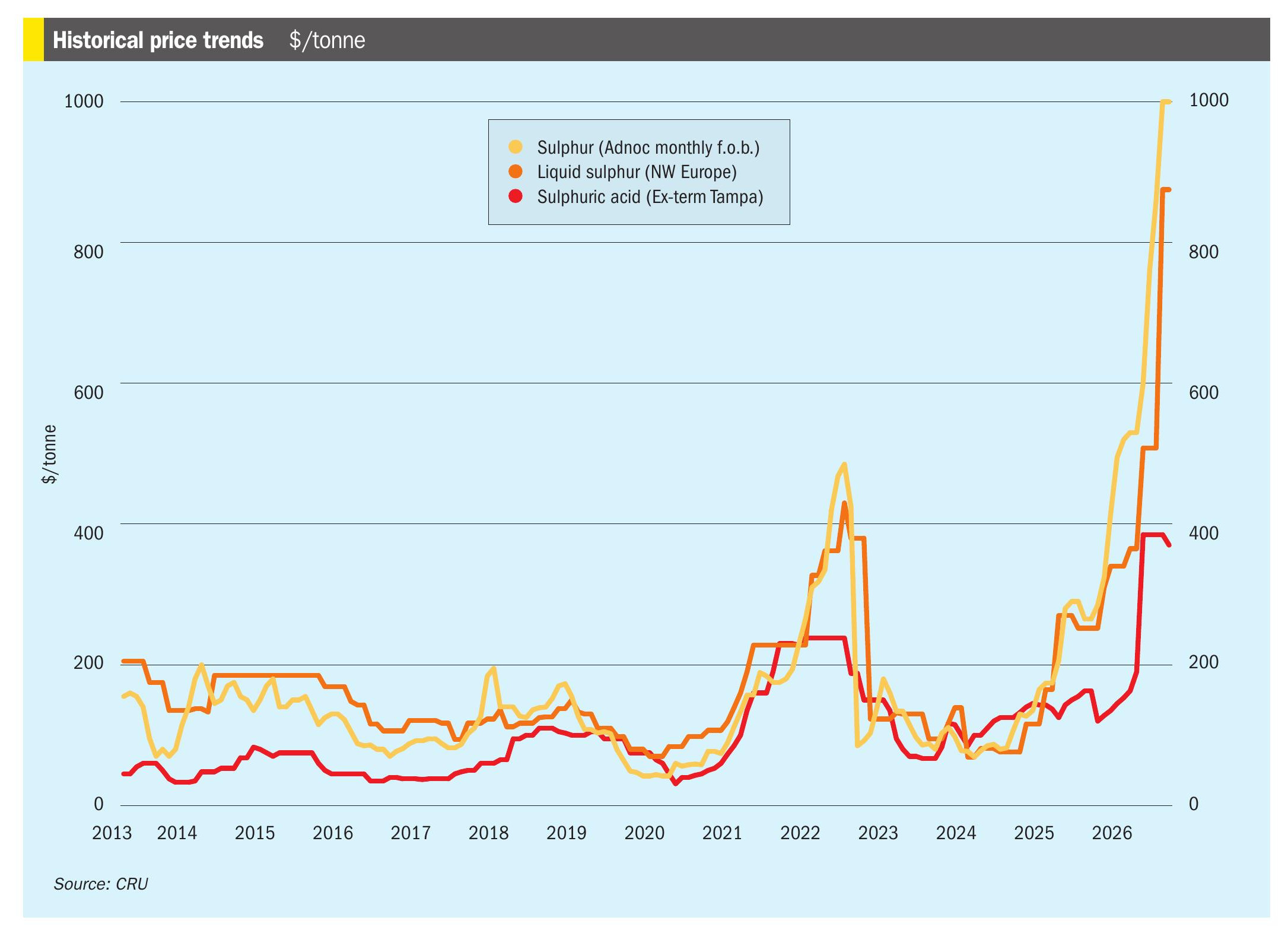
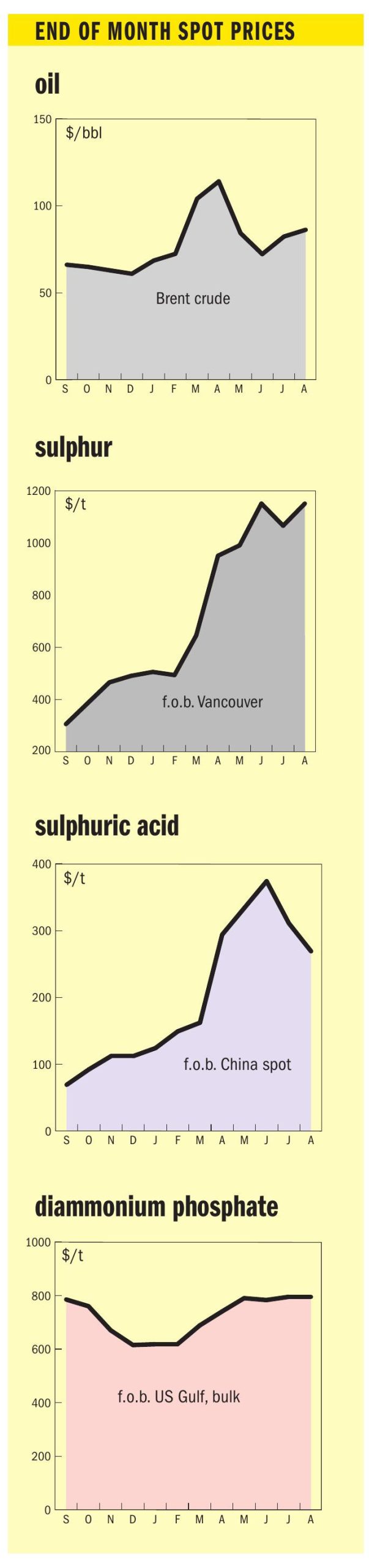
CRU’s Phosphates+Potash Expoconference was held in Paris in mid-April, with the Iran crisis uppermost in everyone’s mind. Margins are under pressure, sulphur has become a strategic constraint, and the phosphates investment pipeline is thin. CRU Principal Consultant Humphrey Knight examined the fallout from the closure of the Strait of Hormuz, noting that fertilizers have been hit harder than most bulk commodities. A large share of exportable sulphur and traded urea normally originates in, or passes through, Gulf producers. The effective closure of the strait has squeezed the traded part of these markets, where international prices are set, and pushed benchmarks up sharply. The global phosphate market is structurally tight, and the combination of Chinese export policy and Middle East logistics has pushed the traded segment into a much more fragile state.