North America

27 May 2026
Mosaic trims phosphate runs as sulphur spikes
Written by Natalie Noor-Drugan
Mosaic has withdrawn its 2026 phosphate production guidance and is cutting rates at key US and Brazilian plants as record sulphur prices compress stripping margins in an already tight phosphate market. The company said it is “closely monitoring raw material markets, particularly sulphur, which recently hit record prices because of limited availability,” and has pulled its phosphate outlook for 2026 while it reviews its operating plan “for the rest of the year”.

Where output is being cut
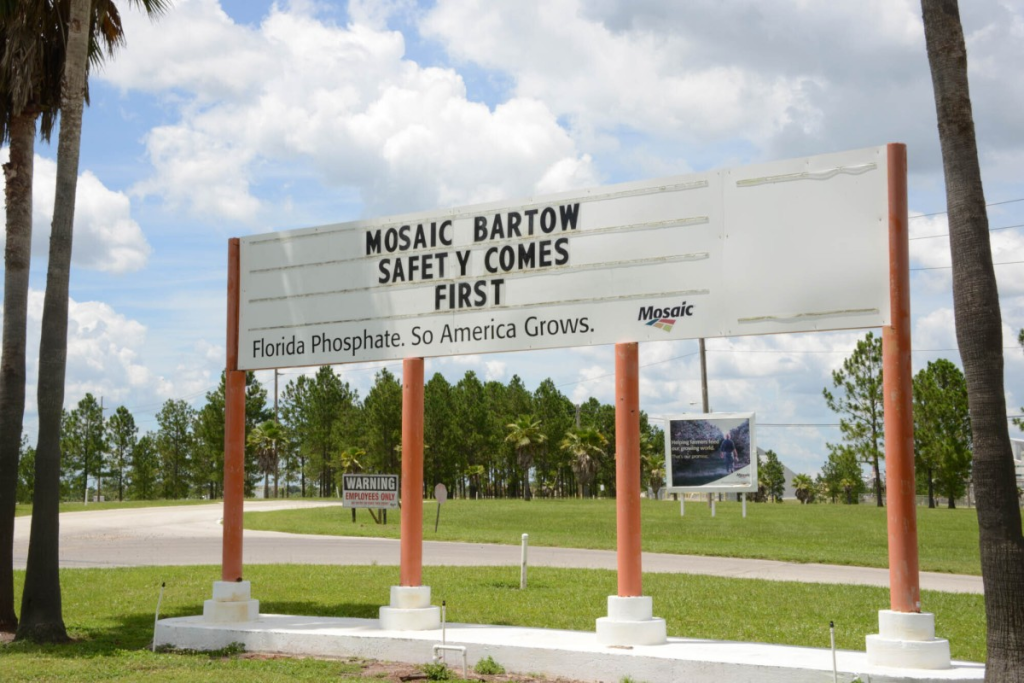
As part of its review, Mosaic has begun to partially curtail phosphate production at its Louisiana and Bartow sites in the US, and to scale back fertilizer output in Brazil. Louisiana refers mainly to its Faustina/Norco operations on the US Gulf Coast, while Bartow is one of its core phosphate facilities in central Florida. In Brazil, the latest actions build on April’s decision to idle the Araxá mining and chemical complex and associated mining at Patrocínio and to pursue a sale of the Araxá assets, moves that together remove about 1 million t/y of phosphate capacity from Mosaic Fertilizantes.
On the Q1 financial results call with analysts, President and CEO Bruce Bodine said Mosaic is “partially reducing production rates at Bartow and Louisiana, and scaling back additional fertilizer production in Brazil”, describing this as “a temporary move that allows us to limit the need for incremental sulphur at today’s prices and wait until the market normalises”. He added that Mosaic’s second‑quarter phosphate sales guidance of 1.4–1.7 million tonnes already reflects the initial cuts in North America and Brazil.
Sulphur costs and stripping margins
In its Q1 release, Mosaic said markets for phosphate and related raw materials “remain dynamic”, with production and logistics disruptions affecting both ammonia and sulphur. The company highlighted that sulphur has “recently reached levels in excess of $1,200 per tonne” and that benchmark stripping margins for finished phosphates are “under pressure”, contributing to a wider pattern of production curtailments and export bans.
Bodine told investors that “current phosphate benchmark stripping margins are under severe pressure despite elevated finished product prices” and that “compressed margins and limited raw material availability have forced producers to curb production”. He noted that Mosaic’s structural advantages in sourcing ammonia and sulphur have helped so far, but warned that strong global sulphur demand is competing for limited supply “including product from our own backyard in the US.”
Guidance reset and capacity context
Mosaic has removed its specific phosphate production target for 2026 — previously framed at seven million tonnes or more — while leaving its potash guidance unchanged at around 9 million tonnes. The potash business generated net sales of $667 million in Q1 on 2.2 million tonnes of sales, with MOP cash costs at $84 per tonne and mine‑gate prices of $265 per tonne.
At the same time, Mosaic has lowered its 2026 capital expenditure guidance by $250 million to $1.25 billion, saying the revised project slate and deferred spending “will not have an impact on our longer‑term production targets”. Bodine said the company is “making tough, but responsible decisions that maintain shareholder value through the current environment without sacrificing our ability to benefit when conditions improve”, and stressed that curtailed phosphate assets can be brought back quickly once raw material markets ease.
Mosaic phosphate assets – status snapshot
Louisiana (Faustina/Norco, US Gulf Coast) – Phosphate production partially curtailed as Mosaic limits incremental sulphur exposure at current prices.
Bartow (Central Florida, USA) – Phosphate production partially curtailed in line with reduced 2026 operating plan; Q2 phosphate sales guidance of 1.4–1.7 million tonnes reflects lower North American runs.
Araxá (Minas Gerais, Brazil) – Mining and chemical complex idled, with Mosaic pursuing a sale of the assets as part of a wider non‑core disposal programme; removes a significant share of Mosaic Fertilizantes’ phosphate output (around 1 million t/y combined with Patrocínio).
Patrocínio (Minas Gerais, Brazil) – Related mining idled; Mosaic is assessing strategic alternatives, including a potential niobium project, while fertilizer output is scaled back.