Fertilizer International 533 Jul-Aug 2026
8 July 2026
IMC brings renewal, investment and expert purpose to US specialty potash
PIONEERING NORTH AMERICAN PRODUCERS
IMC brings renewal, investment and expert purpose to US specialty potash
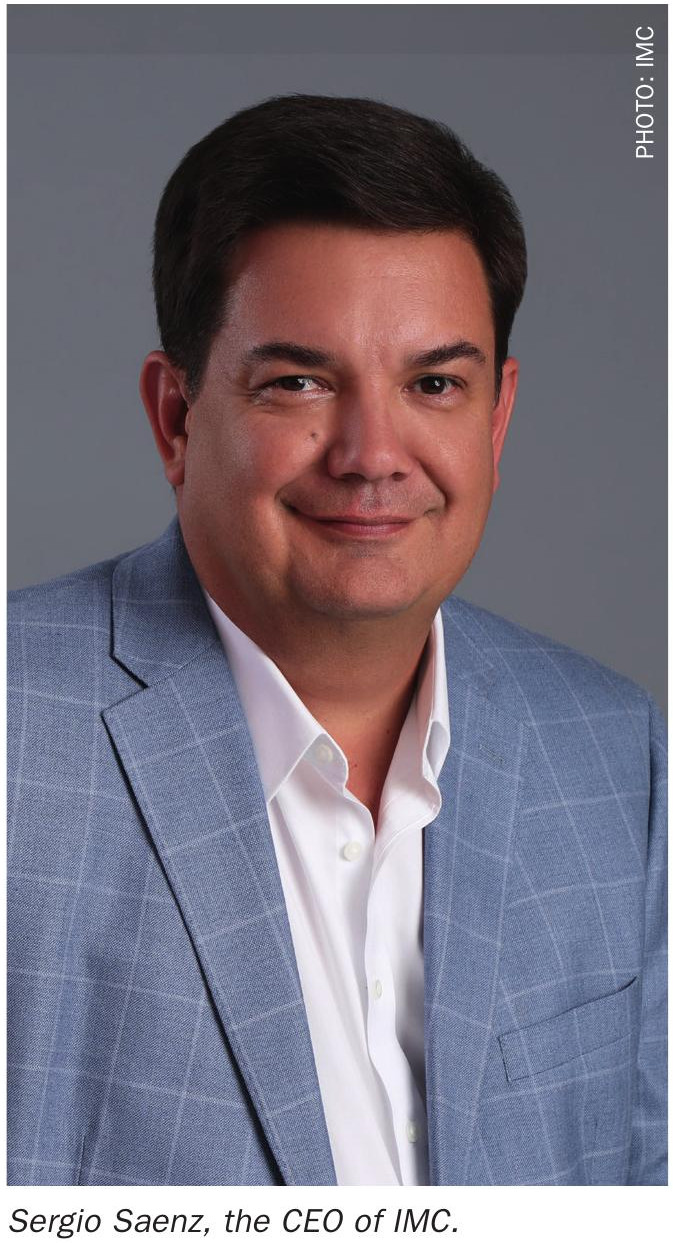
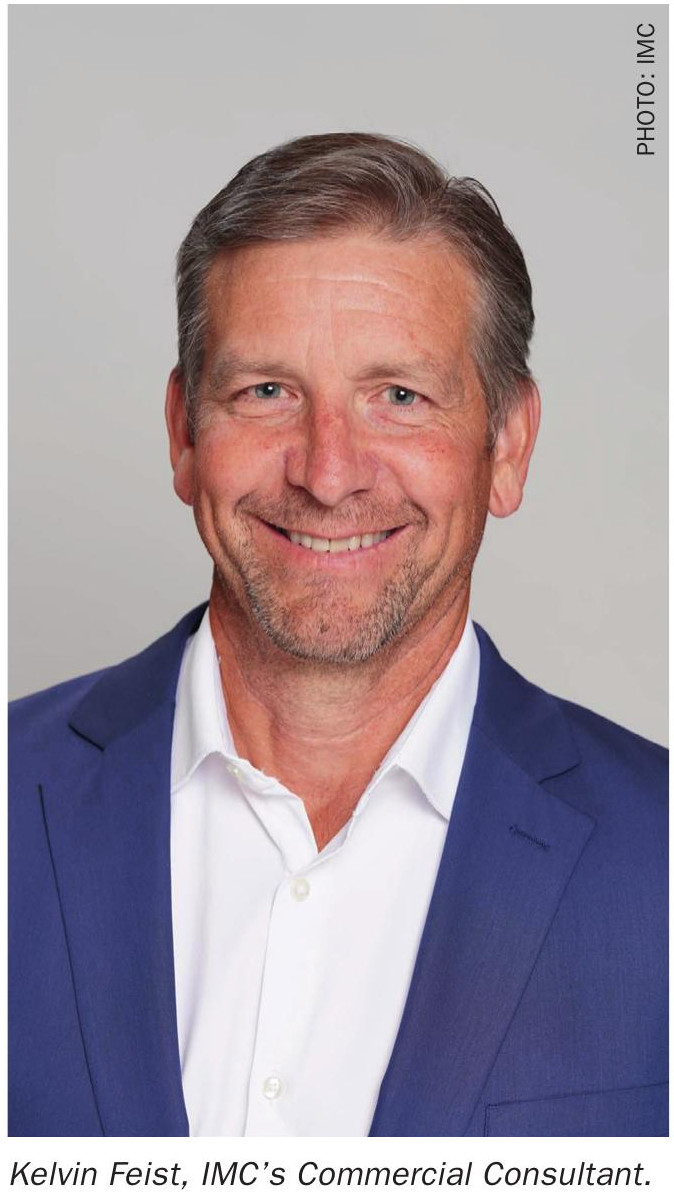
International Minerals Carlsbad (IMC) officially acquired the langbeinite (SOPMg) mining operation at Carlsbad, New Mexico, from Mosaic on 1st May. In an excusive interview, Sergio Saenz, the CEO of IMC, and Kelvin Feist, the company’s Commercial Consultant, talk to Fertilizer International about their ambitions for the business ahead of Southwestern Fertilizer Conference (SWFC) in mid-July.
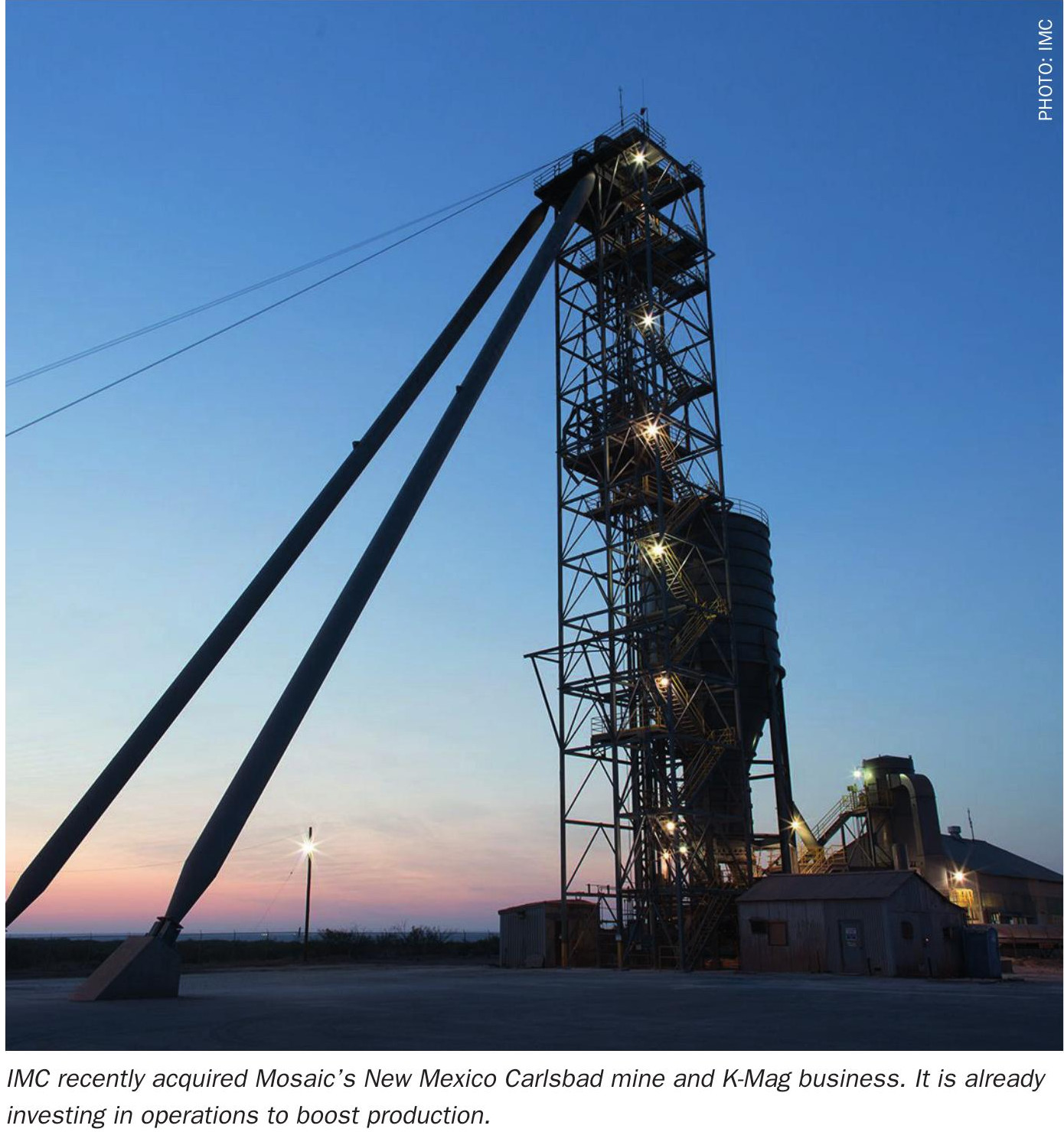
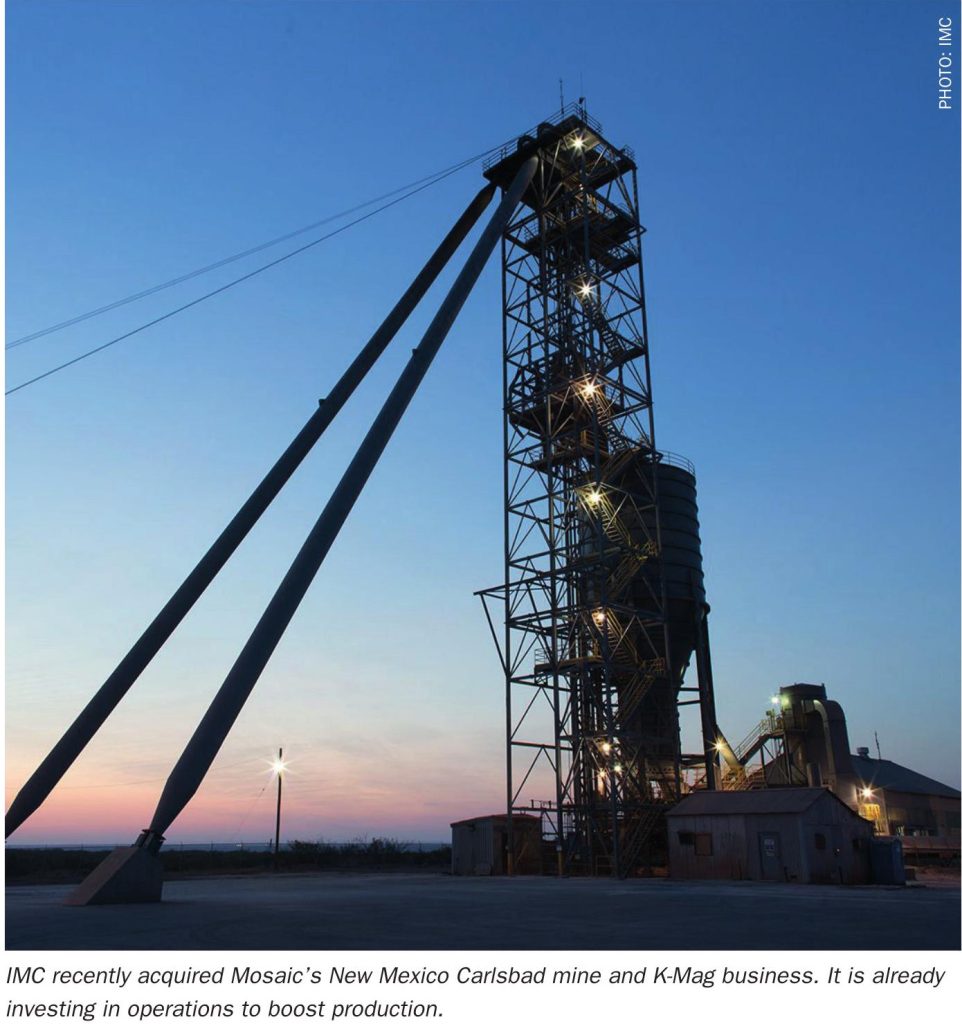
International Minerals Carlsbad (IMC) recently completed the purchase of Mosaic Potash Carlsbad, Inc., from The Mosaic Company for $30 million (Fertilizer International 530, p8). The transaction transferred the ownership of Mosaic’s New Mexico resources, including potash, salt, water and langbeinite (SOPMg), which is sold as K-Mag (fertilizer grade) and Dynamate (feed grade) brands.
SOPMg is a specialty potash product and, alongside other potassium magnesium fertilizers, accounts for around 4% of potash production and consumption globally (K2O basis). Historically, langbeinite has offered US growers a more affordable low-chloride specialty potash option compared to premium priced potassium sulphate (SOP). More recently, it has become increasingly favoured due to tighter SOP availability in the US market (Fertilizer International 530, p56).
Potash extraction in the Carlsbad region dates back more than 100 years. Evaporite layers in the Salado Formation of the Delaware Basin – the western subdivision of the greater Permian Basin – have been mined near Carlsbad, New Mexico since 1925. Active and historic potash extraction is concentrated in the Carlsbad Potash District (also known as the Carlsbad Basin). This spans Eddy and Lea Counties in southeastern New Mexico and is one of the largest domestic potash reserves in the United States.
The Carlsbad mine initially became operative in 1940 under the Union Potash and Chemical Corporation. In 1941, Union Potash merged with International Agricultural Corporation – a company founded in 1909 – to become the International Minerals and Chemicals Corporation. Potash production greatly expanded during the mine’s early years to meet the record demand created by the suspension of German potash imports during the second world war.
In late May, Fertilizer International sat down with Sergio Saenz, the CEO of IMC, and Kelvin Feist, the company’s Commercial Consultant, to discuss IMC’s acquisition of Mosaic Potash Carlsbad and their ambitious plans to invest in the business, restore production and further develop the market for SOPMg.
“If we want to talk market reputation for a moment, both K-Mag and Dynamate have tremendous name recognition, domestically in the US and more broadly internationally. Customers know and see the value in the product.”
An attractive asset and a knowledgeable team
How did IMC come into being and what was the attraction of Mosaic Potash Carlsbad, its assets and associated brands to the company?
Kelvin: “It was Sergio who found out about the opportunity in August 2024. He then called me as I’ve sold the SOPMg product previously for a competitor [Intrepid Potash] and was familiar with the possibilities for K-Mag and Dynamate.
“We just needed to learn more about the asset and why Mosaic were selling it. As we dug deeper, we found that Mosaic had a strategy to divest a number of non-core assets. Their plan was to focus on the potash business in Saskatchewan and phosphate business in Florida.
“SOPMg is a specialty product so it takes a different approach to market, it is different than a commodity like muriate of potash. It needs more TLC, more agronomics to be successful with this product. Mosaic also reduced capital spending at the Carlsbad mine. The reduced capital decreased production volumes. With a mine, it’s very capital intensive and that really impacts the profitability of the business.
“If we want to talk market reputation for a moment, both K-Mag and Dynamate have tremendous name recognition, domestically in the US and more broadly internationally. Customers know and see the value in the product. The products are not limited to the US. We do business in many countries with a focus in Canada and in the Latin American countries – all those markets are very critical and important for different reasons.
“Why we knew this would be a good opportunity for us was that we had assembled a leadership team who were very knowledgeable about the asset: our CEO Sergio knew the area and had been doing business there for a long time; our chief operating officer Don Purvis managed this plant for many years and understood langbeinite production; I have been involved in the ag business for 36 years and understood the commercial side of the business; and then there was John Tatum. vice president of finance, who’s a deal maker and financial individual. Between the four of us, we really felt very comfortable going in and understanding what is possible at this site.
“The deal was complex. A number of companies we engaged to support our bid were telling us it was one of the most complicated deals they’ve ever made. The purchase included a large number of parcels of land – all of them coming with different levels of environmental responsibility.”
Sergio highlights the fact that the deal, while complicated, delivers a lot of value: “Mosaic have acquired so many companies over time that not everything is in the correct name – and there’s enormous water rights [too].”
Kelvin: “While our focus is specialty potash, we see other items like the water rights and salt assets as potential areas for further development. The Laguna Grande, for example, is roughly a 6,000-acre lake. Salt and potash has been pumped into that lake since the 1940s. So there’s value there if we can figure how to utilise it.”
“In entrepreneurship, you need good communication to be successful and you need good employee engagement. Our employees feel that. They see us supporting the community, our workers and they see us supporting the business by putting money back into the operation.”
Prioritising safety and investing in people, community and production
What will IMC do differently compared to Mosaic? – it’s already becoming clear that the company is developing a distinct mission statement and future vision for the business built on a set of core values.
Kelvin: “There are two core things that we need to see: we need everyone working safely every day and we need to get our production back to where it used to be. Those are the two things that we see as important metrics.
“To start with, safety is the cornerstone to the success of the operation. We have to have that. Employees need to come home safely to their families every night. That’s such an important priority for everyone on the team.
“There are a number of other priorities. Specialty potash was no longer a critical asset for Mosaic. We felt like our ownership and focus on a single mine would be more supportive to this business. We have a single focus. We haven’t fleshed out all the pieces of what we want to see as our mission and a vision – but I think there’s humility, integrity and a success-oriented approach to all things. In entrepreneurship, you need good communication to be successful and you need good employee engagement.
“In the past, the mine was producing over 700,000 tons annually, while last year it only did less than 350,000 tons. Getting safe, quality tons into the warehouse – that’s what we need to focus on.”
“All those things, if you bundle them together, are what makes a successful team. Our employees feel that. They see us supporting the community, our workers, and they see us supporting the business by putting money back into the operation.”
Sergio adds: “Some employees are from families that have worked here since the 1940s – there’s a lot of that. Back in the day they used to be called ‘Internationalites’ when it was International Minerals and Chemical Corporation. There’s a lot of history that goes way back!”
Kelvin chimes in: “We’re not taking this generational asset lightly as an employer. This basin is a key employment location and people want to be here and work at this mine.”
Initial production investment of $8 million
What are IMC’s plans for improving the profitability of the Carlsbad mine and production plant and increasing output?
Kelvin: “The Carlsbad mine used to extract both muriate of potash and langbeinite (K-Mag). Today, our single focus is langbeinite. The reason being is that the sylvite seam isn’t as robust as in other deposits like Canada – so we wouldn’t be a low-cost producer. But, if you look at langbeinite, this is the only basin where there’s a commercial grade of langbeinite to harvest. So that’s where we’re putting our effort and our energy.”
Sergio: “In the past, as recent as three to four years ago, the mine was producing over 700,000 tons annually, while last year Mosaic only produced less than 350,000 tons. So, you know, we need to double the production and focus on the safety to get those tons. Getting safe, quality tons into the warehouse is what we need to focus on.”
Kelvin agrees: “I look at it as a single opportunity. We’re phasing in some prudent capital expenditure – that’s important. We’re trying to bring back plant reliability and believe that spending on prudent capital items will allow us to do that.
“We talk about investing in both the employee and the equipment – those are always the two pieces that can very much either reduce or increase production. We really believe that, by putting the money in the right places, we can get back to our goal of 700,000 tons [per annum] over the next couple of years.”
Sergio adds: “We’ve committed to a new, $8 million miner [underground continuous mining machine] that we’re hoping will improve our reliability. The previous owner hasn’t really invested much capital, so the miners are pretty old. We need to get back to reliability with new innovations that can produce additional tons. We’re looking at innovating into continuous haulage – where you put a mobile conveyor that goes directly from the miner to the main conveyor.
“After the miner, the ore is put on a conveyor, we bring it up through a shaft, and the material goes into a crusher. We then use heavy media separation to separate out some of the sodium chloride and then we do some washing. There are some proprietary processes to get to that point.”
“There are three ingredients in K-Mag and Dynamate: potassium, magnesium, and sulphate sulphur. The product contains 22% potash, 22% sulphate and 11% magnesium. This matches the needs of many crops throughout their life cycle.”
A range of different langbeinite products are then produced from the ore, as Kelvin explains: “After that, you’re basically screening materials and separating them. The larger granular K-Mag product is screened off from the other materials and goes directly to the warehouse. We upgrade the smaller grade material into a premium K-Mag. We put it through the mill, separating out any of the salts attached to it, and then into a drum granulator, which produces a rounder and more appealing blendable grade product for customers.
“Dynamate is our feed product. It comes from the finest material that we harvest. The product qualifies for safe food and safe feed status, as there are no additives or coatings applied.”
A low-chloride, multi-nutrient product with broad market appeal
Moving downstream, how would you describe the SOPM market – in terms of sales geography, key crop types and the product’s unique benefits and selling points?
Kelvin: “Firstly, on balanced nutrition, there are three ingredients within K-Mag and Dynamate – potassium, magnesium, and sulphate sulphur. The product contains 22% potash, 22% sulphate and 11% magnesium. This matches the needs of many crops throughout their life cycle.
“Secondly, for a lot of our customers, K-Mag is the preferred product for crops that have any kind of chloride sensitivity: potatoes, avocados, sugar beets, coffee, fruit and nut trees, as well as tobacco, all perform better with lower chloride levels. K-Mag, as I’ve mentioned, has a very good reputation. The third-party studies show improved yields in most crops, even in crops that do not have chloride sensitivity.
“Thirdly, there’s magnesium deficiency across a pretty broad area of the US. Almost everywhere where there’s coarse, sandier soils, you’ll have a need for more potassium and magnesium. If you’re applying muriate of potash every year, you get a shortage or deficiency of magnesium showing up in crops. Growers like to use K-Mag on those soils to ensure that there’s balanced potassium and magnesium nutrition taken up by the crop.
“Kansas and Nebraska is a big area where all crops tend to see some magnesium deficiency. But, really, you can go across the middle south and into much of Florida. Those sandier soils will have soil tests that indicate a need for a K-Mag application. It’s a great fit in those geographies.
“Market wise, our real hope is to be a reliable supplier and grow the market back to where it used to be. As we develop and show our reliability, we think the market will naturally grow back to where it was a few years back – over one million tons of langbeinite in North America. By supplying a significant amount [700,000 tons], then going down to half of that amount, and then back up again, it’s really hard to convince our customers to keep this in their blends.
“Turning to Latin America, a lot of their crops have chloride sensitivity and magnesium deficiency, that’s a double benefit for us as sellers. There’s a very good fit for K-Mag into Brazil and all the South American markets. There are plenty of different soils there that benefit from our product – and there are plenty of different crops that match our nutritional offering of potassium, magnesium and sulphur.
“Globally, we know there are opportunities to apply our product to many other high value crops. Our intent is to explore those opportunities in the near future.”
“There’s a very good fit for K-Mag into Brazil and all the South American markets. A lot of their specialty crops have chloride sensitivity and magnesium deficiency, that’s a double benefit. There are plenty of different soils there that benefit from our product – and there are plenty of different crops that match our nutritional offering of potassium, magnesium and sulphur.”
Best-in-class sales built on trust
What is IMC’s commercial strategy for the new business?
Kelvin: “We’ve already talked about K-Mag and Dynamate having a great reputation in the industry. Building on that, I would say we knew the product is a success story, we just need to build a team around that to make it more successful.
“The nice thing with being able to start with a blank sheet of paper is that we can really add people who we think can fit perfectly into our new organisation and make a best-in-class sales and distribution team. What we’ve done is added a number of folks who have been in the industry for 30 plus years; on our team there is more than 150 years of combined fertilizer industry experience.
“We’ve all been in the agriculture industry a long time. We used to do million dollar deals with a handshake. There’s still a lot of relationship selling in this business, and we see that as a very important piece of the success of our product and our business. I think we’re going to continue with that approach. Even though there’s a lot of ways to automate things, we feel like B2B business in the fertilizer space still happens through relationships.
“We are beyond excited for this opportunity. This is a once-in-a-lifetime opportunity that we have to really take advantage of. It’s not going to be easy, obviously, but we think with the right approach we can make this business successful.”
“There are so many people that say, ‘I came back to agriculture because I like the people and the way the business is done,’ and I stand by that. That’s the reason I’ve never left and I have no plans of leaving, because it’s such a great business. People watch out for each other in this space.”
Investing for future generations
With Southwestern Fertilizer Conference (SWFC) coming up in July, what key messages will IMC be communicating to the industry about this exciting asset purchase?
Kelvin: “SWFC is celebrating its 100th anniversary in 2026. The mine also has an 80-year legacy and I see some parallels as successful things don’t happen by chance. These two entities certainly have endured a lot of different highs and lows. But it really comes down to having a successful plan and relying on key employees to ensure that the business has a vision.
“Our employees have this generational asset. They can look back and see their parents and their grandparents [have worked] at this plant – and maybe their daughters or sons work there as well. That’s pretty cool. We fully intend to put money back in to make this mine an asset for future generations. We really have a kind of a long-term and family-oriented vision – a vision that speaks to the people that are already here and to people that will come to our facility to work in future.”
Sergio: “We are beyond excited for this opportunity – words can’t express it. Kelvin and I feel the same way. This is a once-in-a-lifetime opportunity that we have to really take advantage of. It’s not going to be easy, obviously, but we think with the right approach we can make this business successful.
“You know, I was thinking the other day about how many people our product touches. Our product goes into the food that millions of people eat. I can’t even fathom it – it’s just mind-boggling!”