424 May-Jun 2026

Mosaic idles Brazilian phosphate plants in major restructure

Written by Natalie Noor-Drugan


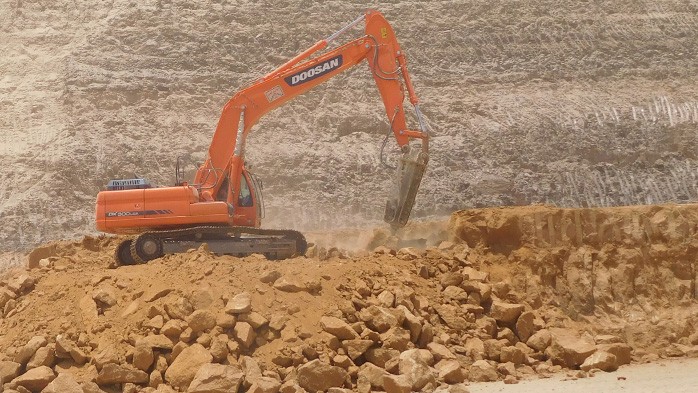
The Mosaic Company has announced the idling and demobilisation of its Araxá Mining and Chemical Complex in Brazil — and the pursuit of a sale of the Araxá assets — along with the idling of related mining activities at its Patrocínio Complex. The move is the latest step in a programme of non-core asset disposals designed to strengthen Mosaic’s core fertilizer business

At Patrocínio, the company is simultaneously pressing ahead with the development of a potentially significant niobium opportunity. The technical assessment work for this, including sampling and analysis, is nearing completion.
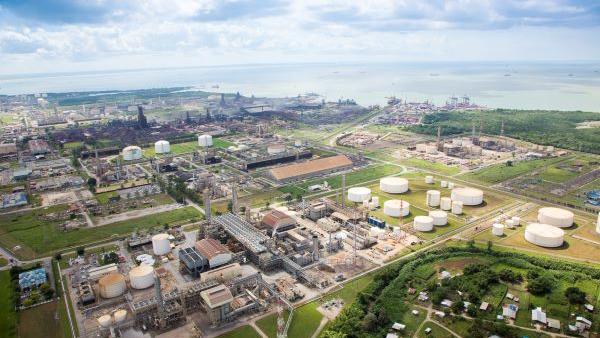
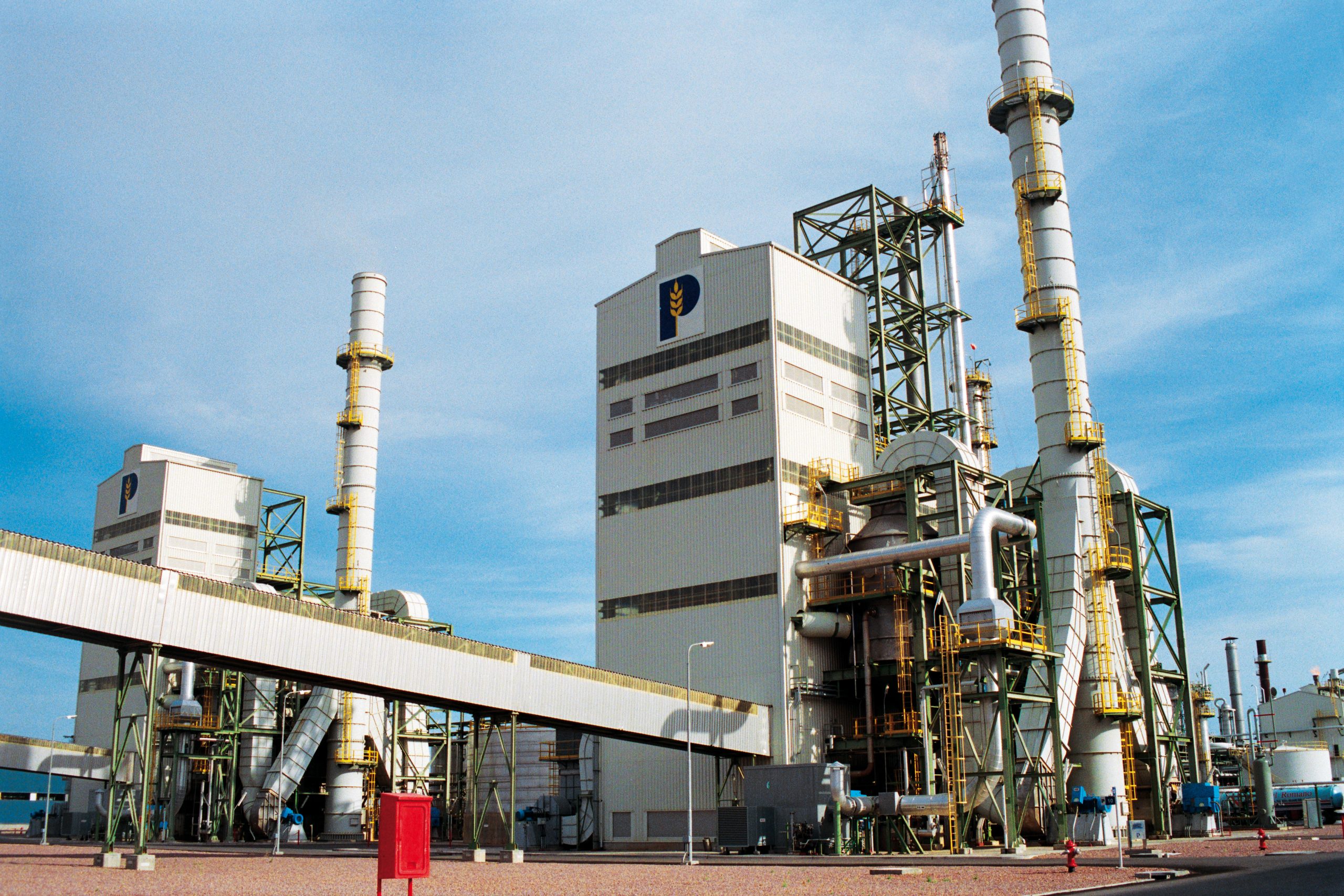
The shuttering of the two Brazilian sites, announced on 8 April, will reduce annual phosphate production at Mosaic Fertilizantes by approximately one million tonnes.

The financial backdrop

The strategic rationale is clear from Mosaic’s full year 2025 results released on 24 February 2026. While the company posted full year earnings (adjusted EBITDA) of $2.4 billion — up 10% on 2024 — its Brazilian operations came under severe cost pressures in the year’s final quarter. Sulphur price benchmarks surged above $500/t towards the end 2025, with sulphur consumption contributing an average of $306/t to the cost of goods sold by Mosaic in the fourth quarter.

Mosaic estimates that every $10/t increase in sulphur costs reduces quarterly earnings (EBITDA) by approximately $10 million. The company had already temporarily curtailed SSP production at its Fospar joint venture and Araxá site in Brazil in response to soaring sulphur costs — production units that together account for approximately 30% of Mosaic’s production in Brazil.

The company’s latest announcement makes Araxá’s curtailment permanent.

The write-down

Mosaic expects to record a pre-tax book impact of $350-400 million in Q1 2026. This will include $275-300 million for asset impairments and write-offs, with the remainder covering severance costs, contract terminations, and other idling costs. Offsetting this, annual capital expenditure savings of $20-30 million and operating cost reductions of $70-80 million per year are anticipated, following the completion of a potential sale.

Part of a bigger pattern — but not an exit from fertilisers

The 8 April 2026 announcement is the latest in a series of non-core asset disposals stretching back to early 2025, as Mosaic systematically sheds assets that require capital it believes is better deployed elsewhere:

13 January 2025: Agreement to sell the Patos de Minas phosphate mine to Fosfatados Centro for $125 million, completing on 6 October 2025.
13 August 2025: Agreement to sell the Taquari-Vassouras potash mine in Brazil to VL Mineração for up to $27 million, completing 4 November 2025.
22 December 2025: Agreement to sell its Carlsbad, New Mexico SOPM business — including the K-Mag and Dynamate brands — to newly formed International Minerals Carlsbad for $30 million.

Those three completed transactions are expected to yield approximately $230 million in total consideration, reduce asset retirement obligations by $60 million, and deliver meaningful annual capital expenditure avoidance. The Araxá idling and potential sale, if completed, would add a further $20-30 million in annual capex savings and $70-80 million in operating cost reductions.

Critically, the freed capital is being reinvested into the core business, not away from it. Mosaic is targeting phosphate production of seven million tonnes or above in 2026 — up from 6.3 million tonnes in 2024 — supported by investments in asset reliability and infrastructure. The company’s potash production of 8.8 million tonnes in 2025 marked its highest output since 2019, with the Esterhazy mine delivering its strongest finished product performance since 2022 and Belle Plaine setting a new production record, according to Mosaic’s latest annual report.

New revenue streams alongside the core

Mosaic is investing in adjacent, higher-value businesses alongside its fertilizer operations. Mosaic Biosciences — its biological products business unit — more than doubled net sales to $68 million in 2025 and is targeting a further doubling in 2026. The company is also partnering with Rainbow Rare Earths to extract high-value materials such as neodymium and praseodymium from phosphogypsum, a byproduct of its phosphate fertilizer production, targeting commercial output by 2030.

The Patrocínio niobium development fits squarely within this strategy. Niobium is a high-value transition metal used primarily as an additive in high-strength steel, where a 0.03–0.05% addition can increase steel strength by more than 30%, according to Stanford Advanced Materials. It is also critical in jet engine superalloys, medical implants, and mobile phone components, the Tantalum-Niobium International Study Center notes. Brazil is by far the world’s dominant supplier — according to the US Geological Survey, the country accounts for approximately 90% of global production. The leading producer is CBMM — Companhia Brasileira de Metalurgia e Mineração — which, according to its own corporate data, holds more than 70% of the world’s known niobium reserves and operates its flagship mine in Araxá, in the same state of Minas Gerais as Mosaic’s Patrocínio complex.

President and CEO Bruce Bodine said: “This decision reflects Mosaic’s continued focus on discipline around capital allocation and returns. We are grateful for our employees at both locations — their years of dedication to safety and contributions to helping the world grow the food it needs have been critical to our success.”

Latest in Latin America

Chile’s lawmakers to investigate Codelco

Members of the lower house in Chile’s Congress have unanimously approved creation of a special investigative commission to examine a series of alleged irregularities at state-owned copper producer Codelco. The issues are: overestimation of production by almost 27,000 t last year; a multimillion-dollar renovation of the company’s headquarters in Santiago; and, maybe, the collapse of a chimney at Potrerillos copper smelter in the Atacama region of northern Chile. The structural failure has forced a production suspension.

Cartagena refinery enters solid sulphur market

Cartagena Refinery has entered the solid sulphur market, diversifying its petrochemical portfolio, according to a company statement on 21 May. The first shipment of 260 tonnes has already been dispatched to the domestic market. This new venture is enabled by a recently commissioned pelletising plant that converts liquid sulphur into solid pellets, with a production capacity of 1,000 t/d. The refinery is targeting Colombia’s fertilizer, chemical, and mining industries, and is also planning to export to international markets, including Brazil, Peru, and countries in Africa.

Petrobras to resume construction at Tres Lagoas

Petrobras PBR has said that it plans to restart construction of the long-delayed UFN-III fertilizer plant in Três Lagoas, Mato Grosso do Sul, with work at the site expected to resume by September. UFN-III, with a planned capacity of 2,200 t/d of ammonia and 3,600 t/d of urea, was partially completed in the 2010s, but the site has been inactive and unfinished since 2015. Petrobras now intends to complete the project with an estimated investment of $1 billion, targeting commercial operations by 2029. The site was chosen as it was strategically positioned near several of Brazil’s largest agribusiness regions, including Mato Grosso, Mato Grosso do Sul, Goiás, Paraná and São Paulo.

Methanex to close Titan methanol plant

Methanex says that it has been unable to agree to a new natural gas contract for its 860,000 t/a Titan methanol plant in Trinidad and Tobago, and, as a result, will begin the process of indefinitely idling the facility. Titan’s existing natural gas contract expires in the third quarter of 2026. Methanex says that it will undertake a preservation process at the Titan plant to provide options for a future restart should conditions materially improve. The neighbouring 1/7 million t/a Atlas methanol plant, a joint venture in which Methanex holds a 63.1% economic interest, remains indefinitely idled in a preserved state.