Africa
11 November 2026
Fertilizers on the agenda at COP31 in Turkey
Written by Beatrice Bedeschi
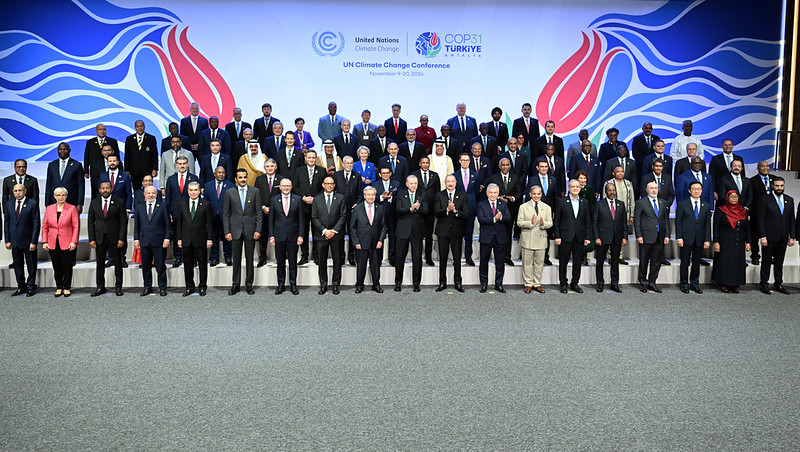
Fertilizers and food security are among the topics being discussed at the COP31 conference which opened this week in Turkey.
The climate change conference organised by the United Nations (UN) is taking place in Antalya between 9 and 20 November 2026.
During the conference, the International Fertilizer Association (IFA) will be hosting the event “Delivering the Green Transition for Food Security: From Climate Ambition to Farm-Level Action” on 13 November, focused on advancing advance policies and investment that help reduce emissions from fertilizer production and use while keeping fertilizers affordable and accessible to farmers.
“At COP31, IFA’s priority is to connect climate ambition with the practical realities of producing fertilizers and growing food,” an IFA spokesperson told BC Insight.
“That means supporting investment in lower-emission production and helping farmers improve nutrient-use efficiency.”
“Policies need to support both: reducing emissions while keeping the nutrients essential to food production affordable and accessible,” he added.
The agenda also includes panel discussions on strengthening food systems resilience amid the extreme weather events, fertilizer price spikes, conflicts and trade disruptions of the past months, with developing countries most at risk of food shortages as a result.
Low-emission ammonia fertilizers
Discussions around fertilizers are also expected to build on the Low-Emission Ammonia Fertilizer (LEAF) initiative launched last year at COP30 in Belem, aimed at accelerating the shift away from fossil-based fertilizers towards low-emission alternatives.
The initiative was backed by a number of organisations including IFA, the Hydrogen Council and the Ammonia Energy Association.
Conventional ammonia-based fertilizer production accounts for 510 Mt of greenhouse gas emissions globally, a footprint comparable to Brazil’s or Germany’s total annual emissions, according to the Hydrogen Council.
Reducing these emissions while maintaining essential nutrient supply and safeguarding food security and affordability “requires a comprehensive, industry-wide effort underpinned by strong public-private collaboration,” it said.