Europe

EU backs fertilizer plants amid gas squeeze

Written by Natalie Noor-Drugan


Brussels has put Europe’s gas‑exposed fertilizer industry at the centre of its new Fertilizer Action Plan, warning that high energy costs and plant closures threaten the region’s nitrogen capacity and long‑term food security. The Commission says natural gas accounts for around 70–80% of nitrogen fertilizer production costs in Europe and that plants representing about 9% of EU ammonia capacity have already shut permanently, with more assets lying idle.
Gas exposure and plant closures

EU officials frame fertilizer as a strategic sector that cannot simply be offshored, even as imports from lower‑cost regions remain attractive on price. The Action Plan links the risk of further nitrogen plant closures to sustained high gas prices, volatile ammonia and urea markets, and tougher climate rules, signalling that Brussels wants to keep a core domestic base in operation rather than rely solely on imports. That points to more focus on energy‑cost relief and targeted, temporary state‑aid options for energy‑intensive fertilizer producers, tied to efficiency gains and decarbonisation.

Tariff moves and trade levers

On trade, the Commission is trying to walk a line between easing input costs and maintaining a level playing field for EU producers. It has proposed one‑year duty‑free tariff quotas for key nitrogen products such as ammonia and urea from suppliers other than Russia and Belarus, aiming to open up alternative supply and shave millions of euros off import bills while existing anti‑dumping measures remain in place. Brussels is also keeping the door open to further calibrated steps if market conditions deteriorate, including expanding the list of fertilizer products that benefit from temporary tariff suspensions or adjusting measures in response to new supply shocks.

Decarbonisation funding and low‑carbon ammonia

For plant developers and existing producers, the Action Plan stresses that carbon pricing and industrial policy are now inseparable from fertilizer strategy. Brussels notes that fertilizer manufacture, especially nitrogen fixation, is a material industrial emitter and says the upcoming review of the EU carbon market will look at tying any extra flexibility for heavy industry to increased “decarbonised home‑grown production” and support for bio‑based, organic and low‑carbon fertilizers. Projects in low‑carbon ammonia, green hydrogen‑based pathways and bio‑based fertilizer production are flagged as eligible for EU innovation and decarbonisation funds, with pilots planned on “more modern and low‑carbon ammonia and bio‑based fertilizer pathways.”

Industry–farmer partnership

Alongside funding and regulation, the Commission is promising closer dialogue with the sector via an EU‑level fertilizer value‑chain partnership that will bring together producers, farmers and Member States. The goal is to identify where policy can help address gas and raw‑material bottlenecks, keep viable capacity running in Europe and coordinate the shift into lower‑carbon products without undermining farm competitiveness. As President Ursula von der Leyen put it, the Action Plan is about “investing in a stronger European fertilizer industry” and Commissioner Christophe Hansen underlined that “food security starts with fertilizer security” and that Europe must “produce more and depend less on others for the nutrients that sustain our agriculture.”

Data, dialogue and stockpiles

For the fertilizer trade, the Action Plan also promises more market structure via an upgraded EU fertilizer market observatory with better data on prices, trade, capacity and stocks. The Commission says it will examine options such as minimum or seasonal stock requirements and, if needed, joint procurement of critical fertilizers and inputs as part of wider EU crisis‑preparedness work, while stressing that any such steps must avoid distorting prices or harming supply to import‑dependent developing countries.

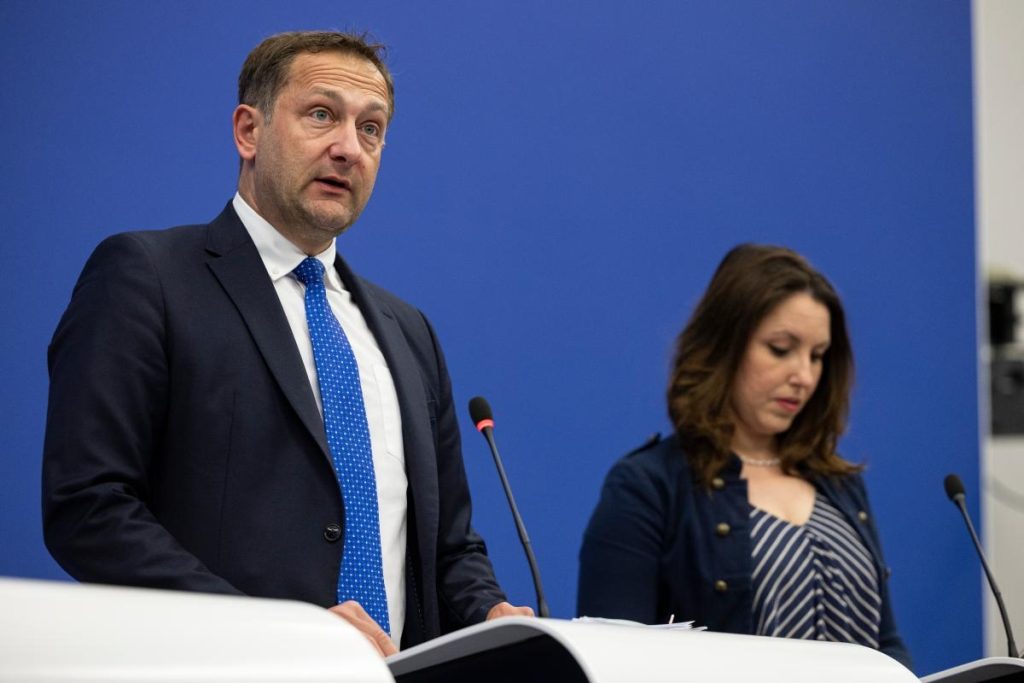
Image: Christophe Hansen, European Commissioner for Agriculture and Food and Arianna Podestà, Deputy Chief Spokesperson of the European Commission present the Fertilizer Action Plan at a press conference in Brussels.© European Union, 2026 – Source: EC Audiovisual Service / Roméo Boetzle.

Latest in Europe

Cherepovets hit by drone strikes; phosphate impact unclear

Multiple drone strikes have hit the industrial city of Cherepovets in Russia's Vologda Oblast region, according to Russian news agency TASS. The area contains PhosAgro's largest phosphate fertilizer production site. Cherepovets has a production capacity of around 700,000 t/a NPK and around 814,000 t/year DAP/MAP, according to CRU data, making it the largest phosphate fertilizer production site across Europe and the CIS. The site also contains several sulphuric acid plants with a combined capacity of 4.5 million t/a, making it Russia's largest production hub for the acid. This entire volume is consumed domestically.