Nitrogen+Syngas 380 Nov-Dec 2022

30 November 2022
Market Outlook
Market Outlook

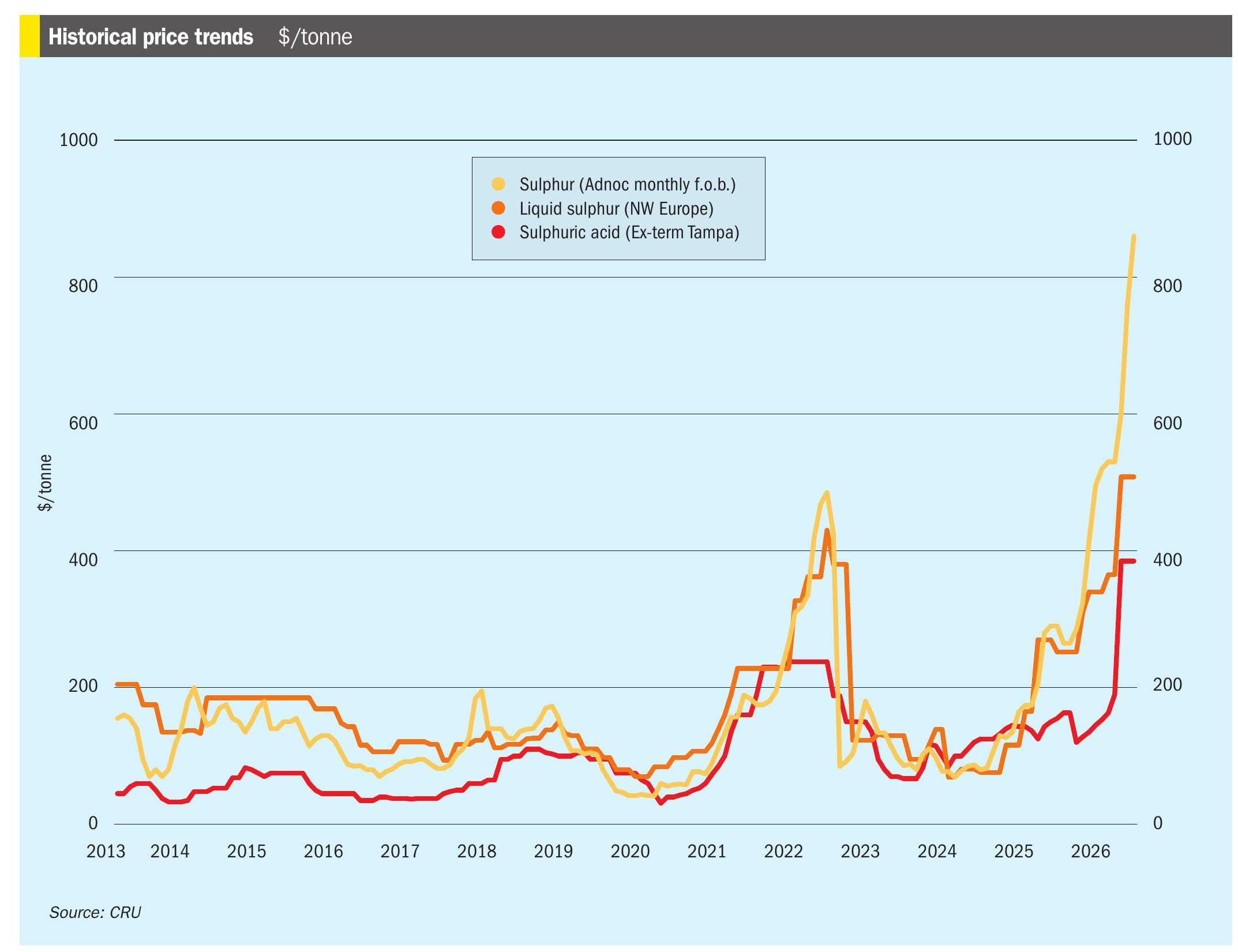
Historical price trends $/tonne
AMMONIA
- The ammonia market appears to be oversupplied as of the end of October 2022, with a ready availability of spot cargoes. Coupled with increased availability from European producers due to an easing of gas prices, this seemed to indicate bearish market sentiment for the immediate future.
- Buying is also traditionally lower over the winter period and a time of falling ammonia prices, though this year much will hinge upon winter weather across the northern hemisphere and consequent gas demand in Western Europe and North America. A cold snap could see gas prices head back towards their stratospheric mid-year levels and a consequent shutdown in European production.
- A deal for the export of Russia ammonia via Odessa remains under discussion at the UN, but negotiations are difficult. While Russia is still exporting some ammonia, deliveries to major consumers like India and Morocco are down by about 50% year on year.
- At the moment, prices remain relatively stable, but there are some signs of falling prices in most markets.
UREA
- Urea prices have been falling on weak demand. In the US, NOLA prices fell by about $60-70/t in September to around $600-635/t. The US saw little impact on demand from Hurricane Ian but historically low water levels on the Mississippi river after a prolonged period of drought were affecting barge traffic and the ability to move cargoes upriver to consumers.
- Indian c.fr prices fell from around $670/t in September to $650/t c.fr in October, and offer rates at or below $600/t in most major supplying nations. More Indian buying is expected before the end of the year, and it is also believed that Brazil still has to cover some demand and should be back in the market over the coming weeks.
- CF Industries says that it expects prices to rise again going into winter with tight supply and continuing uncertainty in the ammonia market.
METHANOL
- Contract methanol prices have stabilised in most major markets in 3Q 2022. Methanex’s reference prices have been a rollover in North America for both September and October at $585/t. European contract prices were stable at e510/t, and Asian contract prices at $410/t. However, high gas prices in Europe in September saw spot methanol rates reach $570/t, with around1 /3 of the continent’s methanol capacity shut down, inventories low and rising demand in derivative markets.
- 4Q pricing is seeing stable demand and firmer prices according to Methanex. China in particular is seeing price rises due to low inventories at Chinese ports. Chinese supply from Iran was curtailed due to both planned and unplanned shutdowns in the country.
- In spite of a lull in European gas prices due to mild weather in October, with winter approaching and major Russian pipelines still shut down, the prospects for methanol pricing appear to be higher going into the end of 2022 and start of 2023.