Sulphur 426 Sep-Oct 2026
18 September 2026
Market Outlook
Market Outlook
SULPHUR
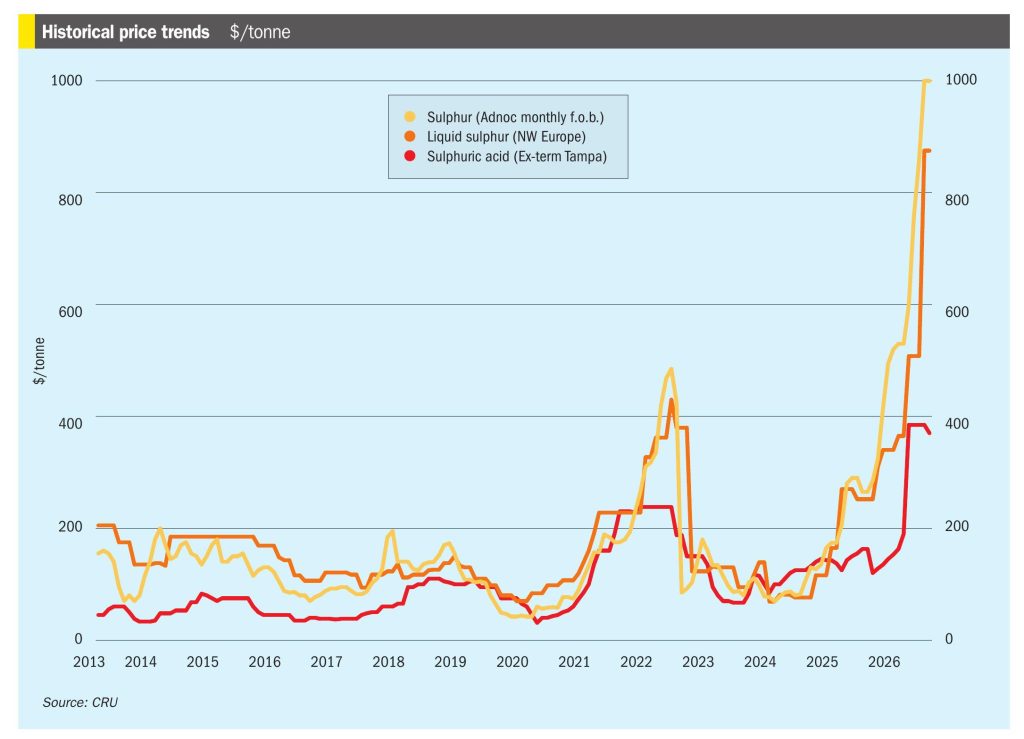
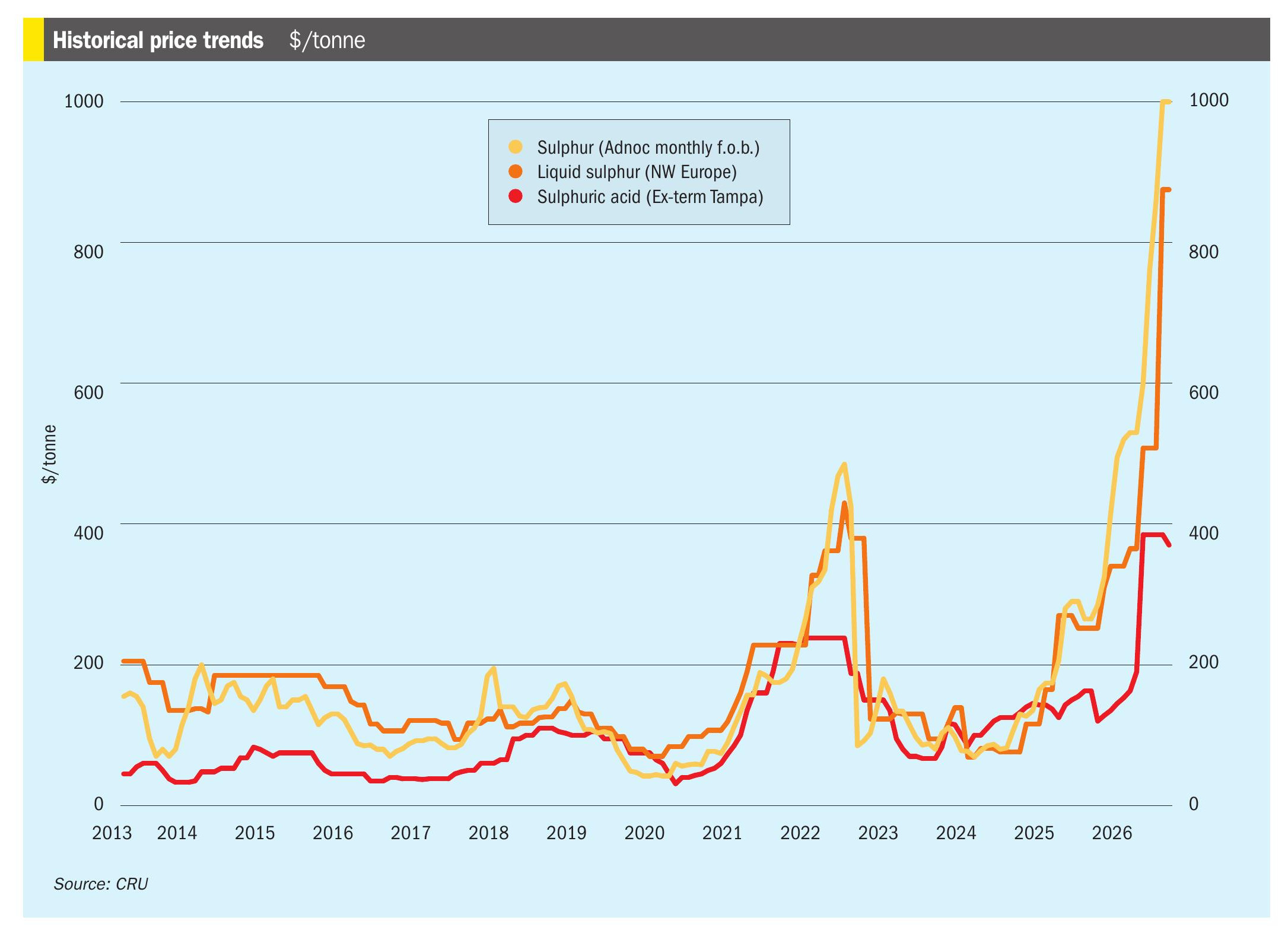
• The global sulphur market outlook is flat to soft in the near term: most benchmarks were unchanged, with declines in the Mediterranean and Chinese port market reflecting limited spot liquidity and cautious purchasing.
• Weak phosphate-sector economics are restraining demand across key import markets. Brazilian producers are curbing output, Chinese buyers are purchasing hand-to-mouth amid rising inventories, and Indonesian nickel-sector weakness is limiting consumption.
• Middle East export disruption offers a potential price-supporting risk, with substantial cargo volumes delayed around the Strait of Hormuz. However, subdued import demand is currently preventing this from translating into broad price gains.
• Any near-term upside is likely to depend on demand catalysts, notably China’s seasonal phosphate buying. However, the market outlook may be soft if there is an increase in supply from Kazakhstan, easing recent tightness.
• The market is likely to remain under downward pressure in the near term. Supply remains difficult to move and prompt alternatives are limited, but buyers are reducing consumption and delaying purchases rather than paying current prices.
SULPHURIC ACID
• The short-term outlook is for continued softness, though the rapid price erosion of recent weeks is likely to moderate. All eyes will be on the Chilean market heading into Q4 to see how much demand is left to be booked.
• Adding to the bearish sentiment, Argentina’s Bunge tender was awarded in the mid-$300/t CFR range for its October requirement. Availability for September loading from Europe is understood to be more limited, which is providing some support for prompt prices. Despite this, the market consensus is that the trend is firmly downwards, with buyers now using the forward indications and the Bunge result to push for lower prices on any new business.
• China’s sulphuric acid export ban has sharply reduced acid availability. Importing markets have cut purchases in response to the limited supply. A resumption of sulphur trade flows in 2026 Q4 could provide some acid importers with an alternative source of raw material and further reduce support to prices. However, this remains uncertain amid renewed conflict in the Middle East.
• The US market remains stable and focused on contract supply, with imports down only 3% year on year in January-July. However, spot activity remains limited, while OCP’s continued absence from the acid market has removed a key potential source of demand for export tonnes.
• Increased sulphur availability in 2026 Q4 may provide some acid buyers with more options, but longer term, sulphur prices are expected to remain higher, which will maintain acid prices at elevated levels. ■