
CRU Phosphates+ Potash 2026
We report on selected keynote and commercial presentations from CRU’s 2026 Phosphates+Potash Expoconference.


We report on selected keynote and commercial presentations from CRU’s 2026 Phosphates+Potash Expoconference.
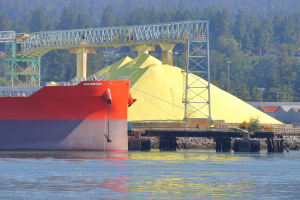
Policy decisions and geopolitical shocks are now the dominant drivers of sulphur and phosphate fertilizer markets, overriding more traditional seasonal fundamentals. The conflict in the Middle East, including the escalation around Iran, has tightened sulphur availability and lifted costs sharply, while China’s export restrictions continue to restrict global phosphate supply.

The Zambian government has introduced a new permit system to manage the export of sulphuric acid, which came into effect on 27 March, 2026, according to an announcement from the Ministry of Commerce, Trade and Industry. The move comes at a time of significant exceptionally high prices and sourcing challenges in the global sulphur market, adding another layer of tightness for regional consumers. The Ministry stated that the measure is designed to correct a "critical market imbalance" and ensure supply for the country's domestic industries. The system aims to safeguard local downstream sectors that rely on the acid, while still ensuring that the needs of the export market are met, it said.
It is two months on from our previous issue, and almost none of the news has been good from sulphur and downstream markets. Only three sulphur cargoes are confirmed to have transited the Strait of Hormuz since the US and Israeli strikes on Iran began, all loaded at Ruwais, with destinations in India, Tanzania and Morocco, carrying a total of 160,000 tonnes. It is believed that a couple of Iranian vessels with a total of 75,000 tonnes may also have left covertly. But in spite of some Middle Eastern sulphur making its way to Saudi Red Sea ports or Duqm on Oman’s Indian Ocean coast, around 700,000 tonnes is still trapped on ships stranded in the Gulf, and coupled with production cuts in the region, it is estimated that over 1.2 million tonnes has so far been removed from the market.
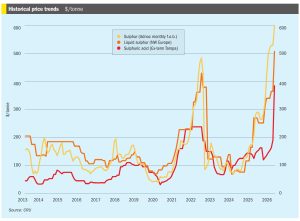
• Prices are expected to hold at historically high levels as long as the Strait of Hormuz remains effectively closed. If the situation persists, further price increases are likely, which will only intensify the affordability crisis for global consumers.
Russia has again extended its ban on the export of industrial sulphur, with the latest decree prolonging the restriction until 30 June 2026. The announcement was made via the government’s press service on 31 March. This decision is aimed at stabilising the supply of raw materials for the domestic market to support the production of phosphate-based fertilizers. The restriction covers the export of liquid, granulated, and lump sulphur.
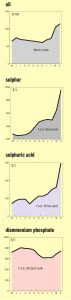
Sulphur continued to break historic records in most key international markets at the start of May as the scarcity of spot supply propelled prices higher, which triggered production cuts at some downstream markets, and increased costs in other industrial sectors. The effective blockade of the Strait of Hormuz, which halted the flow of Middle East supply, has forced desperate buyers to compete for the limited available spot cargoes, primarily from North America. Although fresh transactions were limited, export and delivered prices climbed higher, and market sentiment remained jittery. QatarEnergy hiked its sulphur price to $740/t f.o.b., a new record high for this contract since its inception in August 2013.
Turkey has prohibited exports of sulphur under GTP 2503 from 7 April through the second and third quarters of 2026, according to a 6 April communication from the Ministry of Commerce. The measure does not apply to customs declarations lodged before 7 April. The restriction followed a request from the Ministry of Agriculture and Forestry, which said sulphur prices had risen by 35-40% and that supply had tightened for fertilizer production, including AS, DAP and other compound fertilizers. The General Directorate of Exports will review any exceptional cases arising during implementation.
India is said to be considering a proposal to restrict sulphur exports after industry lobby groups raised concerns about soaring prices and disruption to supplies from the Gulf, according to local news reports. Export restrictions could add to upward pressure on global sulphur prices, as supplies from the Middle East are disrupted by the Iran war and with China also set to restrict sulphuric acid exports from next month. India exported 800,000 tonnes of sulphur in 2025.

Nitrogen markets, and urea in particular, have been impacted by a series of geopolitical shocks in recent years which have driven markets over and above normal market factors such as feedstock and shipping costs, crop prices etc.