Sulphur 425 Jul-Aug 2026
14 July 2026
Uncharted waters

“No-one has any clear idea of where markets and prices will go from here…”
The fragile ceasefire between the United States and Iran broke down at the start of July, just three weeks after the signing of the June memorandum of understanding, after Iran fired at several vessels who had failed to notify them of their transit of the Strait of Hormuz, and the US retaliated with a missile barrage. While the two month negotiation period it had specified to solve all of the outstanding issues between the two parties had always seemed over-ambitious, market participants had at least expected to have that grace period to arrange for new cargoes and tranship them through the Strait. Now that the ceasefire has ended early, markets are truly entering uncharted waters.
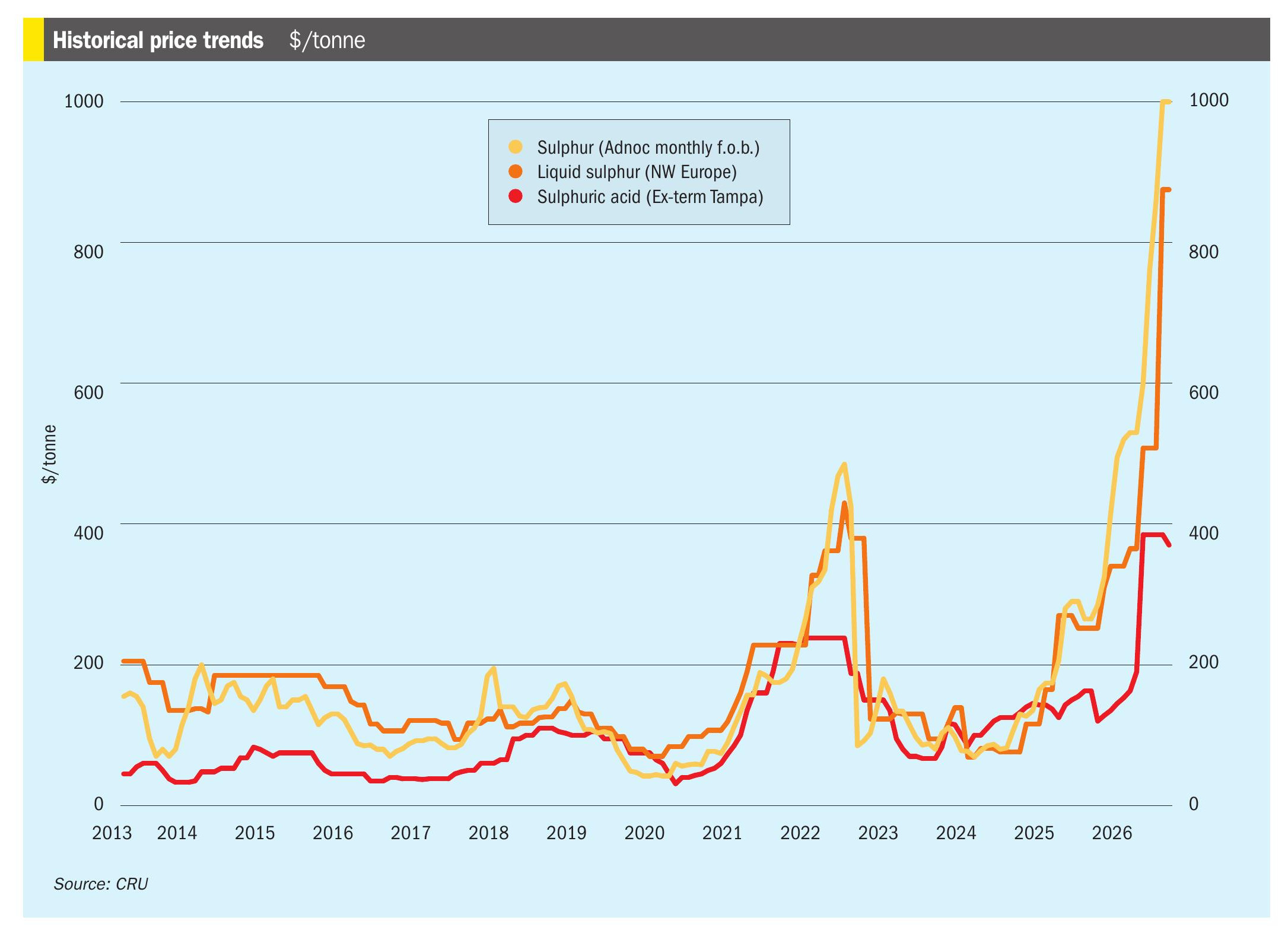
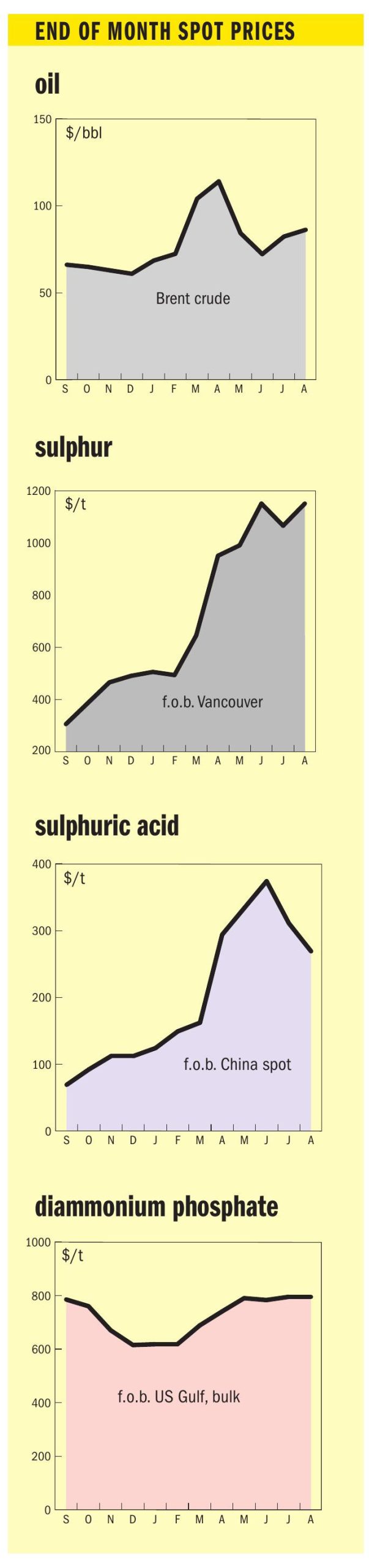
The three weeks of peace had been enough to get all of the remaining stuck vessels out of the Straits, and relieve some of the pressure on sulphur markets at least temporarily. Around 650,000 tonnes of sulphur left the Gulf in June and the first week of July – three times May’s figure but still only half of a ‘normal’ month. However, the new strikes mean that future shipments are very much in doubt, and no-one has any clear idea of where markets and prices will go from here. Spot sulphur export prices from the Middle East had already climbed from $515/t f.o.b. in early March to a record high of $1,215/t by mid-June, only to drop back by $150/t as the Strait opened briefly and demand destruction began to kill demand.
A further symptom of the latter was that on July 8th Mosaic announced additional phosphate production curtailments due to current sulphur costs and limited availability, with output cuts at its Bartow, Florida, and Faustina, Louisiana, plants, which already had reduced operating rates earlier this year, and the company will now also reduce production at its Riverview, Florida, and Uncle Sam, Louisiana, facilities. In Brazil, Mosaic is temporarily suspending blending operations at its Candeias and Catalao units, which have combined capacity of 2.5 million t/a, while reducing output at its Palmeirante and Sorriso plants. A gradual mothballing of its 1 million t/a Uberaba plant is planned starting in September. The company said that the restrictions will stay in place until sulphur supply and prices stabilise and Gulf shipping routes return to normal.
Elsewhere, Russia has extended its ban on sulphur exports until the end of the calendar year and Kazakhstan has likewise stopped exports except to Russia. Puguang in China has stopped offering sulphur prices; Chinese domestic producers are directing their supply to phosphate production, and there is no material available on the open market.
The shipments at the end of June and start of July have provided some breathing space for consumers like Indonesia, but sulphur and acid markets are increasingly in a situation where only those who can pay premium prices are likely to secure supply, unless there are existing long term supply contracts. Phosphate producers appear likely to be hardest hit, with potentially devastating long term consequences for fertilizer supply into next year.