Nitrogen+Syngas 382 Mar-Apr 2023

31 March 2023
Market Outlook
Market Outlook

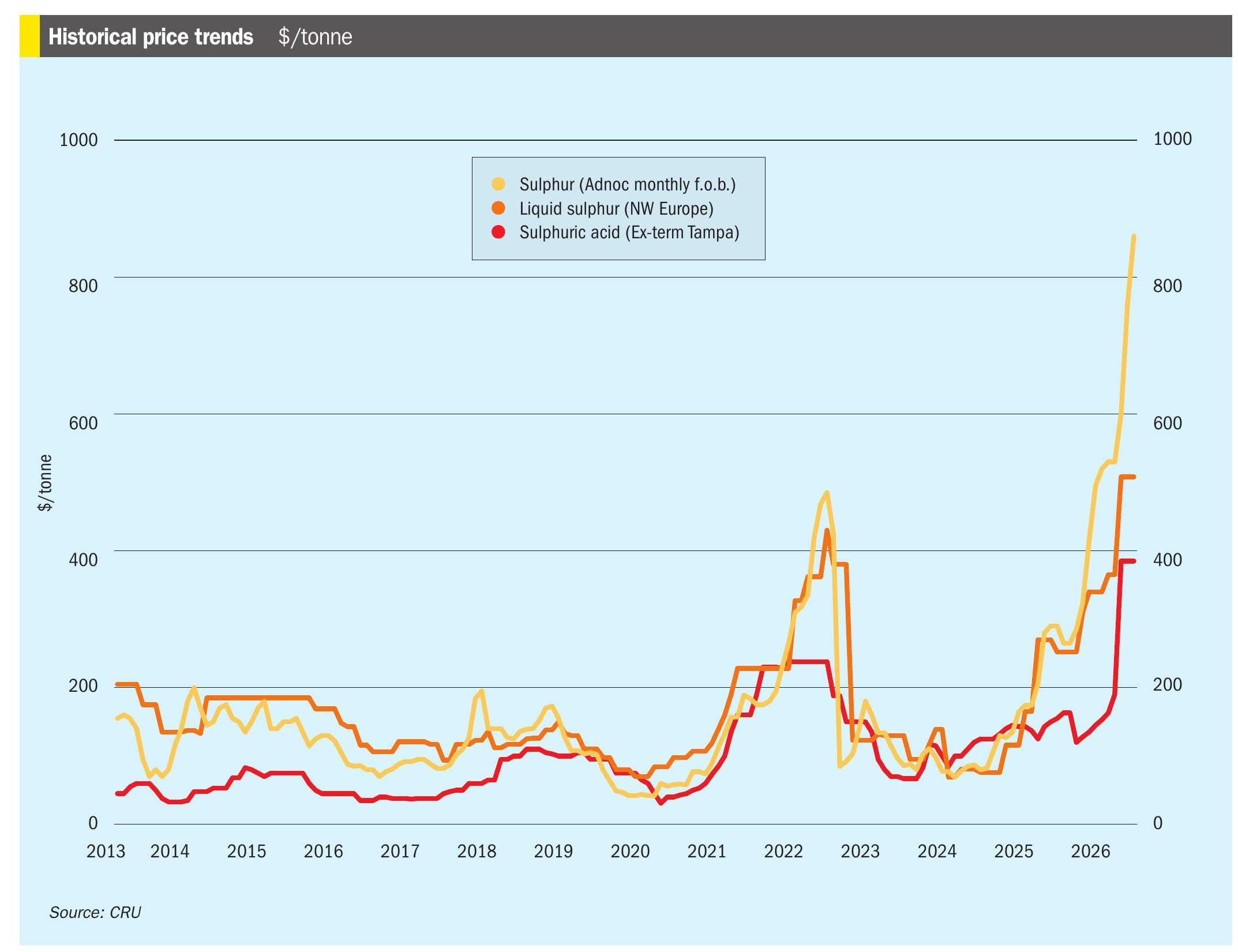
Historical price trends $/tonne
AMMONIA
- The EU benchmark TTF natural gas price had fallen to $16.89/MMBtu on average for February, down 19% on January’s average and 36% lower than the figure for February 2022. By the end of the month it had fallen to $14.83/MMBtu, its lowest level since the outbreak of war in Ukraine. EU gas storage was assessed as 61% full on 28 February, compared to a five-year seasonal average of 40%, due to strong LNG imports and mild weather over the winter. Over one third of European ammonia capacity has returned to production as gas prices fall.
- Ammonia demand is expected to pick up for the spring planting season in the northern hemisphere, but remains subdued at present.
- Market fundamentals suggest that some further price deterioration is possible as buyers continue to stay out of the market on expectations of further price cuts by producers.
UREA
- A large overhang of ammonia stocks weighed heavily on all nitrogen markets, including urea. Buyers have been thin on the ground, with the US Gulf taking some excess capacity.
- There are also expectations of more supply from China in the coming months as export restrictions are lifted. Chinese urea exports halved to 2.6 million t/a in 2022 from 5.3 million t/a in 2021 because of export quotas and other restrictions.
- New plant start-ups added a reported additional 8 million t/a of capacity in 2022, which is also beginning to make itself felt in excess supply.
- Overall, a correction downward in prices to rebalance the market by forcing some production curtailments seems likely given muted levels of demand and high availability.
METHANOL
- Falling coal prices in China as temperatures begin to rise have supported better margins for domestic Chinese methanol producers, but returns remain poor and many plants have elected to take early turnarounds. Low olefins prices have kept MTO operating rates low. Relatively high Chinese coal prices continue to set a floor under global methanol prices.
- The US became a net methanol exporter in 2022 according to recently released figures, with a net outflow of 1.8 million t/a, up from the 2021 figure, which showed imports and exports evenly balanced. Relatively cheap natural gas and Europe’s interruption of supply from Russia allowed US producers to ramp up production for export to Europe. Methanex is looking at Q4 2023 for a start-up of its new Geismar 3 plant
- Equinor said it would restart its 900,000 t/a Tjelbergodden methanol plant at the start of April following a maintenance shutdown.
- Methanol prices have been fairly stable, with a pickup in demand likely in Q1 2023 compared to Q4 2022.