• Skip to main content

    Tag: Project

    Partnership for waste to methanol plant

    HyOrc Corporation says that it has signed a project development and technology agreement with Bulgaria-based OnEnergy Group to develop a waste-to-methanol facility. Under the agreement, HyOrc will serve as the technology partner for Stage 3 of the project, which focuses on thermochemical conversion of refuse-derived fuel (RDF) into green methanol. The facility is designed to process approximately 50,000 t/a of RDF, operating around 330 days per year with a daily throughput of approximately 150-155 t/d. Expected methanol production capacity is approximately 38-42 t/d (13,200 t/a), subject to final engineering configuration.

    SABIC secures feedstock for new plants

    SABIC Agri-Nutrients Company says that it has received approval from the Saudi Ministry of Energy to allocate feedstock required for the construction of its seventh plant in Jubail Industrial City. The new facility will produce approximately 1.2 million t/a of ammonia and 2.6 million t/a of urea, increasing the company’s urea production capacity from 4.8 million t/a to 7.4 million t/a; a 54% increase. This is expected to strengthen its position as one of the world’s largest producers and exporters of nitrogen-based nutrients, in line with its 2040 growth strategy.

    Electrolyser contract signed for green ammonia project

    Chinese companies Sungrow Hydrogen and CRRC Zhuzhou say that they have secured electrolyser supply contracts for the first phase of a geothermal-powered hydrogen and ammonia project in Olkaria, Kenya, developed by Chinese firm Kaishan Group. Kaishan signed a steam supply agreement with state utility KenGen in October 2025, under which KenGen will supply steam from existing geothermal wells for Kaishan to generate 165MW of electricity to power the electrolysers. Chinese firm Wuhuan Engineering is serving as engineering, procurement and construction contractor. Works on the site began in November 2025.

    Agreement over green methanol project

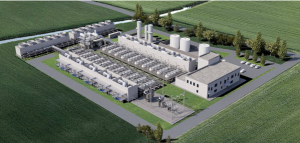
    Swedish e-fuel developer Liquid Wind and Finnish energy company Turun Seudun Energiantuotanto (TSE) have signed a memorandum of understanding (MoU) for the development of a green methanol plant at Naantali, Finland. The facility is planned to be adjacent to TSE’s local power plant, Naantali 4, which will deliver biogenic CO 2 and steam for the production of methanol. Process and waste heat will be used for district heating, reducing the share of incineration-based district heat production by TSE. Once operational, the plant is expected to produce 100,000 t/a of green methanol made from green hydrogen and biogenic CO 2 . The final investment decision (FID) is planned for 2026, and the facility is expected to be operational in 2029.

    Linde to lead blue ammonia project

    Linde Engineering has been appointed to lead the engineering, procurement, and construction (EPC) of the WAH2 blue ammonia plant in Western Australia. This plant is expected to produce around 650,000 t/a of low carbon ammonia using natural gas feedstock and carbon capture technology. Project partner NH3 Clean Energy says that the project’s aim is not only to produce clean ammonia but to ship it as a greener commodity to Asian markets, aligning with global decarbonisation efforts, particularly for countries like Japan and South Korea that are in search of low-carbon fuel sources.

    Bilfinger appointed as consultant for biomethanol facility

    Perpetual Next has selected Bilfinger Engineering & Consultancy as lead consultant for its Methanol Moerdijk project, a planned biomethanol facility in the Port of Moerdijk, the Netherlands. The appointment covers environmental impact assessment and permitting support for the development of the project. Under the agreement, Bilfinger will support Methanol Moerdijk BV with key permitting activities, including the environmental impact assessment (MER/ EIA), support for environmental and nature permits, stakeholder and authority coordination, and project management and quality assurance. The Methanol Moerdijk project is being developed as a large-scale biomethanol facility intended to convert approximately 313,000 t/a of biologically-derived carbon into around 216,000 t/a of biomethanol.

    Saipem technology chosen for new urea plant

    Saipem has been awarded a new urea license agreement by Mitsubishi Heavy Industries Ltd (MHI) for a new fertilizer plant in Turkmenistan. The contract entails the license for the use of Saipem’s proprietary Snamprogetti™ urea technology as well as related engineering services. The urea plant will have a capacity of 3,500 t/d. The new project follows the Garabogazkarbamid plant, commissioned in 2018 in Garabogaz, Turkmenistan, developed with the participation of Mitsubishi and Gap Insaat Yatirim ve Dis Ticaret AS, for which Saipem supplied the urea technology under a contract awarded in 2014 by MHI.

    MoU for green ammonia hub

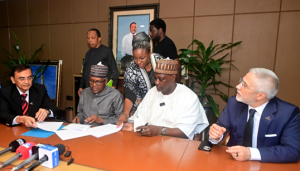
    Abu Qir Fertilizers & Chemicals, Alexandria Fertilizers, Orascom Construction SAE, and Green Hydrogen Development Holding, a subsidiary of China’s United Energy Group (UEG), have signed a memorandum of understanding (MoU) to explore the development of a Mediterranean green hydrogen hub in Alexandria. The proposed project would centre on a large-scale green hydrogen facility powered by wind and solar, with output integrated into existing ammonia infrastructure in the region. Under the agreement, UEG and Orascom will lead feasibility studies covering 500 MW of renewable energy generation and green hydrogen production, while Abu Qir and Alexfert will assess integration into ammonia operations and support access to local infrastructure.

    Construction begins on large scale green methanol project

    Construction has begun in northeastern China on a project that will produce 100,000 t/a of green methanol in its first phase from a combination of biomass and wind-powered green hydrogen. The project, part of the Shenyang Wind-Solar-Hydrogen Fusion Biomass Green Methanol Demonstration initiative, will be located in Kang-ping, Shenyang City. In its first phase, the facility will produce 100,000 t/a of green methanol, with construction expected to be completed within 24 months. The plant will gasify waste straw as its primary raw material, which will be processed into synthesis gas. This gas will then be combined with green hydrogen generated from 6.5 MW wind-powered electrolysers to produce low carbon methanol. The plant will also include a biomass pre-treatment facility capable of producing 337,000 t/a of biomass briquettes, providing a stable supply of feedstock.