• Skip to main content

    Tag: Project

    Canadian government underwrites phosphate feasibility study

    First Phosphate Corp. says that it has finalised an agreement for a C$16.7 million non-repayable contribution from the Government of Canada via Natural Resources Canada’s Global Partnerships Initiative. The company says that the funding will accelerate the development of its phosphate project in Bégin-Lamarche by developing the technical and engineering parameters – including processing circuits and equipment – needed to validate the ability to produce a phosphate concentrate that meets the quality requirements of the lithium iron phosphate (LFP) battery market. The work will be conducted based on parameters established under the contract between First Phosphate and its definitive offtaker.

    Government moving forward with coal-based urea plant

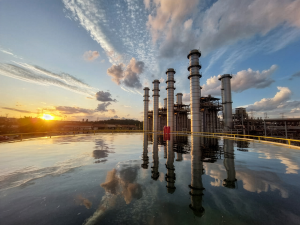
    The government of Pakistan has published a ‘strategic roadmap’ for the country’s major Coal-to-Fertiliser (C2F) initiative. The project is being executed by the publicly-owned Fauji Fertiliser Company (FFC), and will use local coal reserves at Thar as feedstock for the ammonia plant, which will in turn feed 720,000 t/a of urea capacity. The $1.1 billion project aims to strengthen the country’s fertiliser security as well as add value to local resources. A bankable feasibility study was completed in November 2025, and the project is now in the Front-End Engineering Design (FEED) and project agreements phase. Under the proposed timeline, financial closure is expected between late 2026 and 2027, while commercial operations are targeted to commence in January 2031.

    Equinor backs out of blue hydrogen project

    Norwegian oil and gas major Equinor says that it is no longer pursuing its planned H2M Eemshaven blue hydrogen project in the Netherlands, citing policy uncertainty and insufficient funding. The project was a joint venture between Equinor and Linde, and would have produced hydrogen from natural gas piped from Norway, with a capacity of 210,000 t/a of hydrogen beginning in 2029. Around 95% of the carbon dioxide produced would then be piped back to offshore storage sites near the Norwegian coast. Equinor had received a grant of €162 million for the project from the European Innovation Fund last summer. However, uncertainties over whether the project would receive carbon credits under the EU’s RED III directive, and a lack of local hydrogen infrastructure at Eemshaven meant that the project was unable to secure offtake agreements.