Europe

10 June 2026
UK and EU weigh tariff cuts as fertilizer rules tighten
Written by Natalie Noor-Drugan
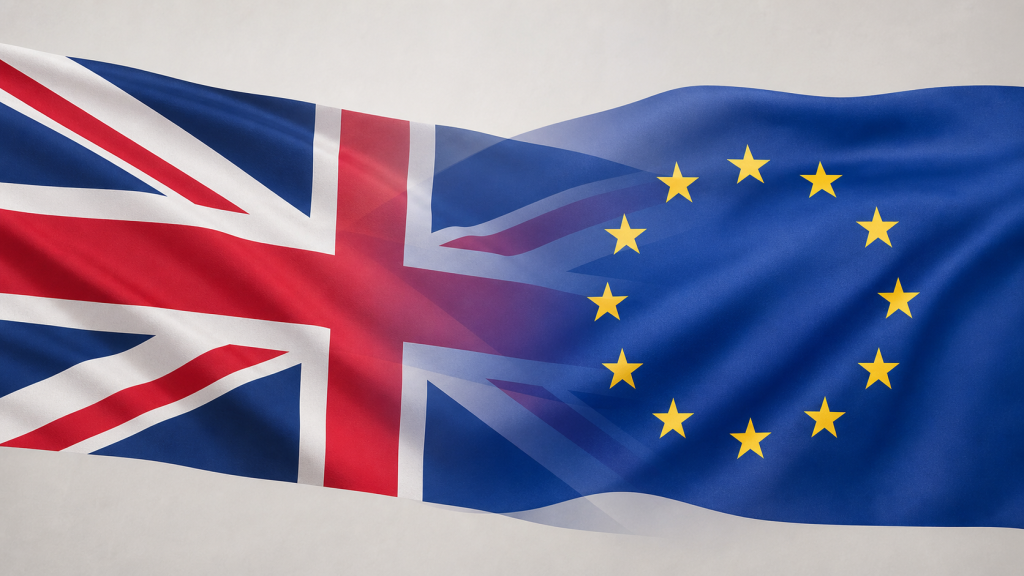
UK and EU policymakers are trying to bring down fertilizer costs without losing control of safety, climate and trade risks. Against a backdrop of high prices, supply disruption and new carbon rules, both are exploring temporary tariff relief while tightening the product and emissions framework that will govern fertilizers over the longer term.
UK weighs temporary cuts to fertilizer import tariffs
The UK government is consulting on a temporary suspension of import tariffs on a range of fertilizers, as part of a wider package aimed at easing cost of living pressures and supporting food security. The consultation covers a one year suspension of duties on key products including urea, ammonium sulphate (AS), DAP, MAP and a range of NP and NPK compounds, where current import tariffs are typically around 6.0–6.5% for nitrogen containing fertilizers and 2.0% for phosphate potash (PK) grades. Urea ammonium nitrate (UAN) has been explicitly excluded.
Officials say the measure is intended to lower landed costs for buyers at a time of elevated global fertilizer prices and ongoing disruption linked to conflict in the Middle East. Any move to zero tariffs would run for a defined period and is subject to consultation; governments have said they will balance potential savings for farmers and blenders against impacts on domestic producers, food security and trade commitments before taking a decision. The call for input closes in late June.
UK sets out new fertilizer product rules
Alongside the tariff consultation, the UK is also consulting on an overhaul of its fertilizer regulatory framework under proposed UK Fertilising Products Regulations (UK FPR). The new rules would replace legislation that is more than 20 years old and widely seen as poorly adapted to modern product innovation. The aim is to create a single, updated framework for putting fertilizers on the UK market, with clearer provisions on conformity assessment, contaminant limits and labelling, and specific rules for high nitrogen ammonium nitrate.
The new regime is expected to be phased in, starting with well established inorganic products. It is designed to give manufacturers and importers a clearer route to market for newer and low carbon fertilizers, while maintaining safety and environmental protections. For engineers and product developers, this points to more structure around testing and certification, but also more room to commercialise alternative nutrient sources over time.
EU suspends tariffs to offset CBAM costs
In the EU, most favoured nation (MFN) tariffs on urea and ammonia have already been suspended for one year, with the change applying to all origins except Russia and Belarus. The one year suspension of MFN tariffs on urea and ammonia, running from 30 May 2026 to 30 May 2027, is one of the first trade measures implemented under the EU’s Fertilizer Action Plan which was introduced on 19 May 2026. The tariff suspension is intended to safeguard fertilizer availability and affordability and to offset the extra cost of the EU carbon border adjustment mechanism (CBAM), which began applying to imported fertilizers from 1 January 2026.
Brussels estimates the suspension will save around €60 million ($64 million) in import duties over the year, helping to relieve pressure on farmers and the fertilizer industry while reducing dependence on Russian and Belarusian supply.
Under the Fertilizer Action Plan, the EU aims to keep nitrogen plants running, reduce import dependence, support low‑carbon fertilizer projects and ease the impact of CBAM on the sector.
What this means for the industry
For international fertilizer producers and traders, the picture is of temporary tariff relief layered on top of tightening climate and product rules. The UK may follow the EU in suspending fertilizer tariffs on a time limited basis, but is also preparing stricter product conformity rules under the UK FPR. The EU, meanwhile, has already removed tariffs on urea and ammonia for a year, but is ramping up CBAM obligations and preparing further policy measures through its Fertilizer Action Plan.
Key policy moves at a glance
| Item | UK position (2026) | EU position (2026) |
| Tariffs on urea & ammonia | Considering temporary suspension of fertilizer import tariffs for one year (consultation phase) | One‑year suspension of MFN tariffs: urea 6.5% → 0%, ammonia 5.5% → 0% |
| Tariffs on NPK/NP/PK | Proposal to suspend tariffs on a range of NPK and NP compounds; PK currently at 2% | No specific new EU‑wide suspension announced beyond urea and ammonia |
| UAN treatment | Explicitly excluded from proposed UK tariff suspensions | Not specifically targeted by the current EU tariff suspension |
| Policy driver | Cost‑of‑living support, food security, response to higher global fertilizer prices and Middle East disruption | Offset CBAM costs, cut fertilizer prices, reduce dependence on Russia and Belarus |
| Product regulation | Consultation on new UK Fertilising Products Regulations (UK FPR) to replace 20‑year‑old rules | Existing EU fertilizer rules plus new CBAM obligations and forthcoming fertilizer action plan |
| Climate‑policy link | No direct carbon border charge yet; tariff and UK FPR changes run alongside net‑zero aims | CBAM applies to imported fertilizers; tariff suspension designed to offset added carbon‑related costs |
DATA: CRU research.