Category: Industrial

Price Trends

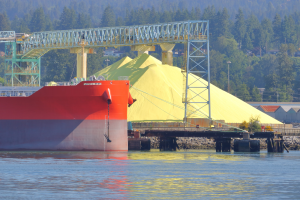
Sulphur continued to break historic records in most key international markets at the start of May as the scarcity of spot supply propelled prices higher, which triggered production cuts at some downstream markets, and increased costs in other industrial sectors. The effective blockade of the Strait of Hormuz, which halted the flow of Middle East supply, has forced desperate buyers to compete for the limited available spot cargoes, primarily from North America. Although fresh transactions were limited, export and delivered prices climbed higher, and market sentiment remained jittery. QatarEnergy hiked its sulphur price to $740/t f.o.b., a new record high for this contract since its inception in August 2013.

Turkey bans sulphur exports to Q3

Turkey has prohibited exports of sulphur under GTP 2503 from 7 April through the second and third quarters of 2026, according to a 6 April communication from the Ministry of Commerce. The measure does not apply to customs declarations lodged before 7 April. The restriction followed a request from the Ministry of Agriculture and Forestry, which said sulphur prices had risen by 35-40% and that supply had tightened for fertilizer production, including AS, DAP and other compound fertilizers. The General Directorate of Exports will review any exceptional cases arising during implementation.

India considering export restrictions

India is said to be considering a proposal to restrict sulphur exports after industry lobby groups raised concerns about soaring prices and disruption to supplies from the Gulf, according to local news reports. Export restrictions could add to upward pressure on global sulphur prices, as supplies from the Middle East are disrupted by the Iran war and with China also set to restrict sulphuric acid exports from next month. India exported 800,000 tonnes of sulphur in 2025.

Partnership for waste to methanol plant

HyOrc Corporation says that it has signed a project development and technology agreement with Bulgaria-based OnEnergy Group to develop a waste-to-methanol facility. Under the agreement, HyOrc will serve as the technology partner for Stage 3 of the project, which focuses on thermochemical conversion of refuse-derived fuel (RDF) into green methanol. The facility is designed to process approximately 50,000 t/a of RDF, operating around 330 days per year with a daily throughput of approximately 150-155 t/d. Expected methanol production capacity is approximately 38-42 t/d (13,200 t/a), subject to final engineering configuration.

Agreement over green methanol project

Swedish e-fuel developer Liquid Wind and Finnish energy company Turun Seudun Energiantuotanto (TSE) have signed a memorandum of understanding (MoU) for the development of a green methanol plant at Naantali, Finland. The facility is planned to be adjacent to TSE’s local power plant, Naantali 4, which will deliver biogenic CO 2 and steam for the production of methanol. Process and waste heat will be used for district heating, reducing the share of incineration-based district heat production by TSE. Once operational, the plant is expected to produce 100,000 t/a of green methanol made from green hydrogen and biogenic CO 2 . The final investment decision (FID) is planned for 2026, and the facility is expected to be operational in 2029.

Bilfinger appointed as consultant for biomethanol facility

Perpetual Next has selected Bilfinger Engineering & Consultancy as lead consultant for its Methanol Moerdijk project, a planned biomethanol facility in the Port of Moerdijk, the Netherlands. The appointment covers environmental impact assessment and permitting support for the development of the project. Under the agreement, Bilfinger will support Methanol Moerdijk BV with key permitting activities, including the environmental impact assessment (MER/ EIA), support for environmental and nature permits, stakeholder and authority coordination, and project management and quality assurance. The Methanol Moerdijk project is being developed as a large-scale biomethanol facility intended to convert approximately 313,000 t/a of biologically-derived carbon into around 216,000 t/a of biomethanol.

Approval for biomass biomethanol plant

The Government of Assam has approved a fiscal incentive package for the development of an industrial scale biomethanol facility at an estimated cost of $1.2 billion. Project developer Novel Biofuels is working in partnership with infrastructure company ACTUAL on the project, which will produce 1.4 million litres/day (1,100 t/d) of high-purity biomethanol from sustainably harvested bamboo sourced from Assam’s smallholder farming communities. It is expected to be commissioned by 2030, with site development and supply chain buildout commencing in 2026.

Jindal Steel to use syngas for direct reduction iron

Jindal Steel says that it has achieved a global first by establishing India’s first coal gasification-based direct reduced iron (DRI) plant, using syngas for iron making. In response to shortages of natural gas, LPG and propane, Jindal Steel has also looked to deploy syngas in galvanising and colour coating line furnaces, as well as injecting syngas into its blast furnace, reducing dependence on imported coking coal and lowering carbon emissions per tonne of steel.

Methanol bunker fuel trial

Deendayal Port Authority says it has completed India’s first methanol bunkering demonstration at Kandla port, furthering its port bunkering capabilities and alternative fuels provision aims. The authority says that the shore-to-ship methanol transfer marks a milestone for port infrastructure development aligned with maritime decarbonisation goals. Conducted on 2 April, the trial brought together multiple industry partners to validate operational readiness and safety procedures for handling alternative fuels within a working port environment.