• Skip to main content

    401 May-Jun 2026

    Drone strikes hit Russian nitrogen plants

    Written by Richard Hands


    Ukrainian drones struck a chemical plant at Cherepovets, Vologda Oblast, on 13 April, with videos circulating on social media platform Telegram appearing to show columns of smoke rising from the Cherepovets-Azot facility, part of Russia’s PhosAgro holding. According to the Russian Ministry of Defence, 13 drones were shot down on approach to the industrial site, with emergency services deployed to locations where debris fell, governor Georgy Filimonov said in a Telegram post.

    OSINT group CyberBoroshno reported a strike on two of the plant’s three ammonia plants, which have a combined capacity of 900,000 t/a, with a possible hit on an ammonia storage facility also reported. The affected plants account for around 6% of Russia’s ammonia production, while the facility as a whole represents approximately 10% of national output, according to CyberBoroshno. The operational status of the facility could not be confirmed at the time of writing. The Cherepovets site was also struck in a drone attack on 27 March 2026. The attack follows a pattern of drone strikes on Russian chemical infrastructure.
    Meanwhile, drones struck the Minudobrenia chemical plant in Rossosh on 6 April 2026, setting fire to the roof of a finished goods warehouse, according to reports from independent Russian media outlet Astra and the Kyiv Independent. The attack was confirmed by Voronezh Oblast Governor Alexander Gusev, who reported that six drones were intercepted over the region. The Minudobrenia facility is one of the largest chemical plants in Voronezh Oblast and is managed by Roskhim. The facility has a total AN capacity of 520,000 t/a, with production running above nameplate capacity at a utilisation rate of 125.3%, equivalent to approximately 600,000 t/a of AN output annually between 2023 and 2026. Ammonia capacity at the site is 1.0 million t/a. The plant was previously struck by Ukrainian drones on 13 December 2025.

    Other Ukrainian drone attacks hit chemical plants in Togliatti, Tolyattikauchuk and KuibyshevAzot on April 4th, part of an extended campaign of Ukrainian attacks on oil, gas, chemical and petrochemical facilities.

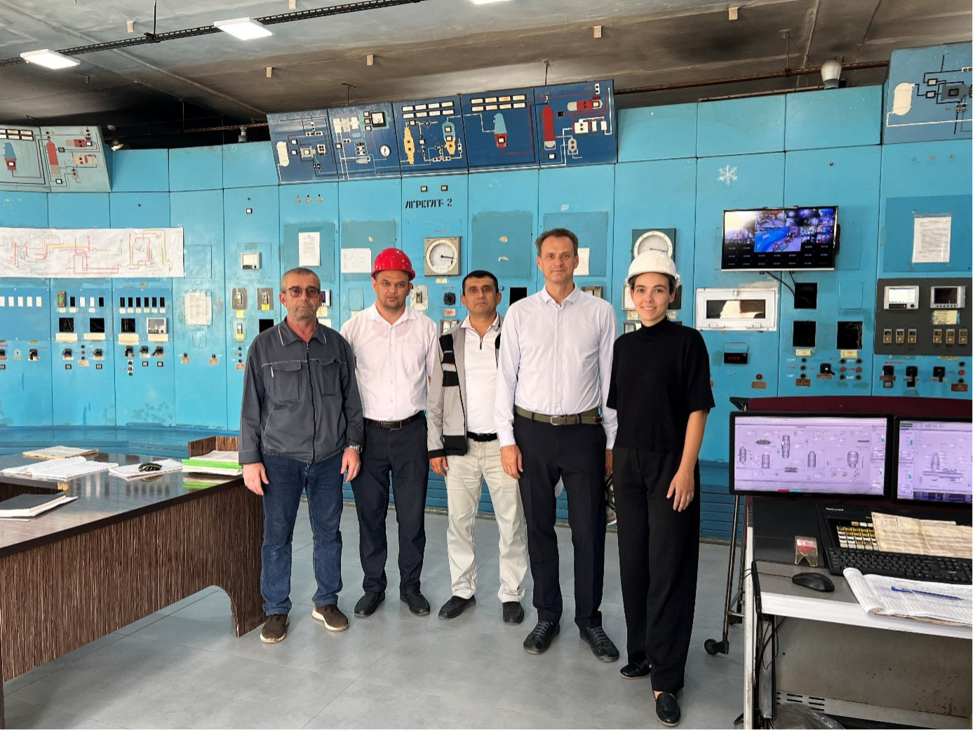
    Pic: The Cherepovets-Azot facility. Ronesans Endustri.

    Latest in Europe

    Gazprom and PhosAgro sign new five-year sulphur deal

    Russian gas producer Gazprom and fertilizer giant PhosAgro have signed a new five-year agreement for the supply of sulphur, according to a report from Interfax on 5 June. The deal, signed at the St. Petersburg International Economic Forum (SPIEF), will see Gazprom continue to supply the key raw material for PhosAgro’s phosphate fertilizer production. The document was signed by Gazprom Deputy Chairman Vitaly Markelov and PhosAgro CEO Alexander Gilgenberg.

    Gouda Refractories Group acquires Revestimientos Refractarios

    Gouda Refractories Group has acquired Revestimientos Refractarios (RR), based in Madrid. Founded in 1979, RR specialises in the installation of refractory materials, serving customers across a wide range of industries, including petrochemicals, (waste to) energy, cement, and other industrial sectors. It is a trusted partner for the installation of refractory materials, hexmesh, anchoring, engineering, technical assistance, project management, inspections and supervision for shutdowns and turnarounds across the European Union. The company has a long history of cooperation with Gouda Refractories, which has intensified in recent years and which, due to a natural moment of succession, has led to this acquisition.

    Waste to energy demonstration plant completed

    Compact Syngas Solutions (CSS) says that it has completed work on a government funded demonstration project which aims to be “the next generation of waste-to-energy plants”. The new £4 million ($5.4 million) MicroHub plant, developed as part of the Department for Energy Security and Net Zero’s (DESNZ) Hydrogen BECCS Innovation Programme, produces hydrogen and electricity from biogenic waste while capturing carbon emissions using water scrubbing. Unlike traditional methods that use chemical solvents like amines, CSS’s system uses water to remove carbon dioxide from syngas, which the company says is a safer and more sustainable solution.

    NextChem completes Ballestra acquisition

    MaireGroup says that its NextChem subsidiary has completed the acquisition of the Ballestra group, a leading player in the licensing, design and engineering of processing plants, as well as in the supply of proprietary technologies and equipment for the chemical industry. NextChem says that the integration of Ballestra significantly strengthens its technology portfolio in phosphate and potassium fertilizers and completes its coverage of the full NPK (nitrogen, phosphorus and potassium) spectrum. At the same time, it provides access to new segments with high growth potential, particularly in chemistry for the production and circularity of strategic materials needed to develop and expand electrification, where Nextchem is already present with metals recovery technologies following the recent acquisition of ETEK.