Europe

12 August 2026
Berlin flags Rhine low-water freight issue
Written by Natalie Noor-Drugan
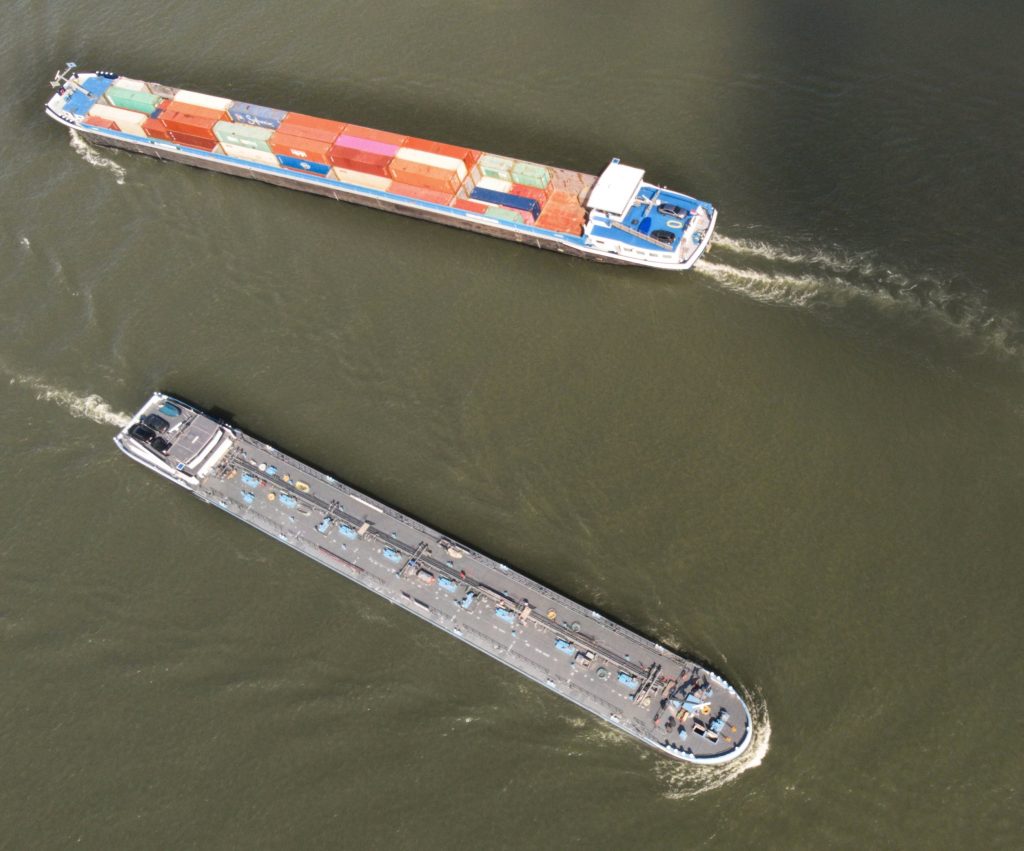
Germany’s chemical industry association VCI has warned that continued low water on the Rhine and other inland waterways could force chemical companies to cut production, as Berlin publicly acknowledged the freight squeeze and put a relaxation of the Sunday lorry driving ban up for review.
According to a Deutsche Presse-Agentur (dpa) wire report dated 6 August, BASF, Evonik and Covestro use the Rhine to transport products including methanol, butane, propane and ammonia, and BASF is already shifting some Ludwigshafen freight to trucks and rail. Around 20 million tonnes of chemical products moved on German inland waterways in 2024, per the same report. The Kiel Institute for the World Economy has estimated a third-quarter economic hit of €1 billion to €2 billion ($1.15 billion to $2.3 billion), or 0.1% to 0.2% of GDP, if disruption persists.
The Rhine carries around 285 million tonnes of cargo per year, roughly two-thirds of all inland waterway freight in the European Union, of which liquid bulk (petroleum products, chemicals, LPG and vegetable oils) accounts for around 86 million tonnes or 30%, according to the Central Commission for the Navigation of the Rhine (CCNR). BASF’s Ludwigshafen Verbund site, the world’s largest integrated chemical complex, stretches along 10 kilometres of the river and operates three company-owned harbours; BASF has previously said around 40% of Ludwigshafen’s raw materials arrive by inland vessel, connecting the site to the Amsterdam-Rotterdam-Antwerp (ARA) port range. Around 80% of BASF’s transport volumes to and from Ludwigshafen pass through the shallow Kaub bottleneck in the middle Rhine, according to a BASF presentation to the CCNR. Ludwigshafen continues to produce ammonia, sulphuric acid and nitric acid, among other basic chemicals, although BASF closed one of the site’s two ammonia plants in 2023 as part of ongoing structural cost cuts.
On the government side, the statement issued on 7 August by the Federal Ministry for Economic Affairs and Energy (BMWE) came alongside a separate 7 August report from Bavaria’s environment ministry noting marked rainfall deficits across every administrative district for March to July, and a Bavarian low-water service reading of a roughly 34% shortfall on the water-year rainfall total. Rail-based relief is limited because major construction on the Rhine’s eastern bank between Cologne and the Rhine-Main region is currently constraining rail capacity, per Deutsche Presse-Agentur (dpa).
“If ships are forced to carry smaller loads or cannot operate at all, costs rise, supply chains come under pressure and production is restricted,” said Wolfgang Grosse Entrup, managing director of the VCI, in comments to Deutsche Presse-Agentur (dpa).
“The low water on the Rhine and on other waterways is impairing important transport routes in Germany. Companies that are particularly dependent on these transport routes face higher transport costs. The first institutes fear negative effects for our economy as a whole,” said Katherina Reiche, Federal Minister for Economic Affairs and Energy.
“It is good that transport minister Bilger has quickly identified initial measures to counteract this and to ease the pressure on road and rail in the short term. A relaxation of the Sunday driving ban for lorries can be a real relief for the affected industry. We in the federal government will continue to coordinate closely in order to keep the effects of the low water on Germany as a business location as small as possible,” Reiche added.