Europe
22 September 2026
Fertiglobe eyes Hamburg ammonia route
Written by Natalie Noor-Drugan
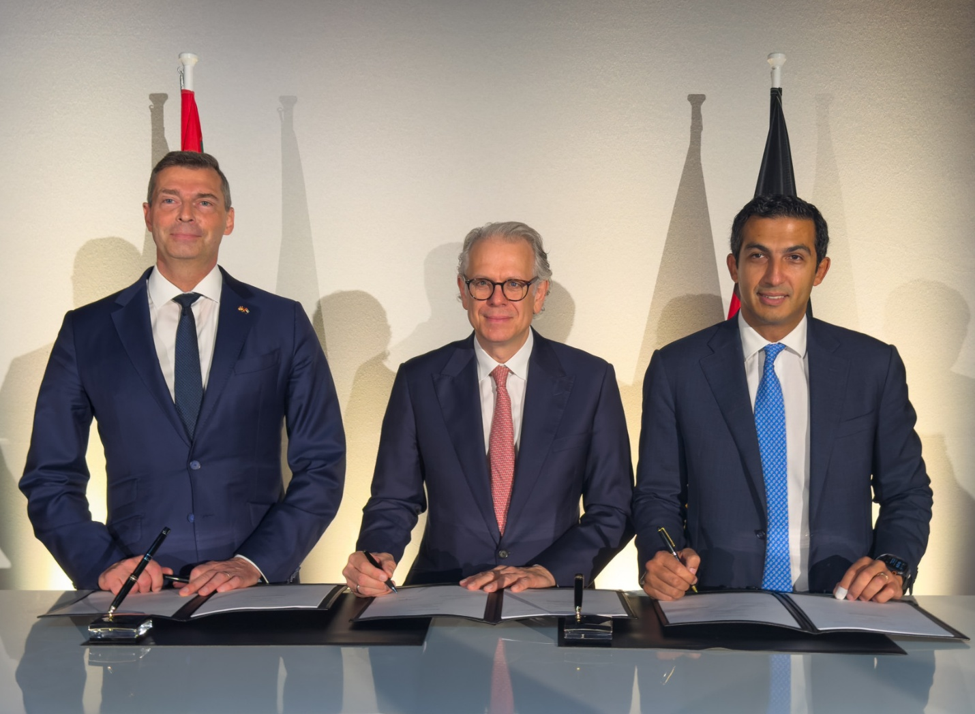
Fertiglobe, Covestro and MB Energy have signed a memorandum of understanding to assess an ammonia-import supply chain through a proposed terminal at Blumensand in Hamburg, Germany.
The parties will examine the import, storage, throughput, distribution and potential offtake of ammonia supplied by Fertiglobe. The assessment will cover conventional, lower-carbon and renewable ammonia, as well as the terminal capacity, supply volumes, delivery arrangements and onward transport required.
Fertiglobe will consider supplying ammonia through the terminal, which MB Energy proposes to build and operate. The Abu Dhabi-headquartered nitrogen producer will also explore a potential equity investment in the project.
“This MoU marks an important step in strengthening Fertiglobe’s connectivity with industrial customers in Europe and expanding routes to market for our global ammonia platform,” said Ahmed El-Hoshy, chief executive of Fertiglobe.
Covestro assesses offtake
German polymer producer Covestro will assess potential ammonia offtake through the Hamburg terminal. It could use the ammonia as feedstock for manufacturing or to meet hydrogen-supply requirements.
“Securing reliable, competitive and increasingly low-carbon ammonia is therefore a strategic priority for Covestro,” said Dr Markus Steilemann, the company’s chief executive. “Together with Fertiglobe and MB Energy, we are exploring an additional supply route that could support our path toward climate neutrality while strengthening supply resilience in Germany and Europe.”
The partners will also assess the infrastructure required to move ammonia to industrial consumers, including pipelines, barges and rail transport. They said the supply chain could also serve other industrial customers in Europe.
CBAM and carbon intensity
The evaluation will consider the carbon intensity of potential ammonia supplies and their alignment with applicable regulatory and certification requirements. These include the EU Carbon Border Adjustment Mechanism and relevant rules covering low-carbon and renewable hydrogen.
MB Energy, an independent integrated energy company headquartered in Hamburg, has operations spanning the import, storage, distribution and marketing of petroleum products, LPG, chemicals and biofuels.
“Europe’s energy transition depends not only on low-carbon molecules, but on reliable infrastructure to reach industrial customers at scale,” said Jonathan Perkins, chief executive of MB Energy.
Fertiglobe describes itself as the world’s largest seaborne exporter of combined urea and ammonia. Its 6.6 million t/a capacity for urea and merchant ammonia is located across four subsidiaries in the UAE, Egypt and Algeria.