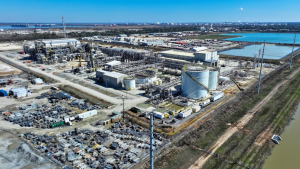
The outlook for low carbon hydrogen
The scale up of low carbon hydrogen has proved slower, more selective and more geographically concentrated than the ambitious plans announced earlier in the decade had anticipated.


The scale up of low carbon hydrogen has proved slower, more selective and more geographically concentrated than the ambitious plans announced earlier in the decade had anticipated.
The Ukraine war and associated tariffs and the EU’s carbon pricing system are keeping ammonium nitrate prices high.
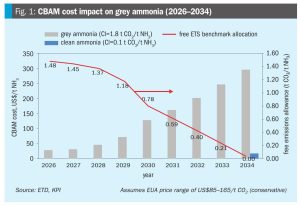
VK Arora of Kinetics Process Improvements (KPI) compares the delivered-cost competitiveness of blue ammonia from regions including the US Gulf Coast, Western Canada, Atlantic Canada, the Middle East, Indonesia, and Malaysia into Japan, the European Union, and South Korea.
Environment Committee MEPs have backed changes to strengthen the EU’s Carbon Border Adjustment Mechanism (CBAM), voting to extend it to a long list of downstream steel and aluminium products, tighten anti circumvention rules and set up a Temporary Decarbonisation Fund (TDF) for industry.
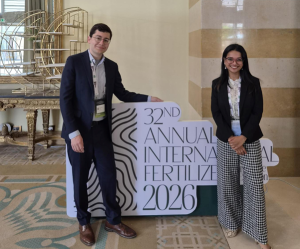
CRU used its presence at the Arab Fertilizer Association’s 32nd Annual International Fertilizer Conference & Exhibition in Cairo to frame two of the meeting’s core debates: the “regulatory tsunami” around CBAM and the evolving economics of global potash supply.
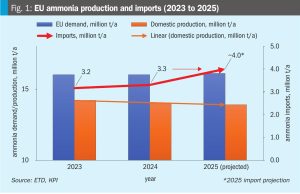
VK Arora of Kinetics Process Improvements, Inc. (KPI) looks at how – while carbon border taxes may reshape ammonia trade – the economics of hydrogen and electricity will ultimately determine the long-term competitiveness of European production.
Stephen B Harrison of sbh4 consulting outlines the options for decarbonising diammonium phosphate (DAP).
We speak with Ilya Motorygin, Managing Partner and Co-founder of GG Trading DMCC.
The European Commission says it will temporarily suspend most favoured nation (MFN) duties on EU urea and ammonia imports for one year.

EU Executive Vice‑President Stéphane Séjourné published an op‑ed calling for tying European public funding to companies that commit a substantial share of production to the EU. The piece, syndicated in several major outlets including Handelsblatt on 2 February 2026, was presented as a call signed by 1,141 European business and union leaders. “Whenever European public […]