EU suspends fertilizer tariffs to offset CBAM costs
The European Commission says it will temporarily suspend most favoured nation (MFN) duties on EU urea and ammonia imports for one year.


The European Commission says it will temporarily suspend most favoured nation (MFN) duties on EU urea and ammonia imports for one year.

EU Executive Vice‑President Stéphane Séjourné published an op‑ed calling for tying European public funding to companies that commit a substantial share of production to the EU. The piece, syndicated in several major outlets including Handelsblatt on 2 February 2026, was presented as a call signed by 1,141 European business and union leaders. “Whenever European public […]
The start of the new year has shown that 2026 is already proving to be a very eventful one, beginning with the US abduction of Venezuela’s president Nicolas Maduro, which has prompted questions over production at the country’s ailing nitrogen assets, as well as the potential for a future boost to gas supplies to Trinidad. Meanwhile the Iranian government faces its most sustained public challenge since the 1979 revolution, and possible US military intervention, threatening continued exports from the country. In Europe, the future of fertilizers’ inclusion in the Carbon Border Adjustment Mechanism (CBAM) has been thrown into doubt barely a week after the new regulations came into force, as France and Italy pushed for an exemption for crop nutrient imports.

CIMC Enric Holdings Ltd says that it has commissioned China’s first large-scale biomethanol facility in Zhanjiang, Guangdong Province, marking a major step forward in the decarbonisation of global shipping and clean fuel supply chains. The project, developed by CIMC Enric and its subsidiaries, is designed as a fully integrated closed-loop system converting forestry residues into green methanol for use as marine fuel. With an initial annual capacity of 50,000 t/a, it is the country’s first commercial scale green methanol plant, and is backed by the port of Zhanjiang and abundant local forestry wastes.

Trade body Fertilizers Europe says the EU’s new carbon border adjustment mechanism (CBAM) package “will significantly weaken the mechanism and prevent it from delivering on its promises”.
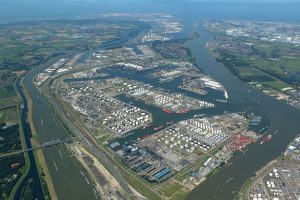
Europe is likely to become an increasing ammonia importer over the coming years as low global ammonia prices and high European gas prices squeeze producer margins, but CBAM remains a wild card.
CRU's fertilizer team provides their top calls for 2026
Recent developments show the Carbon Border Adjustment Mechanism (CBAM) remains active for fertilizers, but the European Commission proposes tariff reductions to offset import costs. Tariff suspension details The Commission will temporarily suspend remaining Most-Favoured-Nation (MFN) tariffs on ammonia, urea, and certain other fertilizers. Import tariffs from most-favoured nations stand at 6.5%, excluding higher staged tariffs […]

Irish MEPs have urged the European Commission to rethink its introduction of the carbon border adjustment mechanism (CBAM).
At the end of this year, the European Union’s Carbon Border Adjustment Mechanism (CBAM) will move from its transitional phase into its ‘definitive’ phase, whereby the carbon costs of goods entering the EU will need to be priced in. CBAM requires suppliers to calculate the carbon emissions of their fertilizer (and other, e.g. steel) products, including indirect emissions, for example from electricity consumed in the process, and emissions of precursor or raw materials. They will then need to purchase CBAM certificates to cover embedded emissions above the established free allowance benchmark rates determined by the European Commission: 1.57 tonnes CO2e/tonne ammonia and 0.23 tCO2e/t nitric acid.