Fertilizer International 530 Jan-Feb 2026
New CBAM package disappoints industry


EUROPE

New CBAM package disappoints industry

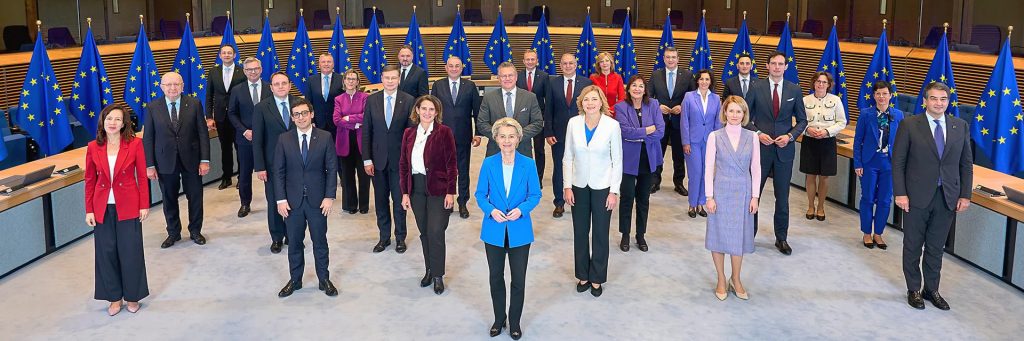
Trade body Fertilizers Europe says the EU’s new carbon border adjustment mechanism (CBAM) package “will significantly weaken the mechanism and prevent it from delivering on its promises”.

This was in response to a new CBAM policy package released by the European Commission on 17th December, specifically the announcement of a flat 1% markup on fertilizer default values.

The default values are designed to encourage non-EU fertilizer producers to report their actual production emissions.

The trade body also criticised the Commission’s new proposal to set up a temporary decarbonisation fund for European industry, saying this “falls short of delivering a real solution for EU-based exporters” and would “not address the competitive disadvantage EU producers face on global markets”.

The new fund will offer financial support to EU fertilizer producers by partly reimbursing their emissions trading system (ETS) costs.

“Since its announcement, European fertilizer producers have viewed CBAM as a necessary instrument to equalize carbon costs between EU producers and non-EU competitors. The European Commission deserves recognition for establishing a mechanism that seeks to reconcile climate ambition with industrial competitiveness,” said Antoine Hoxha, Fertilizers Europe’s director general.

Hoxha did, however, criticise making default values for fertilizers subject to a 1% markup. By watering down the rules, this would “undermine CBAM’s core objectives of fair competition and transparency”, he said.

“The Commission’s decision to start with the markup for default values at 1% reflects a genuine effort to address farmers’ concerns about the CBAM launch, and we acknowledge that. At the same time, extending a 1% markup on default values indefinitely will discourage the reporting of real emissions by overseas producers – particularly those with a higher footprint than their country’s average,” Hoxha said.

Hoxha agreed that watertight implementation will be critical to the success and credibility of CBAM. “Addressing the risk of circumvention is essential, and the Commission’s announcement is a step in the right direction. The real test, however, will be whether these measures prove effective and enforceable in practice,” he said.

A “real solution for EU-based [fertilizer] exporters” was also notably absent from the Commissions’ new CBAM package, in Hoxha’s view.

“The temporary decarbonisation fund is just a patch that fails to address the fundamental issue whereby EU-made products, often with lowest environmental footprint globally, will be pushed out of international markets due to uneven carbon costs. Such an approach will further deteriorate the competitiveness of EU fertilizer producers, undermining sector’s ability to invest in clean technologies,” he said.

Nonetheless, Fertilizers Europe said it remains committed to engaging constructively with the EU to ensure that the CBAM for fertilizers fully delivers on its objectives.

CBAM entered its definitive implementation phase on 1st January 2026. Please refer to the comprehensive explainer in our May/June 2025 magazine for further information on this complex EU policy (Fertilizer International 526, p14).

Latest in Europe

SRU commissioned at Petrobrazi refinery

Romanian oil and gas group OMV Petrom has commissioned a new sulphur recovery unit at its Petrobrazi refinery, near the southern city of Ploiesti. Development work on the new SRU began in 2023, and represents the second at the site, treating acid gas produced during the refining process. The euro 45 million investment is part of euro 2 billion of improvements that have been made over the past 20 years as part of the company’s strategy to modernise its refining capabilities, aiming to reduce environmental impact. Last year, the company said it would invest around euro 750 million to build several sustainable fuel plants at the refinery, which are expected to become operational in 2028.

DOMO files for insolvency

Three German subsidiaries of the Belgian chemical group DOMO Chemicals have filed for insolvency, following weak demand in the European chemicals sector, high energy costs and a significant increase in imports of polyamide resins from outside the European Union, in particular from China. Court appointed administrator Prof. Lucas F. Flöther said that day-to-day operations would continue for the time being. Around 585 employees are affected across the three companies; DOMO Chemicals GmbH and DOMO Caproleuna GmbH in Leuna and DOMO Engineering Plastics GmbH in Premnitz.