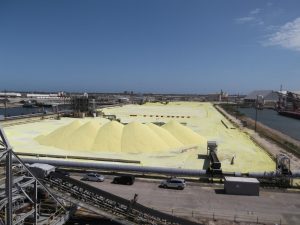
The impetus for sulphur forming
While some sulphur is transported as a liquid, especially in Europe and North America, recent events have highlighted the increased flexibility of solid sulphur supply chains.


While some sulphur is transported as a liquid, especially in Europe and North America, recent events have highlighted the increased flexibility of solid sulphur supply chains.

The US Department of Agriculture's Agricultural Marketing Service on 10 August added anhydrous ammonia pipeline transportation rates to its AgTransport online dashboard.
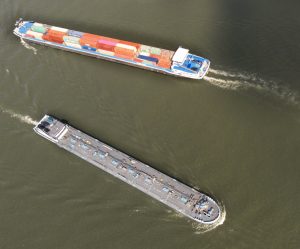
Germany's chemical industry association VCI has warned that continued low water on the Rhine and other inland waterways could force chemical companies to cut production, as Berlin publicly acknowledged the freight squeeze and put a relaxation of the Sunday lorry driving ban up for review.

Belarusian potash fertilisers remain barred from transiting through Lithuania to Klaipėda port under EU sanctions, after the General Court dismissed a challenge from terminal operator Birių Krovinių Terminalas UAB (BKT).
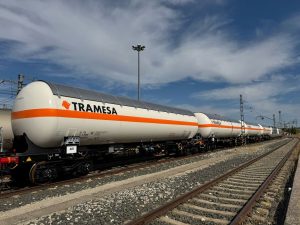
Rail, road, ship or pipelines all bring different benefits and risks to long distance transport of ammonia, but the fundamentals of ammonia safety remain a constant.

Russia has ordered a “temporary cessation” of rail transport of all sulphur originating from Kazakhstan that is destined for Russian seaports and railway checkpoints, representing a significant policy shift, according to an official order from the Federal Agency for Railway Transport (Roszheldor). The directive, which took effect from May 26th, orders a halt to the loading and movement of Kazakh sulphur “until further notice.” While the measure is officially described as temporary, the order provides no specific timeline for when the transit might resume. The action cites instructions from Russia’s First Deputy Prime Minister, D.V. Manturov, as its basis.

MB Energy says that it has received approval from the Hamburg Authority for the Environment, Climate, Energy and Agriculture (BUKEA) for the construction and operation of a new ammonia import terminal. Subject to final investment approval, the facility is planned for the Blumensand tank farm site in the Port of Hamburg.
The effective closure of the Straits of Hormuz by Iran in the wake of US and Israeli attacks has sent shockwaves through all markets, but sulphur has been particularly badly affected. While the Straits carry 22% of global phosphate exports and 35% of urea, for sulphur around 45% of the 39 million tonnes transported internationally every year must traverse the narrow waterway, with major suppliers like Abu Dhabi and Saudi Arabia relying upon it for their export cargoes.
The US and Israel attacks on Iran and the Iranian response have thrown commodity markets into chaos, with sulphur and sulphuric acid particularly affected.
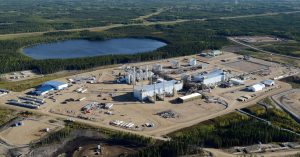
With the decline of Venezuela’s production, Canada’s oil sands now represent 90% of all oil sands output, and a significant share of North America’s sulphur production.