Nitrogen+Syngas 402 Jul-Aug 2026
Long distance ammonia transportation


AMMONIA TRANSPORT

Long distance ammonia transportation

Rail, road, ship or pipelines all bring different benefits and risks to long distance transport of ammonia, but the fundamentals of ammonia safety remain a constant.

The challenge is not confined to any one mode of transport. Road, rail, ship, and pipeline each have strengths, but each also introduces distinct failure points. The chemistry of ammonia creates a common baseline of hazard across all routes: exposure can injure or kill, leaks can rapidly create harmful vapour clouds, and poor material selection can lead to corrosion or cracking. On top of that, long-distance movements add operational handoffs, routing decisions, transhipment, and scheduling complexity. The further ammonia must travel, the more often it must be contained, transferred, monitored, and protected.

Ammonia’s properties

At the core of the problem is the physical nature of ammonia. It is commonly transported as a liquefied gas under pressure, and in some systems it is cooled close to its boiling point of about -33°C. That means every vessel, wagon, truck, tank, valve, flange, seal, and pipeline section must be able to withstand pressure, temperature variation, and mechanical stress. If containment is lost, the released ammonia may flash to vapour, form a dense cold cloud, and travel downwind close to the ground before dispersing. The hazard is not limited to a single place or time. It can extend across roads, yards, ports, waterways, or communities.

Transport becomes even more difficult because ammonia has to be treated as both a chemical hazard and a logistics challenge. A shipping company, rail operator, pipeline owner, terminal, or truck carrier is managing a toxic substance that must remain uncontaminated, tightly sealed, and properly documented throughout the journey. That is why ammonia safety repeatedly emphasises training, inspection, maintenance, labelling, and emergency planning. A lot of the risk is procedural; small mistakes can have disproportionately large consequences.

Road transport

Road transport is the most flexible mode, but also the most exposed. It is best suited to short-to-medium distances, distribution into areas not served by rail or pipeline, and final delivery from a terminal to end users. Its main advantage is reach; a truck can go where a rail line or pipeline cannot. But that flexibility comes at the cost of greater exposure to traffic, weather, road conditions, and interaction with the public.

A recent incident analysis paper1 shows that highway incidents involving anhydrous ammonia are often tied to vehicular crashes, driver error, and other human factors. That is an important finding because road transport depends heavily on ordinary traffic discipline. A collision, rollover, or impact can damage the container or its fittings and produce a release. Even when the vessel itself remains intact, valves, closures, or connections can fail if the vehicle is mishandled or the load is not secured properly. Road incidents are also harder to contain because they happen in open networks shared with other users.

The second issue is payload. Trucks carry less than rail wagons or ships, which means more trips are needed to move the same volume. That increases exposure to risk simply by increasing the number of movements. For a hazardous product like ammonia, every movement is another opportunity for a loading error, a route disruption, a traffic incident, or a response delay.

Road transport also creates significant public-safety concerns. Trucks often travel near homes, schools, junctions, tunnels, and other infrastructure where a release could affect bystanders quickly. A major spill can generate a downwind vapour plume, and the emergency response may be complicated by traffic access, road closures, and the need to evacuate or shelter people nearby. Route planning therefore matters as much as vehicle design. The safest route is not always the shortest. It is the one that best balances traffic volume, population density, response access, and the likelihood of collision.

Operationally, road transport depends on correct loading, secure closures, proper placarding, and stable routing. The attached material suggests that many road incidents are rooted in familiar, preventable problems: overfilling, defective components, poor blocking and bracing, or inadequate preparation. Those are not exotic engineering failures. They are process failures. That is what makes road transport both practical and vulnerable.

Rail transport

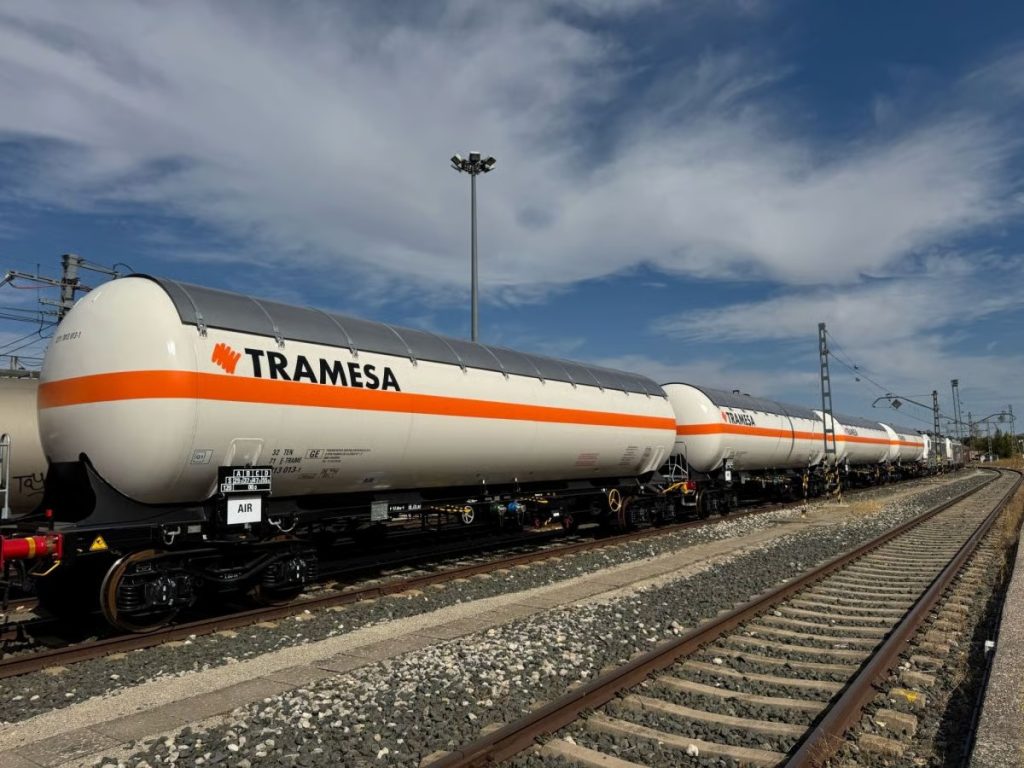
Rail is one of the most important modes for long-distance ammonia movement. It offers scale, efficiency, and an established regulatory framework. In its guidance for transporting ammonia by rail2 , Fertilizers Europe notes that ammonia rail transport has a long history, especially in Europe, where very large annual volumes are transported. Rail tank cars are designed specifically for this purpose, and the industry has developed detailed practices around tank design, materials, labelling, inspection, maintenance, loading, unloading, and emergency response.

The central advantage of rail is capacity. For large inland flows, it is usually more efficient than road and more flexible than pipeline. It can connect production sites, storage terminals, and industrial users over long distances without requiring the enormous capital outlay of a pipeline network. But this mode is only as safe as the system surrounding it.

The biggest technical concerns are tank integrity, valve protection, and stress corrosion cracking. The guidance explains that ammonia tanks must be made from materials suitable for the substance, with particular care taken to avoid copper and copper-bearing alloys. Oxygen ingress must be avoided because it can contribute to SCC in certain steels. That is why nitrogen purging is so important. In some cases, the addition of a small amount of water is also used to inhibit cracking. These measures may sound minor, but they are critical because they address slow, hidden failure mechanisms rather than obvious damage.

Another major issue is overfilling. The rail guidance is explicit that ammonia tanks must not be loaded beyond the permitted mass, because thermal expansion can generate dangerous pressure if there is insufficient vapour space. This is one of the more important long-distance transport hazards because it can turn an otherwise normal shipment into a serious release scenario if temperatures rise during the journey. That is why the guidance insists on independent checks of filling weight, route limits, and documentation.

The RISA analysis1 reinforces this picture. Rail accounted for the largest share of incidents in the US data because rail carries a lot of ammonia volume, but the main causes were often loose closures and defective components rather than catastrophic tank failure. That means rail risk is closely tied to the condition of fittings and the discipline of the loading and unloading process. A properly designed rail tank car is robust. The weak points are often the interfaces: couplings, seals, external valves, and handling practices.

Shunting and terminal operations are especially important. The sources note that a significant share of incidents happen during loading and unloading, not during steady transit. That is logical. Stations create more interaction between people, equipment, and moving rail vehicles. A wagon pulling away while connected, a misaligned coupling, or a missed closure check can produce an avoidable release. That is why the rail guidance devotes so much space to secured loading areas, derailment prevention, checklists, and training. In short, rail is a strong long-distance mode, but only when the terminal layer is carefully controlled.

Shipping

Shipping is central to the future of ammonia if global trade and green fuel supply chains continue to expand. A recent paper on ammonia shipping highlights ammonia’s advantages; it stores more conveniently than hydrogen, the fertilizer industry already has experience with its handling, and it may fit into future maritime fuel systems. But shipping also introduces an entirely different risk environment. Ports, bunkering systems, vessel design, crew training, and emergency coordination all have to function together.

The first issue is infrastructure. A ship can only use ammonia safely if the port can store, transfer, and monitor it properly. That requires tanks, transfer arms, gas detection systems, emergency shutdown controls, ventilation, exclusion zones, and trained staff. This is not a trivial retrofit. Many ports were designed around conventional marine fuels, not toxic liquefied gases. That means the transition to ammonia is not simply a question of buying ships. It requires a port-side buildout and an aligned safety regime.

The second issue is bunkering. Refuelling a ship with ammonia is not comparable to refuelling with conventional marine fuels. The transfer has to be tightly managed, with clear procedures for connection, disconnection, leakage detection, and shutdown. If ammonia is to move into wider maritime use, bunkering has to be reliable across different vessel types and operating conditions. The shipping article shows that this is one of the main uncertainties holding the sector back. Without dependable bunkering, shipowners are unlikely to commit capital at scale.

A third concern is the dual nature of ammonia in shipping: it may be cargo, fuel, or both. That makes safety management more complicated. If ammonia is being used as a fuel, then onboard systems must handle storage, injection, combustion, ventilation, and potentially after-treatment for emissions such as NOx. The shipping source also points out the uncertainty around N2O emissions. Even if ammonia reduces CO2, it may still create climate or air-quality issues if combustion is not well controlled. In other words, a transport solution can be technically feasible and still environmentally incomplete.

The shipping paper also highlights the problem of first-mover risk. Companies are reluctant to invest in new ammonia systems if regulation, insurance, port readiness, and future fuel availability remain uncertain. That hesitation slows deployment even when long-term demand appears likely. As a result, the shipping challenge is not just engineering. It is the coordination of a whole supply chain that is still in transition.

Pipeline transport

Pipelines are the most fixed and capital-intensive mode, but they may also be the most efficient for large, stable, long-distance flows. A recent review of ammonia pipeline safety4 notes that ammonia pipelines have been used for decades in multiple regions, and in some cases they run for very long distances between production centres and downstream users. Where the geography and volume justify it, pipelines can provide continuous, high-capacity transport at relatively low operating cost.

However, pipeline transport concentrates risk in a different way. Once built, a pipeline is difficult to reroute. It has to remain safe over long periods, often in challenging environmental conditions and across large distances. The main threats are corrosion, mechanical damage, weld defects, fatigue, freeze-thaw effects, and third-party interference. If a failure occurs, it may release a large amount of ammonia before the leak is detected and isolated.

Material compatibility is one of the most important issues. The review explains that carbon steel can perform well under appropriate conditions, but the system must also avoid materials that react badly with ammonia or become vulnerable under certain contamination scenarios. Copper-bearing materials are especially problematic. Elastomers and polymers also need careful screening. In long-distance pipeline systems, small compatibility mistakes can grow into major maintenance problems later on.

Leak detection is another central challenge. Because ammonia is toxic, a leak must be detected quickly. The paper discusses balance-based methods, real-time transient models, negative pressure waves, acoustic systems, seismic monitoring, and ammonia-specific sensors. This reflects an important reality: no single detection method is sufficient on its own. Pipeline safety depends on layered monitoring, regular inspection, and good control-room practices. In practice, the operator needs to know not only that a leak has occurred, but where it is, how large it is, and how fast the inventory is changing.

Environmental consequences make pipeline failures especially serious. Ammonia dissolves readily in water and can contaminate soil, groundwater, and surface water if released. That means a pipeline leak is not just a local industrial problem; it can become an environmental incident with longer recovery times and wider ecological impacts. Routing, buffer zones, and emergency response planning therefore matter enormously. The safest pipeline is one that is well designed, well monitored, and kept away from vulnerable receptors wherever possible.

Comparing modes

Each mode of transport offers a different balance of risk and utility.

• Road is the most flexible, but it exposes ammonia to traffic incidents and the public.

• Rail is well suited to large inland volumes, but depends heavily on tank integrity and terminal discipline.

• Shipping is essential for global trade, but requires expensive port and bunkering infrastructure.

• Pipeline offers continuous high-volume movement, but it demands long-term integrity management and excellent leak detection.

The important conclusion is that the mode does not eliminate risk; it reshapes it. Road increases exposure to traffic and human error. Rail increases dependence on operational control and equipment reliability. Shipping shifts the challenge into ports and bunkering systems. Pipelines concentrate risk into long fixed assets that must remain sound over many years.

The real issue: system discipline

What stands out across the sources is that long-distance ammonia transport is as much about tightness of procedures as it is a single potentially dangerous substance. The most common problems are not exotic; they are familiar logistics failures: loose closures, overpressure, bad couplings, inadequate preparation, corrosion, and poor maintenance. That is encouraging in one sense, because these are problems that can be easily managed. However, it also means that long-distance transport safety depends on constant attention to basics, with an emphasis on training, checklists, maintenance schedules, periodic testing, labelling, emergency plans, and route assessment. It also means that, while different modes require different safeguards, they require the same operating mindset: assume that small failures can cascade, and build systems that catch them early.

Ammonia can be transported long distances, and in many places it already is. But long-distance movement is not simple, and it becomes more complicated as ammonia takes on new roles in the energy system. The material’s toxicity, corrosiveness, and pressure/temperature sensitivity create risks at every stage of the journey. Road transport brings flexibility but higher exposure to crashes. Rail offers strong bulk capacity but needs rigorous control of wagons, couplings, and loading operations. Shipping is crucial for international trade but requires port infrastructure and bunkering systems that are still developing. Pipelines are efficient for fixed high-volume flows, but they demand long-term integrity management and excellent leak detection.

The core lesson is that ammonia transport is only as safe as the weakest part of the chain. If the route is long, that chain becomes even more important. As demand grows, the real challenge will not be finding a way to move ammonia; it will be building transport systems disciplined enough to move it safely, repeatedly, and at scale.

References

Latest in Agricultural

Price Trends

Ammonia values have continued to ease across most regions at the end of June, as the first ammonia vessels begin to exit the Gulf since the Iranian conflict began. Iranian ammonia had also begun to flow to India following the US Treasury’s issuance of a 60-day sanctions waiver on 22 June, allowing dollar-denominated trade in Iranian petrochemical products through 21 August. As a result, Indian bids have been heard as low as $750/t c.fr, as buyers benefit from a widening pool of available supply - Iranian, Chinese and renewed Southeast Asian material are all competing for the same business.