Fertilizer International 532 May-Jun 2026
27 May 2026
CASALE: First mover in the green fertilizer revolution
Federico Zardi, the CEO of CASALE, speaks to Fertilizer International about leadership, legacy and steering one of the industry’s foremost technology companies through the green transition.
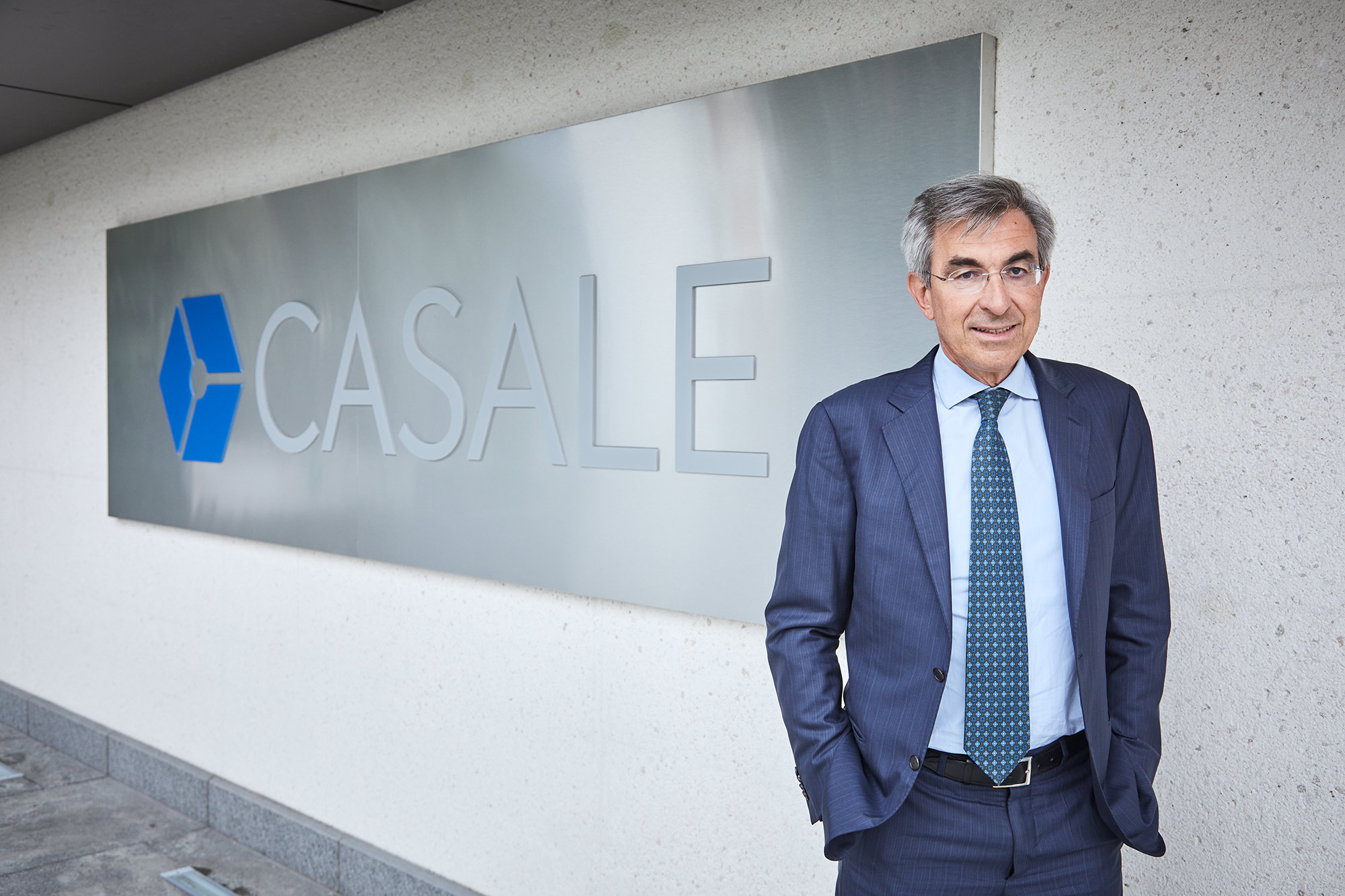
Federico Zardi, CASALE’s CEO. PHOTO: CASALE
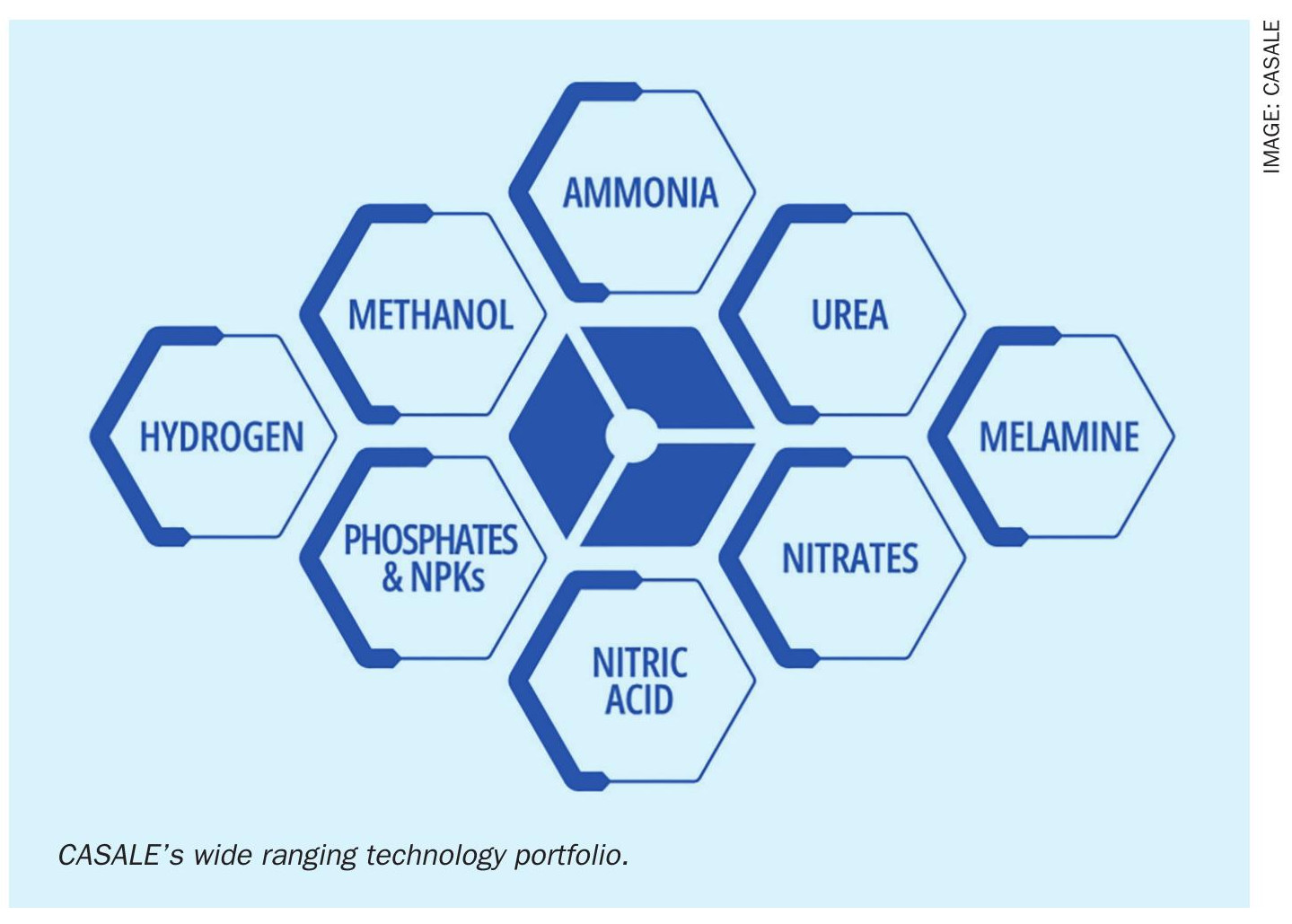
Founded over a century ago in Lugano, Switzerland, CASALE has long been one of the nitrogen fertilizer industry’s most respected technology specialists. From its origins as a pure ammonia licensor, it has grown into arguably the most comprehensive technology provider in the sector – offering process technologies spanning ammonia, urea, methanol, nitric acid, nitrates, NPK and melamine, combined with a full engineering, procurement and construction (EPC) capability that few of its competitors can match.
Today, the company is also staking a clear claim at the forefront of the industry’s low-carbon transition. With a growing portfolio of 12 green fertilizer and low-carbon ammonia projects in its active portfolio, and the landmark Villeta project in Paraguay having reached Final Investment Decision in April 2026, CASALE is increasingly moving from vision to delivery. The achievement is significant not just for the company, but for a sector that has been searching for proof that green fertilizer production is commercially viable at industrial scale.
At the helm is Federico Zardi, who has led CASALE as Chief Executive Officer since 2017. His tenure has coincided with one of the most consequential periods of change the fertilizer industry has faced in living memory – and, as this interview reveals, he brings to it a rare combination of deep technical conviction, long institutional memory and a clear-eyed view of the challenges ahead.
Federico Zardi
Federico Zardi is not simply the CEO of a long-established Swiss engineering company – he is also the custodian of a remarkable family and corporate legacy. His father, Umberto Zardi, was among the most influential figures in CASALE’s modern history, and in the fertilizer industry itself: a visionary engineer and leader who, from the late 1970s onwards, was instrumental in rebuilding and transforming the company into the global technology force it has become. Umberto’s influence was felt not only in the technologies CASALE developed, but in the values – passion, intellectual curiosity, humility and fairness – that Federico describes as both a personal inheritance and a professional compass.
Federico joined CASALE’s leadership in 1999, first as deputy General Manager and then, in 2012, as Chief Operating Officer, during the consolidation of the CASALE Group into a single integrated entity. He was appointed CEO in 2017. Over that period, he has overseen the expansion of the company’s technology portfolio, the deepening of its EPC capabilities and its growing engagement with green and low-carbon projects. He is also a member of the AIChE Ammonia Safety Committee, reflecting CASALE’s broader commitment to industry safety and best practice.
His profile is that of an engineer-leader: technically fluent, strategically ambitious and personally invested in the idea that CASALE should be a front-runner, not a follower, in the transition to a decarbonised fertilizer industry.
Fertilizer International spoke to Federico Zardi about leadership, legacy, technology and what it means to be navigating one of the industry’s most pivotal moments.
Federico, you have taken on a highly visible leadership role at a time of major transition. What has been the biggest challenge so far?
“As a technology company, maintaining technological leadership is, and always has been, a core challenge. But beyond that, the past few years have brought additional complexity on several fronts.
“Historically, CASALE was almost exclusively focused on revamping – from the 1980s through to the end of the last century. Rebuilding and strengthening our position in greenfield licensing, plant design and construction, while simultaneously retaining our leadership in revamping, has required real focus. The two don’t always pull in the same direction.
“On top of that, the market has become significantly less predictable. The closure of the Russian market in 2022 meant replacing a substantial pipeline of projects and opportunities elsewhere in the world. And more broadly, the shift towards sustainable and low-carbon products has removed the kind of long-term visibility that existed a decade ago. The trajectory of the low-carbon market remains unclear, which makes strategic planning more complex for everyone in the industry.”
“CASALE is, at its heart, a company of minds. We don’t manufacture fertilizer — we create ideas and deliver projects. Caring for the people who generate those ideas is not incidental to how we operate; it is fundamental to it.”
CASALE has more than a 100 years of history. What does this legacy mean in practical terms – and what key lesson from your father’s leadership still guides your decisions?
“What drives us, above all, are the values and the mindset that enabled the successes of the past. Innovation and thinking differently have always been central to who we are, and that has not changed.
“As for my father, Umberto – his influence goes well beyond my own experience of it. Many people in the company had the privilege of working alongside him, and he left a deep impression on all of us. The qualities he embodied most strongly were passion – passion for technology, for innovation, for doing things properly – alongside genuine curiosity and intellectual humility. He was always willing to listen, whether to competitors or to what the market was telling him. Fairness was also a core value for him, and it remains central to us.
“He also instilled a deep commitment to people. CASALE is, at its heart, a company of minds. We don’t manufacture fertilizer – we create ideas and deliver projects. Caring for the people who generate those ideas is not incidental to how we operate; it is fundamental to it.”
What truly differentiates CASALE today from other technology providers in the market?
“I would point to three things. First, the quality and uniqueness of our technologies – they are genuinely state-of-the-art and represent a real point of differentiation from our competitors. Second, the breadth of our portfolio: within the fertilizer industry, we offer the most comprehensive range of process technologies of any single company. No other licensor can match that scope under one roof. Third, our ability to act as both licensor and EPC contractor – that combination is rare in our sector and delivers meaningful advantages for clients.”
Was building this broad technology portfolio a deliberate strategy – and how does it translate into competitive advantage for your clients?
“Absolutely. The company was founded as Ammonia CASALE and for decades focused exclusively on ammonia synthesis. From the 1980s onwards, we deliberately expanded into adjacent technologies: urea, then methanol, then nitric acid and melamine, through both in-house development and acquisition. That step-by-step expansion was a conscious strategy rooted in a belief that flexibility is essential. If you are concentrated in a single technology area and that market softens, you are exposed.
“For clients, the advantages are concrete. If a producer needs a fully integrated complex – from natural gas through to a final nitrogen product – having a single technology provider who can optimise the entire chain eliminates the friction of coordinating multiple licensors. It means seamless project execution, more effective value engineering and genuine cost optimisation. Combined with our EPC capabilities, clients can come to us for a complete solution.
CASALE can both license technologies and deliver full EPC projects. From a client’s perspective, what difference does this integrated approach really make?
“The benefits work across several dimensions. Time is the most obvious: when the licensor and the EPC contractor are the same organisation, detailed engineering and equipment procurement can begin before basic design is fully complete – something that is simply impossible when two separate parties are involved. That compression of the project timeline is a real and tangible advantage.
“Cost follows closely. With our process and plant engineers working as two divisions of the same company, value engineering feedback loops are far tighter. That translates directly into better cost control.
“Accountability is a third dimension that is easy to underestimate. In a conventional licensor-plus-EPC arrangement, the contractor must endorse the licensor’s performance guarantees and add a risk premium accordingly. When we are both licensor and contractor, that issue disappears – we carry the full guarantee ourselves, without the contingency costs that come from endorsing a third party’s warranties.
“There is a final benefit worth noting: because we have genuine EPC experience, even on projects in which we are involved just as licensor – we bring a level of understanding to working with third-party contractors that a pure licensor simply cannot match.”
How do revamping and greenfield projects currently balance within CASALE’s business, and how has this mix evolved in recent years?
“The shift has been substantial. Through much of the last century, we were effectively 100% focused on revamping. Over time, greenfield has grown significantly, and by value – particularly when EPC greenfield projects are included – it now accounts for more than half of our business.
“That said, revamping remains strategically important, and we believe the market will value it more, not less, as sustainability pressures intensify. Revamping is entirely consistent with a circular economy approach: rather than decommissioning an existing asset and building a new plant with all the associated resource consumption, you extend and enhance what is already there. We see revamping as very much part of the long-term picture, and we expect demand to grow.”
Green fertilizer and low-carbon ammonia projects are increasingly central to CASALE’s strategy, including the Villeta project in Paraguay. How strategic are these initiatives for your future growth?
“They are central to our vision. We genuinely believe in the need to decarbonise the fertilizer industry and the broader energy sector, and our goal is to be at the forefront of that transition. Green projects are not peripheral activities for us – they are how we intend to lead.
“Beyond their strategic importance to CASALE, these projects matter enormously for the industry as a whole. Fertilizers account for 30–50% of the CO2 impact of food production, depending on the crop. Decarbonising fertilizer production therefore has a direct and significant effect on the carbon footprint of the food supply. And the cost premium for consumers is minimal – the additional cost of green fertilizer, when spread across the value chain to the final product on a supermarket shelf, amounts to perhaps 1% of the retail price. That is a very modest cost for a very significant environmental gain.”
“What makes the Villeta project different is that it is producing green fertilizer for agricultural use. That matters because it demonstrates that the entire pathway from green power to green fertilizer is commercially viable — and crucially, without reliance on subsidies.”
What role do blue ammonia and hybrid configurations – combining conventional production with green hydrogen – play in making these projects viable?
“The transition cannot happen in a single step. Blue technologies – where natural gas remains the feedstock but CO2 capture is applied – offer a meaningful level of decarbonisation and are critical for accelerating the transition in a realistic timeframe. Hybridisation, where existing facilities begin operating with progressively lower CO2 intensity per tonne of product, serves the same purpose. CASALE has advanced technologies for both blue production routes and hybrid configurations, and we see them as essential bridges on the path from grey to fully green.”
Very few green projects globally have reached Final Investment Decision (FID). The Villeta project in Paraguay has just done so – what does this achievement mean for CASALE, and for the fertilizer sector as a whole?
“It is an extraordinary milestone – not just for CASALE, but for the fertilizer industry as a whole. This is the world’s first industrial-scale green fertilizer plant. Much of the recent focus on green ammonia has centred on its role as an energy vector; what makes Villeta different is that it is producing green fertilizer – specifically, calcium ammonium nitrate (CAN) – for agricultural use.
“That matters because it demonstrates that the entire pathway from green power to green fertilizer is commercially viable – and crucially, without reliance on subsidies. Proving viability without public support was an exceptionally demanding cost challenge. We had to integrate green hydrogen production with a green ammonia synthesis loop, nitric acid production, ammonium nitrate synthesis and CAN granulation – multiple complex reaction steps – in a design that had to be simultaneously bankable, proven and cost-competitive. The value engineering required to bring the project within cost targets was genuinely exceptional work.
“For CASALE, it is a foundational reference for future projects. For the sector, it opens the door to decarbonising the food supply chain in a tangible and scalable way.”
Looking ahead, what will be the biggest challenges in delivering such a complex, large-scale green project?
“Green power availability is the central challenge. Renewable electricity is increasingly in demand across multiple sectors – data centres, transport and others – and these sectors can typically pay a considerably higher price than the fertilizer industry. Competition for green power is real and will intensify.
“Securing offtake agreements is a parallel challenge. And on the technical side, we need to continue refining our designs to bring costs down further – this is precisely where continued R&D investment is critical.
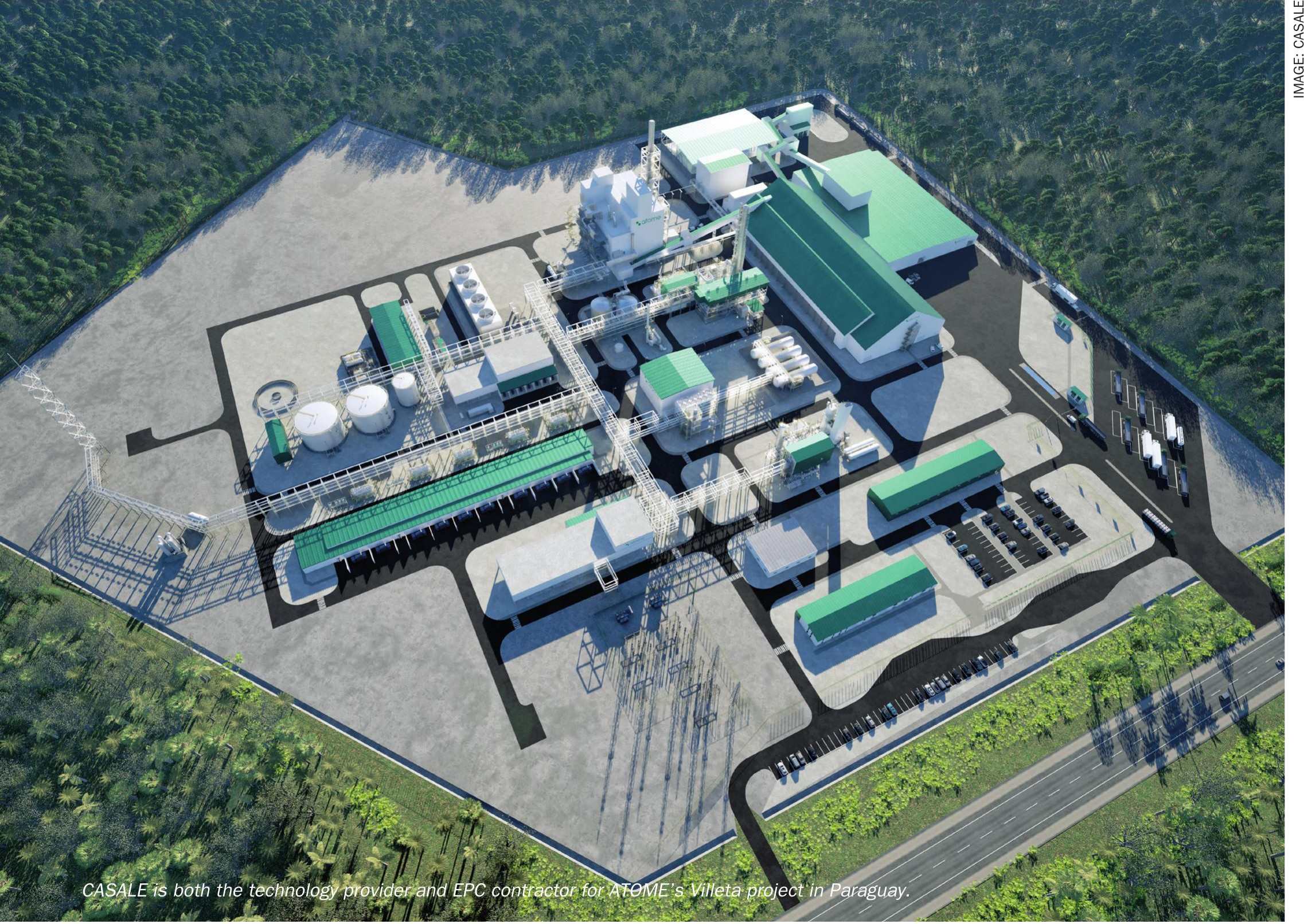
“One factor that is easy to underestimate is the quality of the project developer. ATOME was an exceptionally strong developer and partner for the Villeta project – capable of marshalling the financial resources and managing the complexity of bringing a project of this nature to FID. Having the right development partner is as critical as the technology itself.”
Where are you seeing the strongest growth today – in terms of technologies, project types and regions?
“I want to be straightforward: we are not seeing broad-based strong growth across the market as a whole. That said, there is meaningful activity in low-carbon solutions. Despite the political and economic pressures that are slowing the transition in some markets, the industrial push towards lower-carbon production continues.
“Geographically, China and India are both active – we have green ammonia projects under way in India, for example. South America is also generating real momentum, with Villeta acting as a catalyst. We expect South America to be an increasingly important market for low-carbon fertilizer production in the years ahead.”
Ammonia is increasingly discussed as both a fertilizer feedstock and an energy carrier. How do you see its role evolving?
“In the fertilizer sector, ammonia’s role will remain central and irreplaceable – it is the fundamental nitrogen carrier from which all downstream products are derived. What will change is the carbon intensity of how it is produced.
“If I were to name a single overarching ambition for CASALE it would be this: to be recognised as the leader in guiding the fertilizer and energy industries through the decarbonisation transition.”
“As an energy carrier, ammonia has genuine advantages – it is easier to transport and store than hydrogen, for instance – but it also faces more competition than it does in the fertilizer world. Methanol is one alternative; other energy vectors are also under active development. My view is that there will not be a single winner: multiple green molecules will serve different markets and applications. Ammonia will have its space, but the pace and scale of its role in the energy sector will depend significantly on how quickly enabling regulations and market structures take shape.”
Which topics around fertilizers and decarbonisation do you believe are still underestimated – by the industry or by policymakers?
“Policymakers, in my view, are underestimating the urgency and consequences of global warming. If they fully grasped the risks, they would be acting faster and with greater consistency. The pace of policy development remains one of the key constraints on market development.
“The industry, on the other hand, has at times overestimated how quickly the low-carbon market would develop. There was a period of considerable optimism about the speed of the transition that the market has not yet borne out. That mismatch between expectation and reality has been challenging, and recalibrating those expectations is an ongoing process for all of us.”
Innovation has always been part of CASALE’s DNA. Which recent developments are you most proud of – and why do they matter for customers?
“Innovation has been central to CASALE since we were founded – and again since the company was given a rebirth from the late 1970s onwards. We have a strong R&D group and a genuine culture of technological development.
“Recent highlights include our green ammonia and green methanol processes designed for variable renewable energy inputs, capable of operating across a production range of 10 to 100%. That is a significant capability for green plants powered by intermittent solar or wind energy. We have also developed advanced processes for blue ammonia and blue hydrogen, based on our auto-thermal reforming technology. On the use of ammonia as a low-carbon energy vector an advanced ammonia cracking process has been developed.
“On the conventional side – because supporting the transition of the existing industry is equally important – we have developed an ultra-low-consumption urea process that reduces both energy use and CO2 emissions per tonne, and a more efficient melamine process with reduced waste generation. These may be less visible developments to the outside world, but they are genuinely significant contributions to the near-term transition.”
How do you see CASALE evolving over the next 5–10 years?
“I will not go into detailed strategy in a public forum, but there are a few clear directions I can point to.
“Digitalisation will be transformative for us. We are already applying AI tools to the development of detailed engineering design, enabling the same team to manage a greater volume of work more effectively. Extending that across our internal processes and into how we help clients optimise plant operations will represent a significant shift in how we work.
“We will also continue expanding our technology portfolio – broadening into adjacent areas and deepening our capability in existing ones. And we intend to strengthen our position further as a supplier of both greenfield and revamping solutions globally.
“But if I were to name a single overarching ambition, it would be this: to be recognised as the leader in guiding the fertilizer and energy industries through the transition to decarbonisation. That is the direction we are heading, and it is where we intend to be.” ■
Acknowledgement
Interview by Natalie Noor-Drugan, Senior Editor, CRU Communities.