Nitrogen+Syngas 402 Jul-Aug 2026
Managing cost, carbon and complexity in low-carbon hydrogen


SYNGAS PRODUCTION

Managing cost, carbon and complexity in low-carbon hydrogen

Selecting the right syngas technology is a critical early decision for low-carbon hydrogen and ammonia projects, with significant implications for carbon intensity (CI), capital cost and plant complexity. Gas-based partial oxidation (POx) offers a potentially simpler and lower-cost route designed to deliver high carbon capture performance. Shadi Mihandoust and Matthew Mardell of Shell Catalysts & Technologies examine how it compares with conventional alternatives, where steam methane reforming (SMR) can struggle to achieve high capture rates and autothermal reforming (ATR) can add cost and complexity.

Recent comparative analysis of Shell Gas-POx (SGP) and ATR configurations under high carbon capture conditions (≈99%) indicates that SGP can offer a lower capital cost, supported by a simpler process configuration and reduced equipment count. The same analysis shows an approximately 10% lower levelised cost of product (LCOP) for the SGP case, reflecting lower power demand, efficient heat integration and reduced CO2 compression requirements. Together, these results highlight the potential for SGP to deliver both cost and carbon advantages at scale.

As the global energy and chemicals sectors move from ambition to execution on decarbonisation, the focus of project developers, licensors and engineering, procurement and construction (EPC) contractors is increasingly shifting towards the selection of synthesis gas (syngas) production technology. This is because the syngas route fundamentally determines efficiency, carbon capture performance, operability and overall project economics.

POx technologies are often associated with the processing of heavy or challenging feedstocks, reflecting decades of successful deployment of coal and residue POx in refining, chemicals and other applications. While this heritage is well established, it has also led to the longstanding misconception that POx is primarily a solution for upgrading difficult feeds, rather than a competitive option for natural gas based hydrogen and ammonia production.

In practice, gas based POx technologies represent a distinct and highly mature class of syngas processes and are beneficial for high-capture, low-carbon hydrogen and ammonia production, having been specifically optimised for gaseous feedstocks and large scale syngas production.

In recent years, interest in gas-based POx has accelerated as low-carbon hydrogen hubs, decarbonised (blue) ammonia projects and refinery decarbonisation initiatives move into front-end development. For these applications, the ability to integrate CO2 capture efficiently, while maintaining high availability and economic competitiveness, is emerging as a critical differentiator between technology options.

Integrating syngas generation and carbon capture

Syngas production sits at the core of hydrogen and ammonia manufacturing, but its role takes on renewed importance in the context of decarbonisation. The composition, pressure and thermal profile of syngas directly influence not only the yield but also the efficiency and cost of carbon capture, the complexity of downstream process and, ultimately, the CI of the end product.

Syngas routes that enable efficient pre-combustion CO2 capture are fundamentally advantaged over post-combustion approaches, owing to higher partial pressure of the CO2 being captured. Capturing CO2 from a concentrated, high-pressure syngas stream enables smaller equipment, lower solvent circulation rates, reduced regeneration energy and lower compression duties, which can translate into lower operating costs and improved overall plant performance.

The Shell Blue Hydrogen Process (SBHP) is a proven and de-risked process for conversion of gaseous hydrocarbons to syngas via Shell Gas POx (SGP), while capturing the CO2 with Shell’s amine-based ADIP® ULTRA pre-combustion CO2 capture technology. SBHP can provide an end-to-end solution by integrating these in-house technologies with third-party technologies to deliver hydrogen, ammonia and CO2 end products (including derivatives such as urea).

The hydrogen/ammonia produced is often referred to as “blue” or “low carbon”. This technology is applicable to a wide range of applications and project types, typically categorised by the source of feedstock and the intended use of the resulting decarbonised (blue) hydrogen or ammonia product with common themes or archetypes as illustrated in Fig. 1.

The Shell Blue Hydrogen Process

Industrial references and operating experience

The development of the SBHP is underpinned by decades of proven industrial experience. Shell’s expertise in partial oxidation dates back to the early 1950s, when the first Shell POx unit for research and development was commissioned. Since then, Shell’s POx technology has been continuously developed and refined, evolving into a highly robust and scalable solution for syngas and hydrogen production.

Today, POx-based systems form the backbone of some of the world’s largest integrated syngas and hydrogen complexes. To date, more than 170 Shell POx reactors have been developed and deployed worldwide, representing a total installed syngas production capacity of approximately 150 million Nm³/d (hydrogen plus carbon monoxide).

Shell also brings extensive experience in gas treating through its ADIP technology, which also originated in the 1950s. Over the decades, ADIP has continuously evolved to meet the changing needs of industry and it remains a widely adopted and trusted solution today. There are now more than 500 ADIP technology users worldwide, across refining, natural gas and syngas applications. This combination of long-standing POx and gas-treating experience gives Shell a foundation for delivering integrated hydrogen production schemes, including decarbonised hydrogen concepts where reliable syngas generation and effective CO2 capture are both essential.

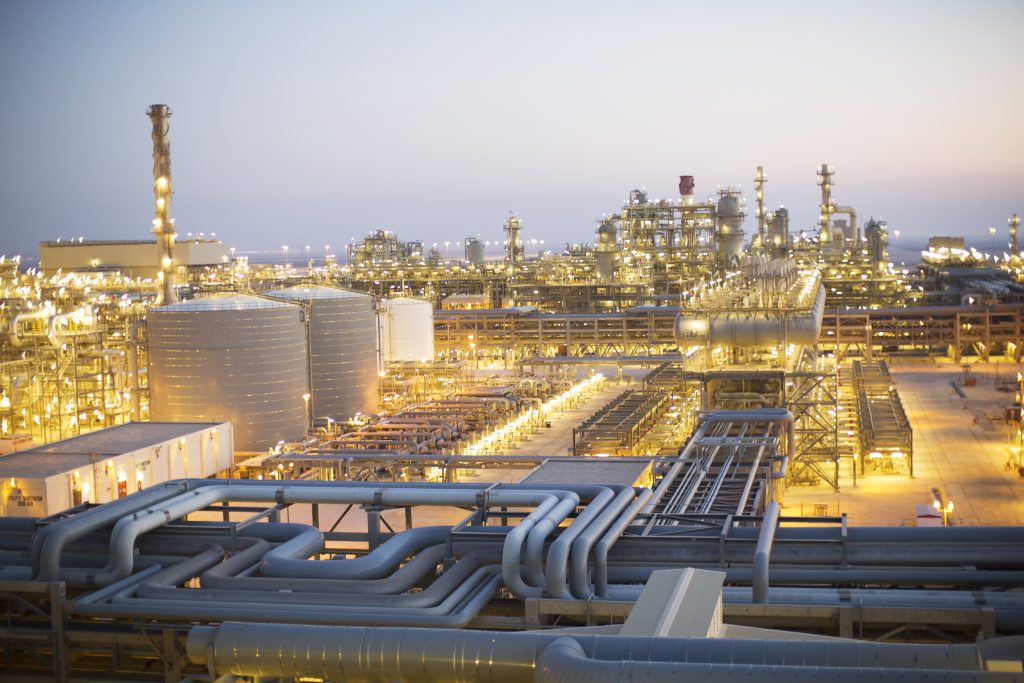
Fig. 2 provides an overview of the global deployment of these technologies, including several assets designed and operated by Shell such as Pearl Gas-to-Liquids (GTL) in Qatar and Shell Energy and Chemicals Park Rotterdam in The Netherlands (Fig. 3). These references are not limited to standalone licensed units; they also include large, fully integrated operating facilities where Shell has accumulated practical know-how as both technology developer and plant operator. The lessons learned from designing, operating, maintaining and optimising these complexes have been systematically incorporated into Shell’s licensor scope and are made available to both Shell-operated and third-party projects. This experience-based approach helps reduce implementation risk and supports smoother project execution from concept selection through long-term operation.

Shell’s decades of owner-operator experience provide a deep practical understanding of what drives reliability and uptime in large-scale syngas and hydrogen facilities. That experience is reflected in a POx-based SBHP design focused on operational efficiency, with a highly automated control system that simplifies routine operation and helps manage start-up and shutdown transients smoothly, thereby reducing both the extent and duration of flaring.

This inherently simple and robust configuration is designed to support high reliability and availability of the SGP-based scheme. The long service life of key POx equipment supports sustained performance over extended operating campaigns. At the same time, removing equipment and process features often associated with higher maintenance demand or operational complexity (such as process-fired heaters or catalysts) helps minimise unplanned downtime. Based on Shell internal reliability, availability and maintainability (RAM) analyses, supported by feedback from operating assets, overall availability from unplanned events is typically expected to be greater than 98% for the full integrated SBHP.

Technical features of the SBHP

The SBHP (Fig. 4) is designed to deliver efficient, high-pressure hydrogen production with high carbon capture performance. Its principal technical advantages are summarised below:

High conversion and low methane slip

The high conversion achieved in the SGP reactor results in lower methane slip compared with alternative process routes. This improves overall carbon capture performance by limiting residual hydrocarbons in the product streams and supports a typical overall carbon capture rate of more than 97%, with the potential to exceed 99% depending on the selected line-up and project boundary conditions.

High thermal efficiency

The syngas effluent cooler (SEC) recovers reaction heat to generate high-pressure steam, enabling effective thermal integration across the plant. In many cases, this steam can satisfy the process steam demand, and surplus steam can be exported, used for internal power generation or applied to compressor drives. This supports both high overall efficiency and improved site energy integration.

High pressure CO2 capture

ADIP ULTRA operates at high capture pressure, allowing a large portion of the CO2 to be regenerated at medium pressure. This reduces the duty of the downstream CO2 compression system and can minimise both compressor size and associated power consumption.

High operating pressure

SGP reactors can operate at elevated pressure, which reduces the size of downstream equipment and delivers hydrogen or syngas at high pressure. This can lower downstream compression requirements, particularly for ammonia production, thereby providing both an energy benefit and a reduction in overall plant complexity.

Feedstock flexibility

The non-catalytic POx route can process a wide range of hydrocarbon feedstocks with minimal or no pretreatment. In addition to conventional natural gas feeds, this includes refinery/chemical plant off-gas, biogenic feedstocks and even heavier gaseous feedstocks, thus offering flexibility for integration with existing industrial and refining assets.

Flexible hydrogen purity options

The process can be tailored to meet a range of hydrogen purity requirements, so the most appropriate and cost-effective configuration can be selected for each project. For example, the purity of the hydrogen downstream of the ADIP ULTRA unit is suitable for use in hydrogen firing applications, allowing for a simpler and more efficient line-up. Where high-purity hydrogen (> 99.9%) is needed, pressure swing adsorption (PSA) can be applied. For industrial-grade hydrogen, methanation offers an efficient alternative to PSA, and in ammonia applications, liquid nitrogen wash can be applied.

Technology comparison and case study benchmarking of POx

For decarbonised hydrogen and decarbonised ammonia developers, the choice of syngas generation technology has implications that extend well beyond the reaction pathway itself. It influences project capital cost, CI, energy efficiency, operability, and ultimately the ability of a project to progress competitively towards final investment decision. As low-carbon projects continue to scale up, technology selection is therefore increasingly being assessed not only in terms of technical feasibility, but also in terms of delivery risk and long-term economic resilience.

At a high level, SMR, ATR and POx each offer established routes to syngas production. SMR remains a proven and widely applied technology for conventional hydrogen production and can be adapted for decarbonised hydrogen through the addition of carbon capture. However, for new-build projects targeting very low CI, oxygen-based routes such as ATR and POx are more effective than SMR in integrated high-capture configurations, as SMR requires capturing the CO2 from both the process and flue gas thereby adding cost and inefficiency.

For this reason, ATR is more relevant than SMR for detailed comparison with POx and tends to be used as the principal alternative benchmark for large-scale decarbonised hydrogen and decarbonised ammonia applications.

To illustrate the relative performance of the SBHP, a case study for decarbonised ammonia production was carried out comparing a Shell Gas POx-based configuration with an ATR-based configuration on a consistent basis. The comparison was aligned, assuming the same:

  • ammonia production capacity and product purity;
  • overall carbon capture rate (≈ 99%);
  • plant location;
  • costing basis;
  • CI of natural gas production and transportation and grid electricity.

The results are presented in Fig. 5, in normalised form, using the POx-based case as the reference value of 1.00.

The POx configuration was found to offer a lower capital expenditure (capex), supported by a relatively simple process line-up, lower equipment count owing to the absence of furnaces, and the benefit of higher operating pressure. To meet the same carbon capture rate, ATR needs additional equipment and process complexity, both of which contribute to an increased capex.

The same case study also indicated an approximately 10% lower LCOP for the POx case. This reflected a combination of lower power demand, efficient heat recovery and steam integration, and lower CO2 compression requirements.

Although both technologies were matched on carbon capture rate, owing to having the same Scope 1 emissions, the resultant CI of the product is approximately 10% lower for the POx case. This comparison considers a full life cycle analysis across the value chain, with the delta coming from the increased Scope 2 emissions (power consumption) and upstream emissions (feed plus fuel consumption) associated with ATR.

In interpreting these results, it is also important to consider potential trade-offs. Oxygen-based routes require an air separation unit, adding power demand and capital investment compared with SMR, while enabling high carbon capture rates without extensive additional processing. By contrast, SMR is typically more suited to smaller-scale applications and faces challenges in scaling to higher capacity and to high capture levels. These aspects are typically addressed through project-specific design and integration.

Taken together, these results show that POx-based syngas production offers a favourable combination of cost and carbon performance for large-scale decarbonised hydrogen and decarbonised ammonia projects. Although the relative outcome will always depend on project-specific boundary conditions, the case evaluated indicates that process simplicity, efficient heat integration and high-pressure operation can translate into meaningful advantages at plant scale. For developers seeking to balance low-carbon performance with project robustness and competitiveness, POx therefore represents an attractive option for future decarbonised hydrogen and decarbonised ammonia developments.

Conclusions

The selection of syngas technology remains a critical early decision for developers of low-carbon hydrogen and ammonia projects, with direct implications for CI, capital cost and process, equipment and start-up complexity. The comparison presented here shows that, under high carbon capture conditions (>99%), Shell Gas POx can deliver a favourable combination of cost, carbon performance and process simplicity relative to conventional alternatives such as SMR and ATR.

Although the optimal solution will depend on project-specific conditions, Shell Gas POx is considered a robust and competitive option for project developers seeking to achieve very low CI without introducing unnecessary cost or complexity.

Latest in Decarbonisation