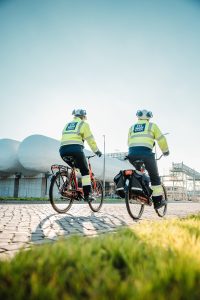
Yara opens Europe’s largest carbon capture project
The €200 million project was officially opened on 7th September in an inauguration ceremony at Sluiskil in the Netherlands attended by the Norwegian and Dutch prime ministers.


The €200 million project was officially opened on 7th September in an inauguration ceremony at Sluiskil in the Netherlands attended by the Norwegian and Dutch prime ministers.
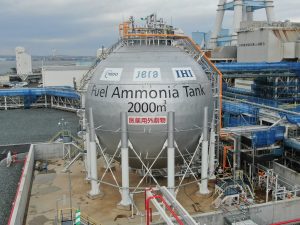
While the power sector has been advanced as a major long term source of demand for emerging low carbon ammonia projects, the pace of development in leading proponents such as Japan and South Korea remains patchy.

Coal India Limited (CIL) says that it has executed a non-binding memorandum of understanding (MoU) with ArcelorMittal Nippon Steel India Private Limited (AMNS), to examine the use of syngas from a gasification facility which CIL would set up next to the ArcelorMittal’s Paradip pellet plant in Odisha state. The company says that it will be “exploring the possibility of utilising syngas produced from a coal gasification facility… coupled with CCUS.” The focus of the MoU will initially be to assess the technical, commercial, and implementation aspects of the project and to facilitate preparation of a preliminary feasibility report for evaluating project viability.

Novel technology from UK start-up Vateris combines potassium hydroxide with gypsum and captured carbon dioxide to deliver high-purity potassium sulphate (SOP).
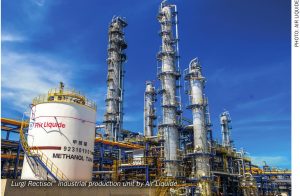
Air Liquide examines how its Lurgi™ ATR and Recticap™ carbon-capture technologies can support scalable, cost-effective low-carbon ammonia production.
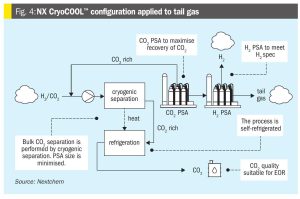
Gas processing facilities are increasingly required to reduce industrial carbon footprint. A significant opportunity lies in recovering CO2 from tail-end gas streams that are typically routed to thermal oxidation. MAIRE Group presents an integrated recovery configuration combining cryogenic separation with pressure swing adsorption (PSA) to recover high purity CO2 and H2 from SRU/TGTU tail gas.
While there has been a focus on switching to low carbon hydrogen feeds, many options exist to decarbonise refineries, including energy efficiency, carbon capture and changing to bio-feedstocks.
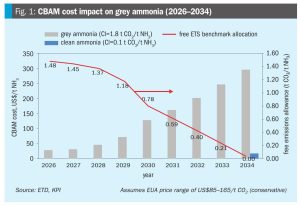
VK Arora of Kinetics Process Improvements (KPI) compares the delivered-cost competitiveness of blue ammonia from regions including the US Gulf Coast, Western Canada, Atlantic Canada, the Middle East, Indonesia, and Malaysia into Japan, the European Union, and South Korea.
Selecting the right syngas technology is a critical early decision for low-carbon hydrogen and ammonia projects. Shell shows how gas-based partial oxidation (POx) can offer a potentially simpler and lower-cost route designed to deliver high carbon capture performance.

SunGas Renewables Inc. has said that it will cease further development of the Beaver Lake Biofuels project, a proposed wood fibre-to-low carbon methanol facility in Louisiana. The project was to have involved integrating three of SunGas S1000 syngas production systems with downstream technologies to produce approximately 553,000 t/a of low carbon methanol, and geological storage […]