Europe

Middle East conflict drives historic urea affordability crisis

Written by Natalie Noor-Drugan


CRU has published a series of updates for its clients on the impacts of the Middle East conflict on fertilizer markets. These are the headline findings from its latest analysis, published on 7 April 2026.

Urea hits record unaffordability

Nitrogen prices have surged since the start of the conflict. CRU’s urea affordability indicator hit 206 points last week — 8 points above the prior high of 198 set in November 2021 — making urea the most unaffordable fertilizer across all three main nutrient groups. Global crop prices, meanwhile, have barely responded, with CRU’s crop price indicator holding at 114, well within its recent range, widening the affordability gap further.

Global urea demand is forecast to reach 200 million tonnes in 2026, according to CRU’s March 2026 urea market outlook, up 1.6% year on year — the slowest rate of annual growth since 2021. Significant downside risks are also building across key regional markets.

Iran’s nitrogen output goes dark

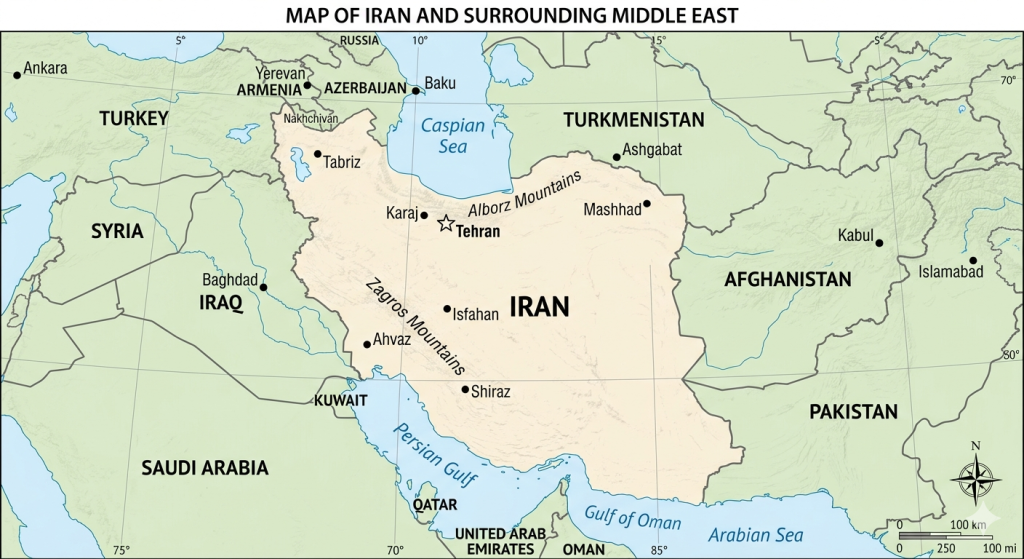
All Iranian ammonia-urea plants have been taken offline, CRU reported on 7 April, following missile strikes on associated power and feedstock infrastructure. Pardis Petrochemical Company, Shiraz Petrochemical Company, Turkish-owned Razi Petrochemical Company, Khorasan Petrochemical Company, Kermanshah Petrochemical Industries Company, Lordegan Urea Fertilizer Company and Masjed Soleyman Petrochemical Industries have all ceased urea output. Iranian nitrogen production had only just resumed following a two-week nationwide shutdown caused by earlier strikes on the South Pars gas field. The official Iranian producer price was set at $700/t FOB this week, up $70/t on the prior week.

Regional demand at risk

CRU’s analysis identifies Australia as the most exposed urea market globally. With nitrogen demand already forecast to decline approximately 8% year on year, the country faces additional downside risks, given its full import dependence and limited government support.

In March, Brazil’s urea:corn and MAP:soy barter ratios both reached their worst levels since tracking began in 2010. The continuation of elevated prices represents a material downside risk to the current 2026 fertilizer consumption forecast for Brazil, warns CRU.

In the US, urea and UAN affordability are at their worst since tracking began in 2013, although domestic production and government support programmes limit the risk of material demand destruction.

Europe, meanwhile, faces a compressed spring application window and, as a marginal nitrogen producer, is particularly exposed to gas pricing, leaving its moderate 2026 growth outlook exposed to downside risk.

China and India remain largely insulated — China through domestic coal-based production and export restrictions, India through government subsidy programmes — although India will face rising fiscal pressure from higher import costs.

Latest in Europe

Cherepovets hit by drone strikes; phosphate impact unclear

Multiple drone strikes have hit the industrial city of Cherepovets in Russia's Vologda Oblast region, according to Russian news agency TASS. The area contains PhosAgro's largest phosphate fertilizer production site. Cherepovets has a production capacity of around 700,000 t/a NPK and around 814,000 t/year DAP/MAP, according to CRU data, making it the largest phosphate fertilizer production site across Europe and the CIS. The site also contains several sulphuric acid plants with a combined capacity of 4.5 million t/a, making it Russia's largest production hub for the acid. This entire volume is consumed domestically.

Russia extends sulphur export ban to mid-2026

Russia has again extended its ban on the export of industrial sulphur, with the latest decree prolonging the restriction until 30 June 2026. The announcement was made via the government’s press service on 31 March. This decision is aimed at stabilising the supply of raw materials for the domestic market to support the production of phosphate-based fertilizers. The restriction covers the export of liquid, granulated, and lump sulphur.

Partnership for waste to methanol plant

HyOrc Corporation says that it has signed a project development and technology agreement with Bulgaria-based OnEnergy Group to develop a waste-to-methanol facility. Under the agreement, HyOrc will serve as the technology partner for Stage 3 of the project, which focuses on thermochemical conversion of refuse-derived fuel (RDF) into green methanol. The facility is designed to process approximately 50,000 t/a of RDF, operating around 330 days per year with a daily throughput of approximately 150-155 t/d. Expected methanol production capacity is approximately 38-42 t/d (13,200 t/a), subject to final engineering configuration.

Agreement over green methanol project

Swedish e-fuel developer Liquid Wind and Finnish energy company Turun Seudun Energiantuotanto (TSE) have signed a memorandum of understanding (MoU) for the development of a green methanol plant at Naantali, Finland. The facility is planned to be adjacent to TSE’s local power plant, Naantali 4, which will deliver biogenic CO 2 and steam for the production of methanol. Process and waste heat will be used for district heating, reducing the share of incineration-based district heat production by TSE. Once operational, the plant is expected to produce 100,000 t/a of green methanol made from green hydrogen and biogenic CO 2 . The final investment decision (FID) is planned for 2026, and the facility is expected to be operational in 2029.