Nitrogen+Syngas 396 Jul-Aug 2025
Another month of market turmoil


Editorial

Another month of market turmoil

Yara estimated that 20% of global urea capacity was offline…”

June saw fertilizer markets – urea markets in particular – thrown into chaos by the widening of hostilities in the Middle East. Israel’s and then the United States’ strikes on Iranian nuclear facilities and the retaliatory attacks on Israel and Qatar for a while held out the potential for the conflict to widen, perhaps even leading to attempts to close the straits of Hormuz at the entrance to the Gulf, something not seen since the ‘tanker war’ of the 1980s when Iraq tried to cripple Iran’s oil exports during the eight year Iran-Iraq War.

Around 40% of global urea trade passes through the Straits, as well as 20% of LNG cargoes, potentially leading to feedstock shortages or price rises. But even without an attempt by one side or another to blockade the Straits, the fighting caused plenty of chaos, as Iran shut down its own domestic urea production, and disruptions in gas supply from Israel into Egypt from the Leviathan and Karish fields also led to temporary shutdowns in Egyptian urea production. Iranian missiles fired at US bases in Qatar increased nervousness about escalation, and at one stage during the month Yara estimated that 20% of global urea capacity was offline for one reason or another, leading to price spikes in most markets. Middle East f.o.b. prices jumped by around $150/t in a fortnight, something not seen since the Russian invasion of Ukraine in February 2022.

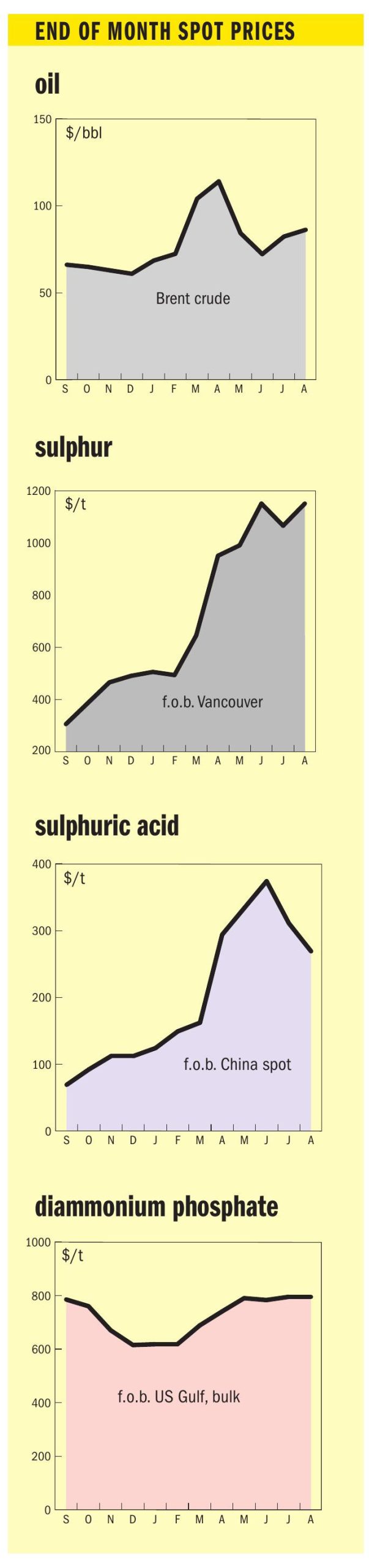
Fortunately the fighting has not worsened, and what is now beginning to be called the ’12 Day War’ ended with a US-backed ceasefire that – aside from another missile exchange between Israel and Iran the next day – seems to be holding. With Iranian urea production beginning to return to operation at the end of June, it looks as if the worst of the disruption may be past. CRU estimates that the shutdowns represented the loss of around 120-170,000 tonnes of Iranian urea, while Egyptian capacity has returned to around 80% operating rates overall by the start of July, with an estimated 300,000 tonnes of production lost. China has released more urea for overseas sale, which is also helping to bring markets back to an even keel in spite of India looking for 2 million additional tonnes by mid-August. Energy prices have also calmed, with oil back down to the low $70s/barrel for Brent crude at time of writing, after a jump of around $8/bbl, easing fears about a potential global economic slowdown.

However, set on top of other continuing market uncertainties, from US tariffs and ongoing trade disputes to the impact of the European Carbon Border Adjustment Mechanism (CBAM), not to mention additional sanctions on Russian fertilizer, and continuing high European energy prices, it feels like another reminder that the level of volatility we have seen in commodity markets since the outbreak of covid-19 may simply be “the new normal”, and something that producers and consumers alike must find ways of adapting to.

Latest in Outlook & Reviews

CRU Phosphates+Potash conference focuses on sulphur

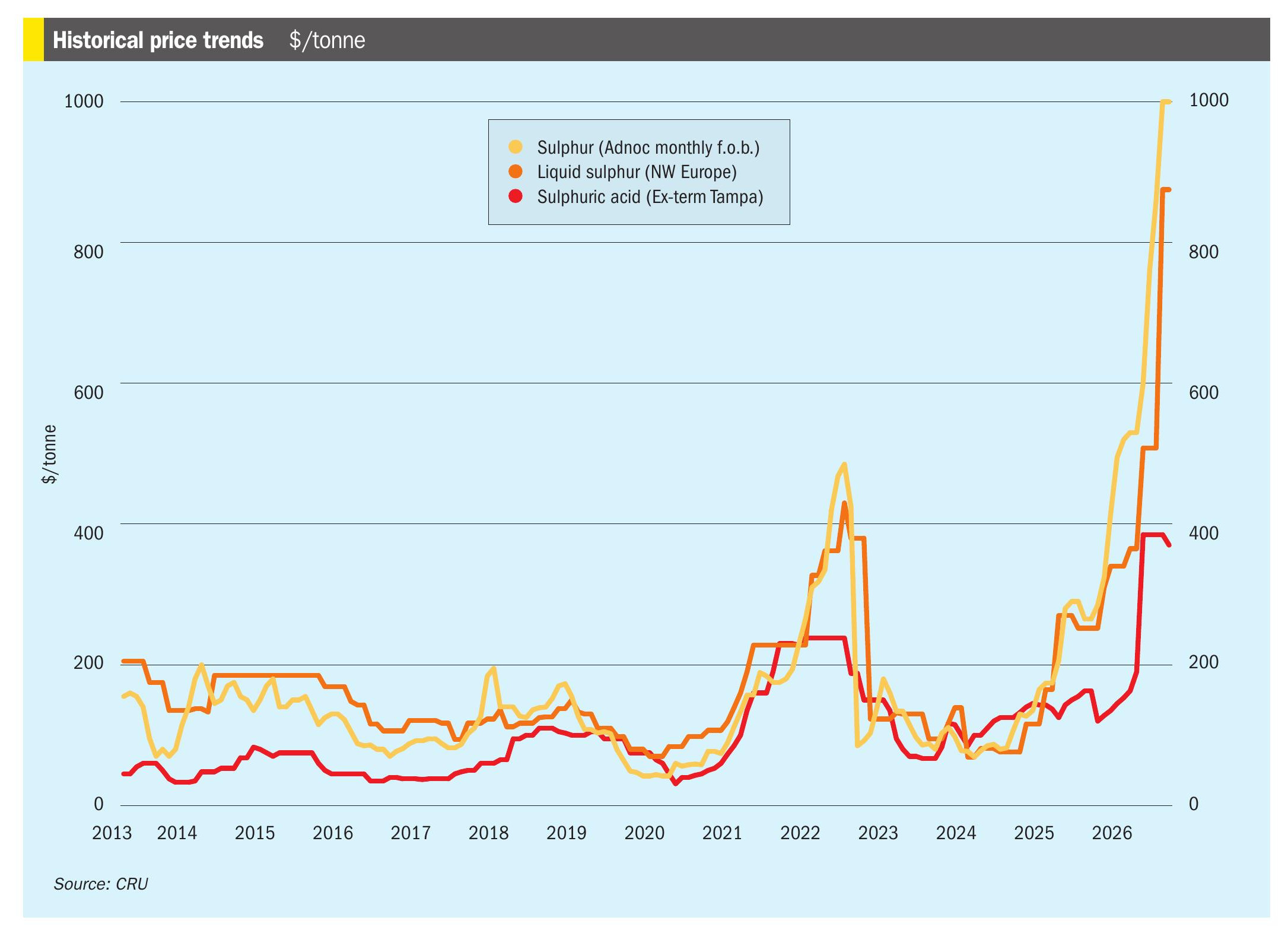
CRU’s Phosphates+Potash Expoconference was held in Paris in mid-April, with the Iran crisis uppermost in everyone’s mind. Margins are under pressure, sulphur has become a strategic constraint, and the phosphates investment pipeline is thin. CRU Principal Consultant Humphrey Knight examined the fallout from the closure of the Strait of Hormuz, noting that fertilizers have been hit harder than most bulk commodities. A large share of exportable sulphur and traded urea normally originates in, or passes through, Gulf producers. The effective closure of the strait has squeezed the traded part of these markets, where international prices are set, and pushed benchmarks up sharply. The global phosphate market is structurally tight, and the combination of Chinese export policy and Middle East logistics has pushed the traded segment into a much more fragile state.