Nitrogen+Syngas 382 Mar-Apr 2023

Which way the wind blows


Editorial

Which way the wind blows

“There are now also major carrots and sticks in place to drive the changeover”

On March 20th this year, just as this issue was going to print, the UN Intergovernmental Panel on Climate Change (IPCC) issued its Synthesis Report, one of its 5-7 yearly comprehensive assessments of how the world’s climate is changing and what needs to be done to ameliorate it. In spite of all of the progress that has been made since the 5th Synthesis Report in 2017, the IPCC notes that: “the pace and scale of what has been done so far, and current plans, are insufficient to tackle climate change.” While the body believes that keeping warming to 1.5°C above pre-industrial levels is still possible, it is not likely unless work to decarbonise proceeds more rapidly. In particular, the IPCC suggests that CO2 and equivalent emissions need to fall by 43% by 2030 compared with 2019 values, and 60% by 2035 to achieve this goal.

There is thus an increasing urgency to measures to tackle this, and certainly there was no shortage of presentations and talk of blue and green ammonia at the recent CRU Nitrogen+Syngas conference in Barcelona, as our report in this issue details. In his presentation, CRU’s Alex Amin calculated that there is now a total of 160 million t/a of announced blue and green capacity across dozens of projects, though of course economics and financing remain an issue, and at present only around 6 million t/a of this capacity looks likely to be completed before 2030.

Even so, this is a rapid growth rate from a low base, and successful projects are likely to ease the way for future capacity by demonstrating technologies and helping bring down costs. There are now also major carrots and sticks in place to drive the changeover, including the US Inflation Reduction Act, and Europe’s carbon pricing regime, and especially its Carbon Border Adjustment Mechanism, which begins a transitional phase this year, and which is due to fully come into force on January 1st 2026. There is also more government money available in the EU, with Germany increasing its spending on renewables by 30% year-on-year, and Spain 60%.

Green capacity requires renewable energy, and one of the ironies of the war in Ukraine is that, as it forces Europe to confront its dependence on Russian gas, so it has also actually accelerated Europe’s move towards renewable energy. In October 2022 a report found that use of renewables in EU electricity generation had increased even just since February 2022, by 14% in France, 20% in Italy, and 35% in Spain. The International Energy Agency’s Renewables 2022 report estimated that installed solar photovoltaic capacity could surpass natural gas and coal as the largest source of electricity generation by 2027. Renewable power generation is projected to more than double over the next five years, with as much capacity installed in that time as in the previous 20.

With markets for clean ammonia beginning to open up in the power sector, particularly in Japan, and with the longer term prospect of low carbon ammonia and methanol demand from shipping as a clean burning fuel, it is starting to become clear which way the wind is blowing.

Latest in Outlook & Reviews

CRU Phosphates+Potash conference focuses on sulphur

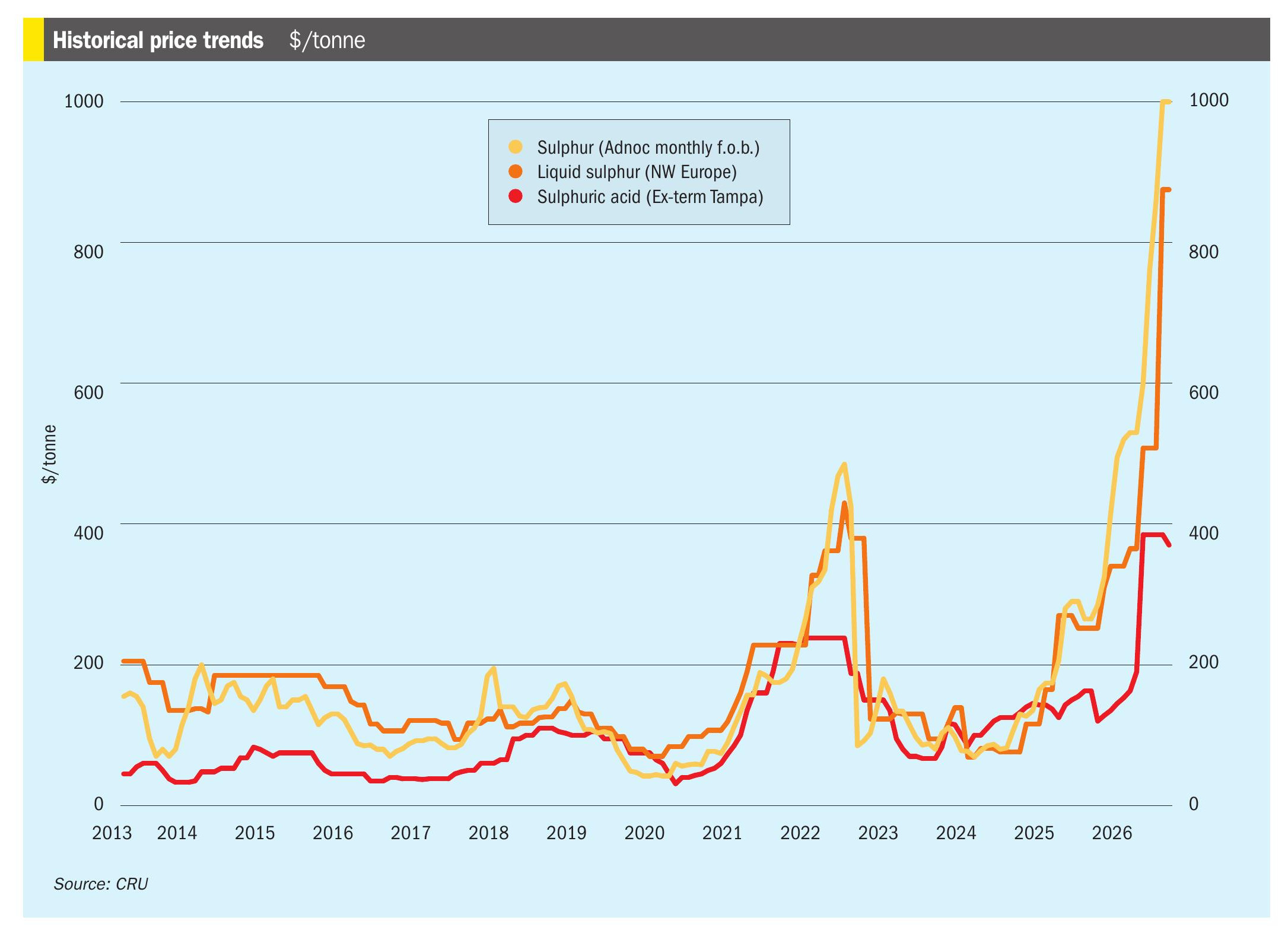
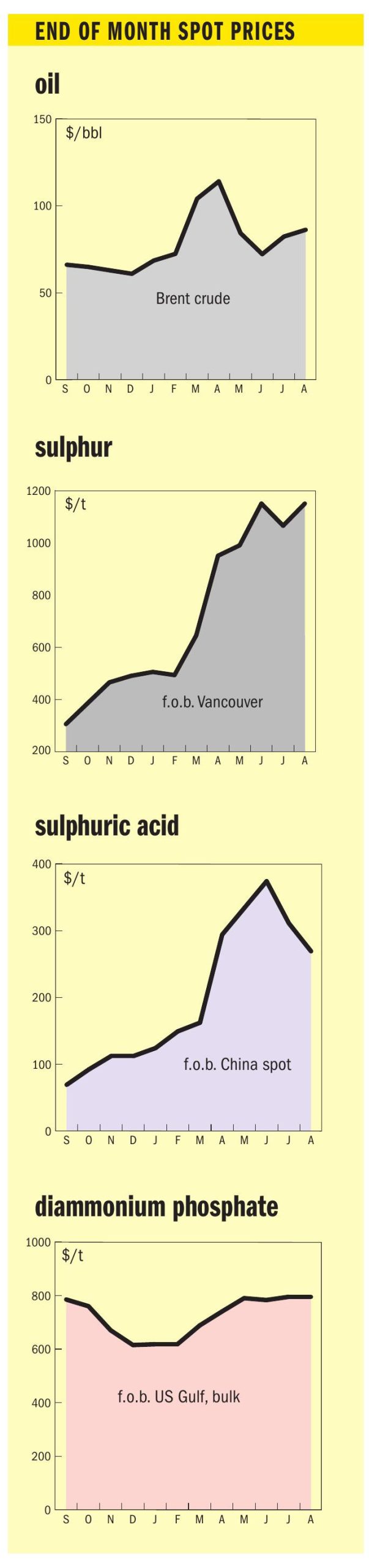
CRU’s Phosphates+Potash Expoconference was held in Paris in mid-April, with the Iran crisis uppermost in everyone’s mind. Margins are under pressure, sulphur has become a strategic constraint, and the phosphates investment pipeline is thin. CRU Principal Consultant Humphrey Knight examined the fallout from the closure of the Strait of Hormuz, noting that fertilizers have been hit harder than most bulk commodities. A large share of exportable sulphur and traded urea normally originates in, or passes through, Gulf producers. The effective closure of the strait has squeezed the traded part of these markets, where international prices are set, and pushed benchmarks up sharply. The global phosphate market is structurally tight, and the combination of Chinese export policy and Middle East logistics has pushed the traded segment into a much more fragile state.