
Edition Tag: Nitrogen Syngas 2026-05-31
Plant Manager+
In an ideal natural draft urea prilling tower, molten droplets fall, cool air rises, and prills solidify – but what happens when airflow at the tower base is disturbed? Small adjustments can have big consequences.
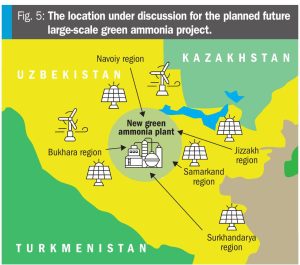
Green ammonia technology in Uzbekistan
A summary of Uzbekistan’s industrial baseline, historical operational experience with electrolysis, the 2025 green hydrogen pilot at Chirchiq, and the current outlook for scaling green ammonia production.
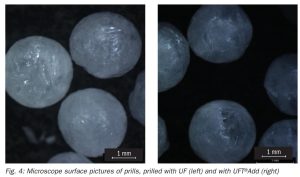
Additives for free-flowing automotive grade urea
thyssenkrupp Uhde Fertilizer Technology) has developed a series of formaldehyde-free additives, UFT®Add, which keeps solid urea free-flowing during transport and storage, enabling compliant automotive grade urea production.
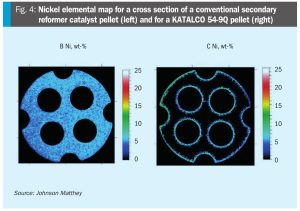
Optimised catalyst design for secondary reformers
Johnson Matthey Davy Technologies presents an innovative nickel catalyst for secondary reformers that lowers catalyst refill costs, aids reliability and reduces environmental impact.
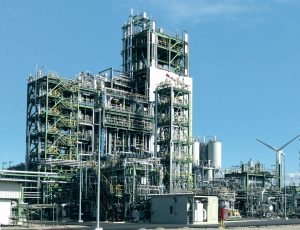
Conversion of biomass to chemicals and synthetic fuels
Continuously developed and adapted to evolving requirements, Uhde’s PRENFLO gasification technology can play a significant role in enabling the clean and sustainable production of syngas and syngas-derived products from an even broader range of carbonaceous feedstocks than ever before.
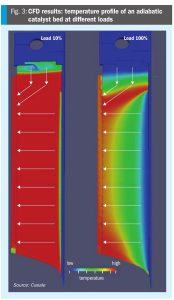
Successful 10% load test of an existing LAC™ ammonia plant
In an industrial test campaign, Linde has successfully demonstrated that an existing Linde Ammonia Concept (LAC™ ) plant equipped with a state-of-the-art Casale axial radial converter can be stably operated at 10% load for more than 24 hours.
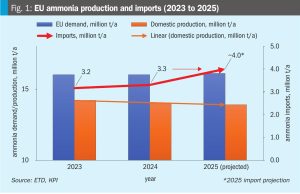
Convert, compete, or close: European ammonia at the crossroads
VK Arora of Kinetics Process Improvements, Inc. (KPI) looks at how – while carbon border taxes may reshape ammonia trade – the economics of hydrogen and electricity will ultimately determine the long-term competitiveness of European production.
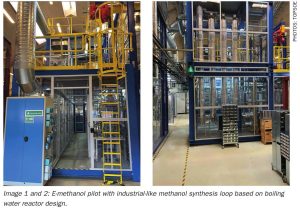
Delivering optimal e-methanol plant solutions
Topsoe explains how to avoid challenges and choose the optimal solutions for e-methanol plants based on CO2 feedstocks, electrolytic hydrogen and renewable power.

Policy impacts on nitrogen markets
Nitrogen markets, and urea in particular, have been impacted by a series of geopolitical shocks in recent years which have driven markets over and above normal market factors such as feedstock and shipping costs, crop prices etc.