Nitrogen+Syngas 399 Jan-Feb 2026
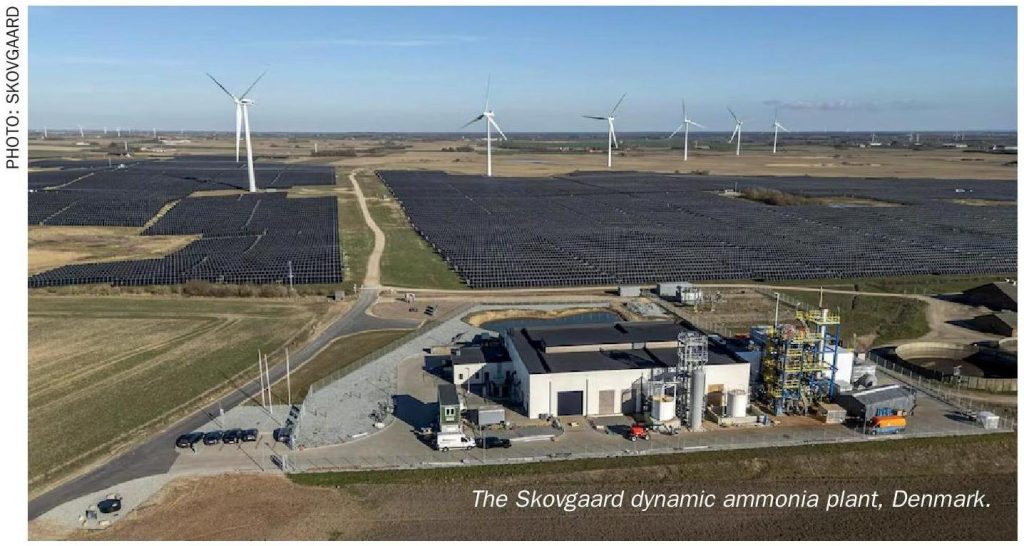
Dynamic green ammonia plant starts operations
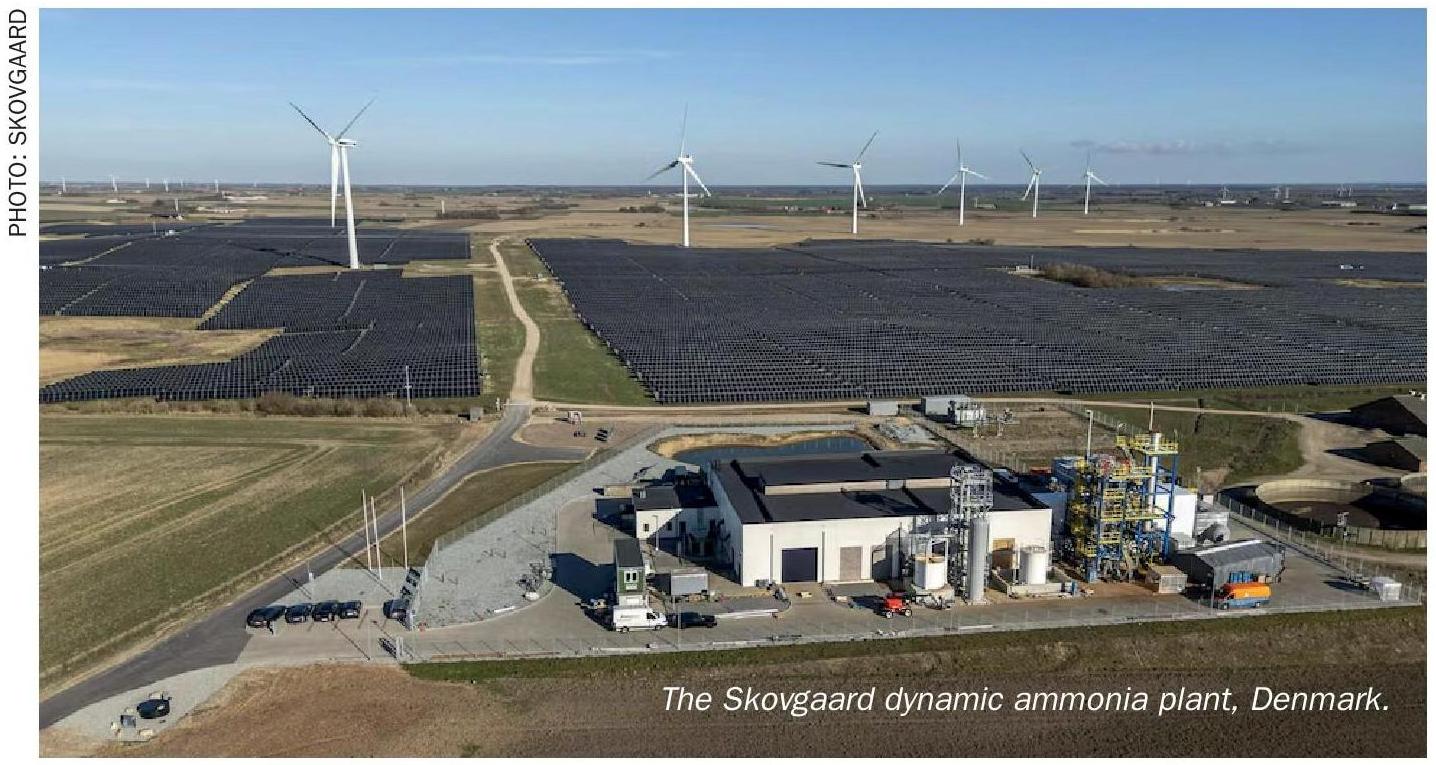

A consortium including Danish companies Skovgaard Energy, Topsoe and Vestas says that it has reached an important milestone with the startup of operations in what they describe as the world’s first of its kind green ammonia plant. The plant, owned by Skovgaard Energy and located in Ramme, Denmark, is a demonstrator for a dynamic approach to green ammonia production, which means that the plant will adapt to the inherent fluctuations in power output from the renewable power sources in integration with the plant’s electrolysis and ammonia synthesis loop. This, say the developers, will ensure optimal production and improve the cost-effectiveness of green ammonia, ensuring less need for costly storage solutions of green hydrogen or renewable power. Production capacity is 5,000 t/a of green ammonia, with an associated CO2 reduction of 9,600 t/a. The partnership has received euro 11 million in funding from the Danish Energy Technology Development and Demonstration Program (EUDP).
Kim Hedegaard, CEO Power-to-X at Topsoe, said: “This is a significant achievement. By working across the value chain, we’re accelerating green ammonia as a pathway to diversify our energy supply and decarbonise energy-intensive industries and long-distance transportation like shipping and agriculture.”

Niels Erik Madsen, CEO at Skovgaard Energy, said: “We are extremely proud of this groundbreaking project in Northwest Jutland, driving innovation, growth and job creation locally. It demonstrates the energy systems of tomorrow – scalable worldwide to accelerate the green transition.”

Latest in Agricultural

Cherepovets hit by drone strikes; phosphate impact unclear

Multiple drone strikes have hit the industrial city of Cherepovets in Russia's Vologda Oblast region, according to Russian news agency TASS. The area contains PhosAgro's largest phosphate fertilizer production site. Cherepovets has a production capacity of around 700,000 t/a NPK and around 814,000 t/year DAP/MAP, according to CRU data, making it the largest phosphate fertilizer production site across Europe and the CIS. The site also contains several sulphuric acid plants with a combined capacity of 4.5 million t/a, making it Russia's largest production hub for the acid. This entire volume is consumed domestically.