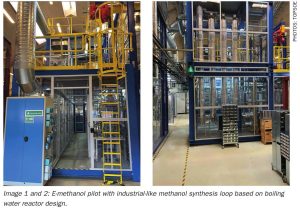
Delivering optimal e-methanol plant solutions
Topsoe explains how to avoid challenges and choose the optimal solutions for e-methanol plants based on CO2 feedstocks, electrolytic hydrogen and renewable power.
Topsoe has entered into an agreement with Texas-based sustainable fuels and chemicals technology company BioVeritas to unlock advantaged feedstocks for existing infrastructure. The agreement will enable fuel producers to license Topsoe’s HydroFlex® technology alongside the Bio-Veritas Process™ to produce renewable fuels from second-generation feedstocks, such as woody biomass, corn stover, wheat straw, and similar waste and residual biomass. The BioVeritas Process™ converts second-generation feedstocks to advantaged intermediates, called KEY-Tones™ that can be processed by Topsoe’s HydroFlex® technology to unlock production of renewable fuels using second-generation feedstock.
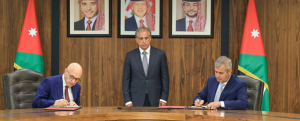
Topsoe has signed a FEED agreement for Hynfra’s green ammonia project located in the port of Aqaba, Jordan. The FEED is the detailed engineering and design of the plant, and Topsoe’s ammonia synthesis technology will be part of this design. The plant will convert green hydrogen to ammonia based on Topsoe’s ModuLite™ platform. Kim Hedegaard, CEO […]
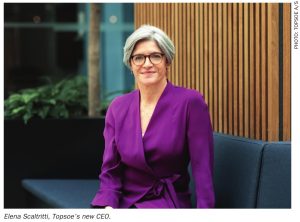
Roeland Baan has informed the Board of Directors of Topsoe A/S of his decision to step down as President and CEO of Topsoe effective 31 May, 2026. The Board has appointed Elena Scaltritti, currently the company’s Chief Commercial Officer, as the new President and CEO, from 1 June, 2026.
Topsoe says that it has been selected as the ammonia technology licensor for ACWA’s Yanbu Green Hydrogen Project in the Kingdom of Saudi Arabia. The process will enable green hydrogen from the Yanbu Project to be converted into ammonia. Topsoe will also deliver engineering, proprietary equipment and catalysts to Sinopec and Tecnicas Reunidas, who have jointly been awarded the front-end engineering design (FEED) contract.
In this real world case study, Topsoe demonstrates how cost effective catalyst changes can result in significant production increase without any equipment changes or revamps, all while maintaining compliance with emission limits.
Dangote Fertilizer, Africa’s leading fertilizer producer, has awarded contracts to several major companies for the provision of licenses and technical expertise for the development of two new planned ammonia-urea complexes, one in Nigeria and the other in Ethiopia, as well as the provision of basic engineering and design services for the related plants.
Topsoe is partnering with Maersk Training to establish safety standards that support the emerging Power-to-X industry. Topse says that Power-to-X and the production of e-fuels are critical enablers of the transition to low-emission fuels. However, no comprehensive safety standards currently exist that address the full range of risks at these sites. Together, the two companies will develop realistic simulations, competency-based training and a strong operational culture designed to strengthen safety practices across the entire value chain. As Power-to-X technologies scale to meet global climate ambitions, both companies emphasise the need for robust, realistic and forward-looking training frameworks. The collaboration builds on Maersk Training’s nearly 50 years of experience in high-risk environments.
A consortium including Danish companies Skovgaard Energy, Topsoe and Vestas says that it has reached an important milestone with the startup of operations in what they describe as the world’s first-of-its-kind green ammonia plant. The plant, owned by Skovgaard Energy and located in Ramme Denmark, is a demonstrator for a dynamic approach to green ammonia production, which means that the plant will adapt to the inherent fluctuations in power output from the renewable power sources in integration with the plant’s electrolysis and ammonia synthesis loop. This, say the developers, will ensure optimal production and improve the cost-effectiveness of green ammonia, ensuring less need for costly storage solutions of green hydrogen or renewable power. Production capacity is 5,000 t/a of green ammonia, with an associated CO2 reduction of 9,600 t/a. The partnership has received euro 11 million in funding from the Danish Energy Technology Development and Demonstration Program (EUDP).
Globally, operational renewable ammonia projects have exceeded one gigawatt (GW) of installed electrolyser capacity for the first time. Kevin Rouwenhorst of the Ammonia Energy Association (AEA) provides an overview of well-advanced projects and the associated technology options for ammonia synthesis.