Nitrogen+Syngas 402 Jul-Aug 2026
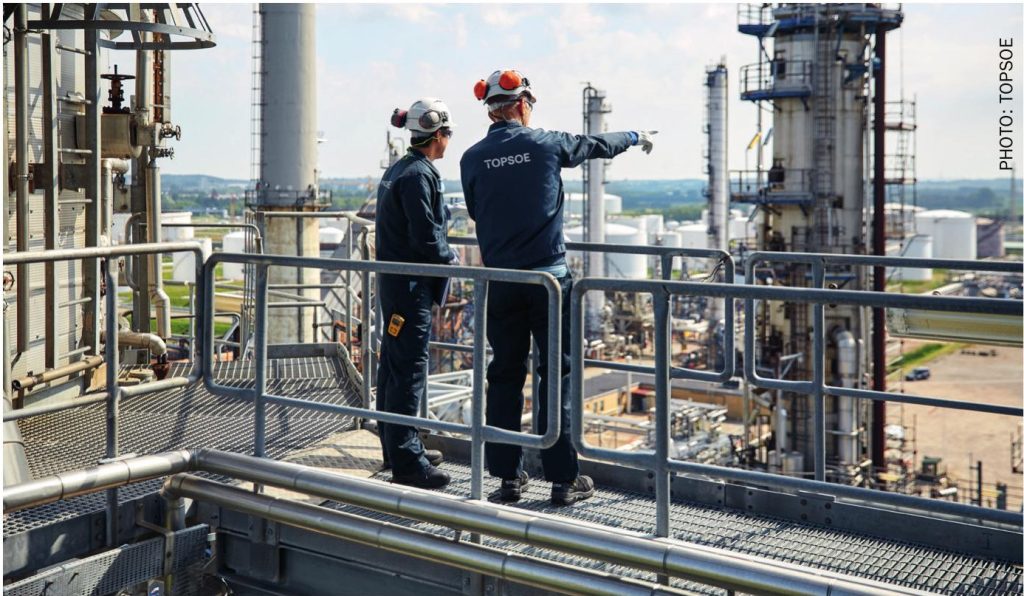
Why smart refiners and chemical producers are revamping now


REVAMPING

Why smart refiners and chemical producers are revamping now

Topsoe specialist, Ilayaraja Karuppasamy, looks at what typically triggers a revamp, how plants build a robust business case, where technology advances can deliver meaningful gains, and how to secure a successful revamp project.

Across refineries and integrated sites, “revamp” can mean many things: a debottleneck to lift output, a targeted equipment or catalyst upgrade to reduce energy consumption, or a staged modernisation to prepare for a different feedstock or a future low-carbon product market. What revamps have in common is that they aim to extract more value from existing assets – often with less time, cost and risk than a newbuild – provided the project is framed realistically and engineered around a solid operating baseline.

Why revamp now? The practical drivers plant owners cite

Increasing capacity can meet downstream demand. Yes, the most common driver is straightforward… production needs to go up. For instance, ammonia revamps are frequently tied to growing fertilizer demand or changes in the value of downstream product chains. Methanol revamps, likewise, tend to be demand-led, driven by growth in derivative markets.

Alongside capacity, plants focus strongly on reducing energy consumption (and operating cost). Lower energy use typically improves competitiveness immediately, especially in gas-based production where fuel and feedstock costs dominate the variable cost structure.

Some facilities pursue revamps to accommodate changes in feed quality or availability while still meeting production targets and maintaining stable operation. These projects often require a careful look at constraints that may not have mattered at original design conditions.

Decarbonisation pressure is also becoming a revamp driver. A growing, forward-looking reason is carbon footprint reduction. Many countries and customers are moving toward ambitious decarbonisation targets, and plant owners increasingly need modernisation pathways that support sustainability goals without sacrificing output. For methanol in particular, decarbonisation can require significant investment, so the sequencing of implementation and a clearly defined business case with achievable outcomes become critical.

The business case: payback still rules, but the “why” is expanding

In traditional revamps, the business case is usually built on two factors: higher production rate and lower specific energy consumption. Together, they translate into improved operating margins by lower cost per tonne. In many organisations, the biggest gating barrier is the payback period, which is typically expected to be less than four years, to justify the investment.

As revamp objectives shift toward decarbonisation, the value logic changes. The business case often depends on whether the market will pay a premium for low-carbon products and whether government support, mandates or incentives are available and locked-in long term to make the investment financially viable. This is why many sites explore staged decarbonisation revamps: This captures near-term efficiency gains in the short term, while keeping bigger carbon reductions on the table as policy and pricing mature.

Has the technology really moved on? Where modern upgrades can matter most

Even well-run plants, many of which have already undergone debottlenecks, can still benefit from technology that has progressed over the last 10–15 years. Two improvement areas come up repeatedly.

First, catalyst innovation can improve process efficiency and stability and can often be implemented during planned replacement cycles, making it an attractive, lower-disruption lever. Second, process and heat-integration advances potentially impact the energy utilisation within the process unit; examples include heat exchange reforming concepts and modifications in CO2 removal sections that better utilise process heat to improve overall syngas efficiency.

For ammonia facilities in particular, the recurring objective remains consistent: increase production rate while reducing specific energy consumption. The best revamps are the ones that achieve both without pushing the plant into an unstable or overly constrained operating regime.

Decarbonisation benefits go beyond emissions

When decarbonisation is part of the revamp scope, the benefits are tangible. Improved efficiency reduces natural gas consumption, which lowers carbon intensity (CI) and can reduce exposure to carbon pricing or emissions-related product costs. However, decarbonisation revamps are rarely one-size-fits-all; the right approach depends on baseline performance, site constraints and the market context the product will be sold into. Working with an experienced revamp partner, like Topsoe, can help to navigate these areas.

What makes a revamp successful on the technology side?

Revamp success is less about proposing the most ambitious redesign and more about proposing a path that can actually be implemented. In practice, the solution often needs to be partly customised to fit the plant’s immediate requirements, as well as its longer-term direction, which can include potential decarbonisation. Many owners find that phase-wise implementation is what makes a revamp commercially feasible, especially when a single “full revamp” would be difficult to approve or execute.

Early education and expectation-setting are also decisive. Revamp decisions tend move faster and deliver better outcomes when stakeholders align early on what problem is being solved (capacity, energy, carbon, feed flexibility, etc.) and what trade-offs are acceptable.

What are common risks in revamps and how can they be avoided?

Refinery revamps can fail due to factors such as misalignment and bad baselines rather than from missing or misfiring technology. A frequent risk is setting expectations so high that no practical design can meet every requirement within acceptable cost, schedule and risk. A staged plan, constructed with a knowledgeable technology partner, can help keep ambition while restoring feasibility.

Another common “project killer” is using unsuitable operating data for the revamp estimate. If the base case is not representative, it can throw up surprises later on. These can be higher-than-expected total installed cost, delays in timeline, unplanned redesign work, internal debates during approvals because the comparison case no longer holds up or missed capacity or energy-saving targets.

Planning and executing a revamp – Best practices to shorten turnaround time

Plants aiming for a short, predictable turnaround will certainly benefit from disciplined early planning. Engaging major licensors early with a well-defined revamp case helps shape realistic options and identify constraints. Aligning the project timeline early around probable long-lead items reduces schedule risk. Early involvement of the detail engineering contractor improves constructability and execution readiness; late engineering involvement is a recurring contributor to budget uncertainty and schedule pressure.

The first step for a plant manager is to build the right case

Before vendors, before options, before economics: start with the data. The first step is to identify and select the right operating data to define the base case for revamp evaluation. That base case becomes the reference point for bottleneck identification, performance targets, energy and carbon calculations, and cost and schedule realism. If the base case is wrong, even the best-looking revamp concept will struggle when it reaches detailed engineering and internal approval.

Revamps are not only about “more tonnes.” Increasingly, they are a way to future-proof existing assets; improving energy efficiency, enabling new feedstock realities and preparing for markets that will value lower carbon intensity. The most successful projects tend to ensure clear objectives and defined outcomes, a grounding in representative operating data, and a structure based around implementable steps rather than a single all-or-nothing transformation. As both a technology licensor and catalyst provider with extensive experience in revamps, Topsoe can be a reliable collaborative partner when it comes to designing and executing the most appropriate revamp no matter the desired outcome or refinery characteristics.

Latest in Technology