Sulphur 420 Sep-Oct 2025
Running the gamut


Running the gamut

This rapidly increasing demand is leading to a significant shortfall in sulphur supply…”


This issue of Sulphur magazine contains a preview of CRU’s Sulphur + Sulphuric Acid conference in Woodlands, Texas, which is being held from November 3rd to 5th this year, giving delegates the opportunity to meet and discuss some of the trends which are continuing to change the sulphur and sulphuric acid industries. Some of this is echoed in our editorial coverage in this issue; the rise of electric vehicles and the continuing electrification of society is changing demand for metals and impacting upon both sulphur and sulphuric acid markets alike. As CRU’s principal analyst Peter Harrison discusses on pages 36-37, battery demand for nickel is leading to a surge in new nickel leaching capacity in Indonesia which is drawing in greatly increased volumes of sulphur, while rising demand for copper is leading to additional volumes of smelter acid from China, India and Indonesia which are impacting the merchant market for acid, as detailed by CRU’s Viviana Alvorado on pages 38-40. In the United States, new lithium mines will require additional sulphur (see pages 22-23). Rare earths and battery metal recovery will form a major topic on the first day of the Sulphur + Sulphuric Acid conference, with speakers from Lithium Americas, one of the pioneers of the new US lithium industry.

Elsewhere, Morocco’s phosphate expansions are also drawing in large tonnages of sulphur, as described on pages 18-21, and all of this rapidly increasing demand is leading to a significant shortfall in sulphur supply over the next couple of years, which has so far been made up for via the melting down of sulphur stockpiles, particularly held by sour gas processors in Canada and Central Asia. With acid from base metal smelters likely to rise, there may be lower operating rates for sulphur burners until the imbalance is resolved.

Politics of course also continue to play their role, with US trade policy and tariff regimens leading to uncertainty across a number of markets, particularly in the metals sector. A keynote panel on the afternoon of the first day of the conference will also tackle deglobalisation and the regional policy and regulatory landscape, global trade challenges and sanctions, and risk identification and mitigation.

But whatever the economic and regulatory framework, the meat of the conference, as of this issue, are the technical papers which cover all aspects of the sulphur value chain, from sulphur recovery units and amine treatment, to sulphur storage and sulphuric acid plant operation, both sulphur burning and metallurgical off-gas treatment. Emissions, efficiency and reliability are particular topics this time, as well of course as reducing environmental footprints and managing sulphur in biorefineries.

We look forward to welcoming you to Woodlands, and hope to see you there.

Latest in Outlook & Reviews

CRU Phosphates+Potash conference focuses on sulphur

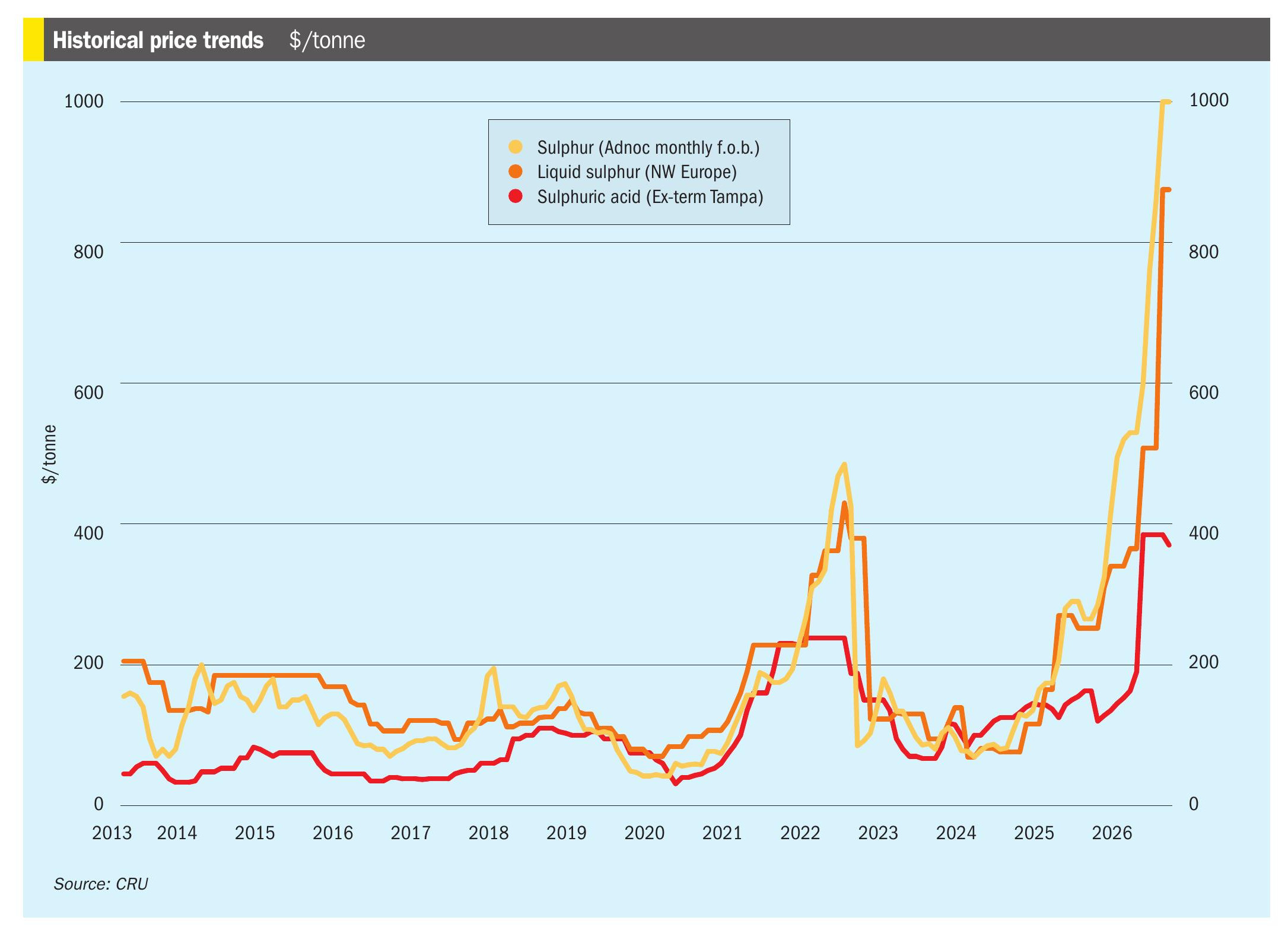
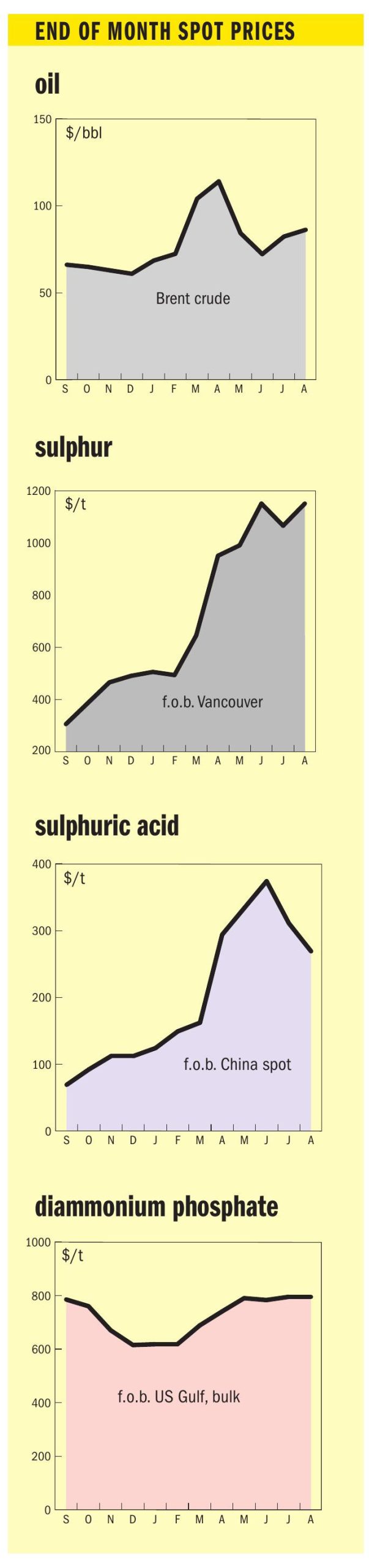
CRU’s Phosphates+Potash Expoconference was held in Paris in mid-April, with the Iran crisis uppermost in everyone’s mind. Margins are under pressure, sulphur has become a strategic constraint, and the phosphates investment pipeline is thin. CRU Principal Consultant Humphrey Knight examined the fallout from the closure of the Strait of Hormuz, noting that fertilizers have been hit harder than most bulk commodities. A large share of exportable sulphur and traded urea normally originates in, or passes through, Gulf producers. The effective closure of the strait has squeezed the traded part of these markets, where international prices are set, and pushed benchmarks up sharply. The global phosphate market is structurally tight, and the combination of Chinese export policy and Middle East logistics has pushed the traded segment into a much more fragile state.