Sulphur 419 Jul-Aug 2025
16 July 2025
How long can phosphate prices stay high?
“There seems to be something of a vicious circle between sulphur and phosphate prices at the moment…”
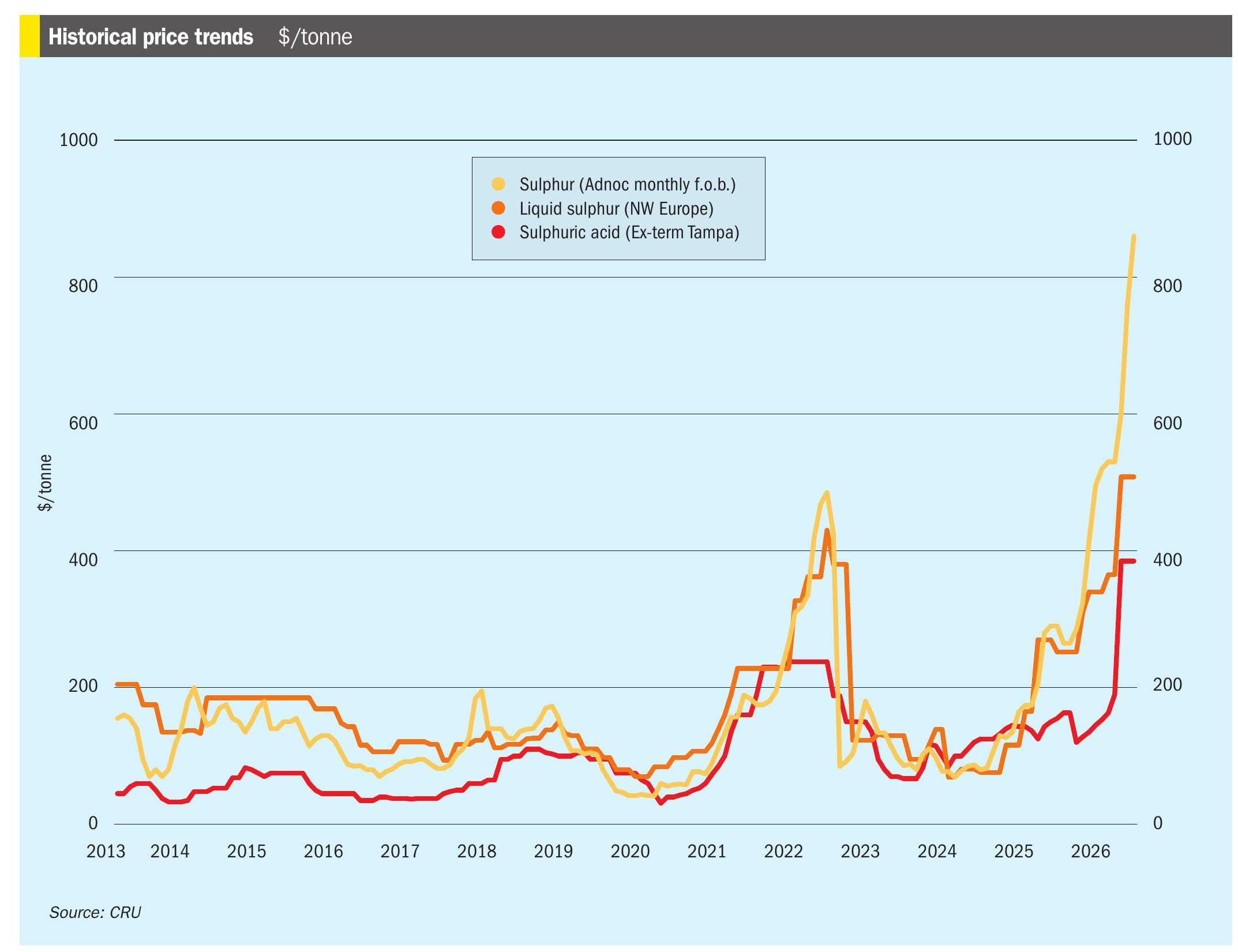
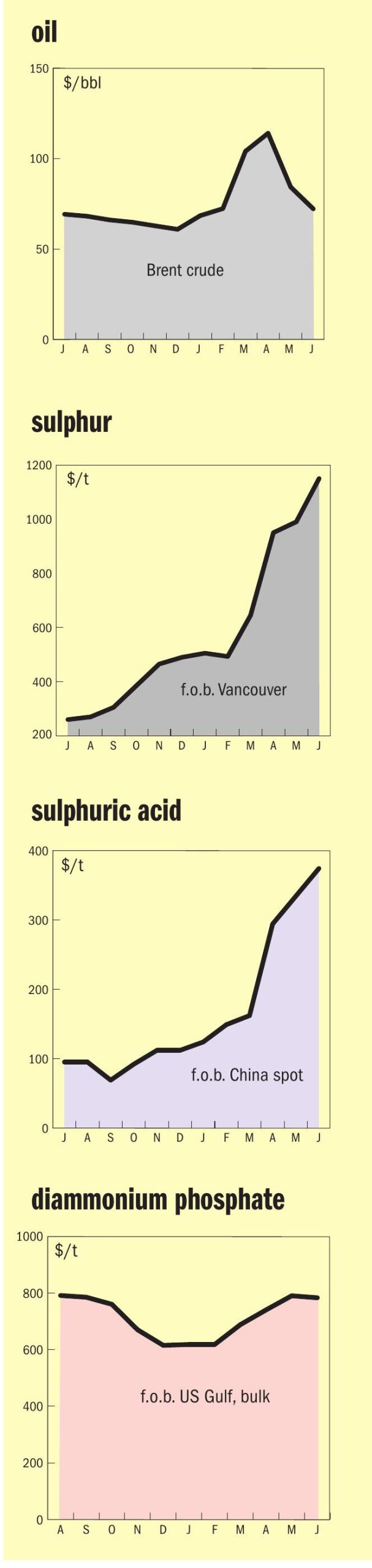
Phosphate prices have been at high levels for a couple of years now, and talk at the recent International Fertilizer Association (IFA) meeting in Monaco was that it was not only continuing to support higher sulphur prices in spite of oversupply in the sulphur market, but that there seemed to be no prospect of it falling in the short term.
Phosphate markets have been squeezed by Chinese export restrictions which have kept supply tight. This year China has instated even stricter export restrictions, and it is expected to ship only 5.4 million tonnes of DAP, MAP and TSP combined to international consumers in 2025, with restrictions only being lifted from late May to September. The DAP market seems to be tightest of all, and import tariffs in the US have added to the premium being charged. Phosphate fertilizers continue to command a premium well over and above that for nitrogen or potash. The prolonged run of high prices raises concerns about affordability for farmers, and the potential for demand destruction remains as long as phosphates are as expensive as they are. India is particularly sensitive to higher phosphate prices, and farmers may start to forego phosphate applications until prices fall to a more reasonable level.
At the moment, affordability seems to be the only potential check on where phosphate prices go. Indeed there seems to be something of a vicious circle between sulphur and phosphate prices at the moment, whereby high sulphur prices, particularly in China, lead to high domestic phosphate prices, and consequently continuing moves by the Chinese government to reduce domestic phosphate prices by restricting exports, which in turn increases international phosphate prices and hence justifies continuing high sulphur prices. Some easing to this is expected in the third quarter of 2025 as we pass the peak application season for phosphates, but CRU’s medium-term forecast is that phosphate prices are unlikely to reduce substantially before 2028, when large new capacity comes on stream.
The good news is that in the longer-term prolonged runs of high prices tend to be a signal to the market for more investment, and will help justify new phosphate capacity, in places such as Egypt, Morocco, China and the Middle East. In the meantime, a correction to sulphur prices is long overdue, but seems to be taking its time in arriving. Once it finally does, though, it may in turn lead to easing of Chinese export restrictions and a slump in phosphate prices. n