Nitrogen+Syngas 384 Jul-Aug 2023

Market Outlook


Market Outlook

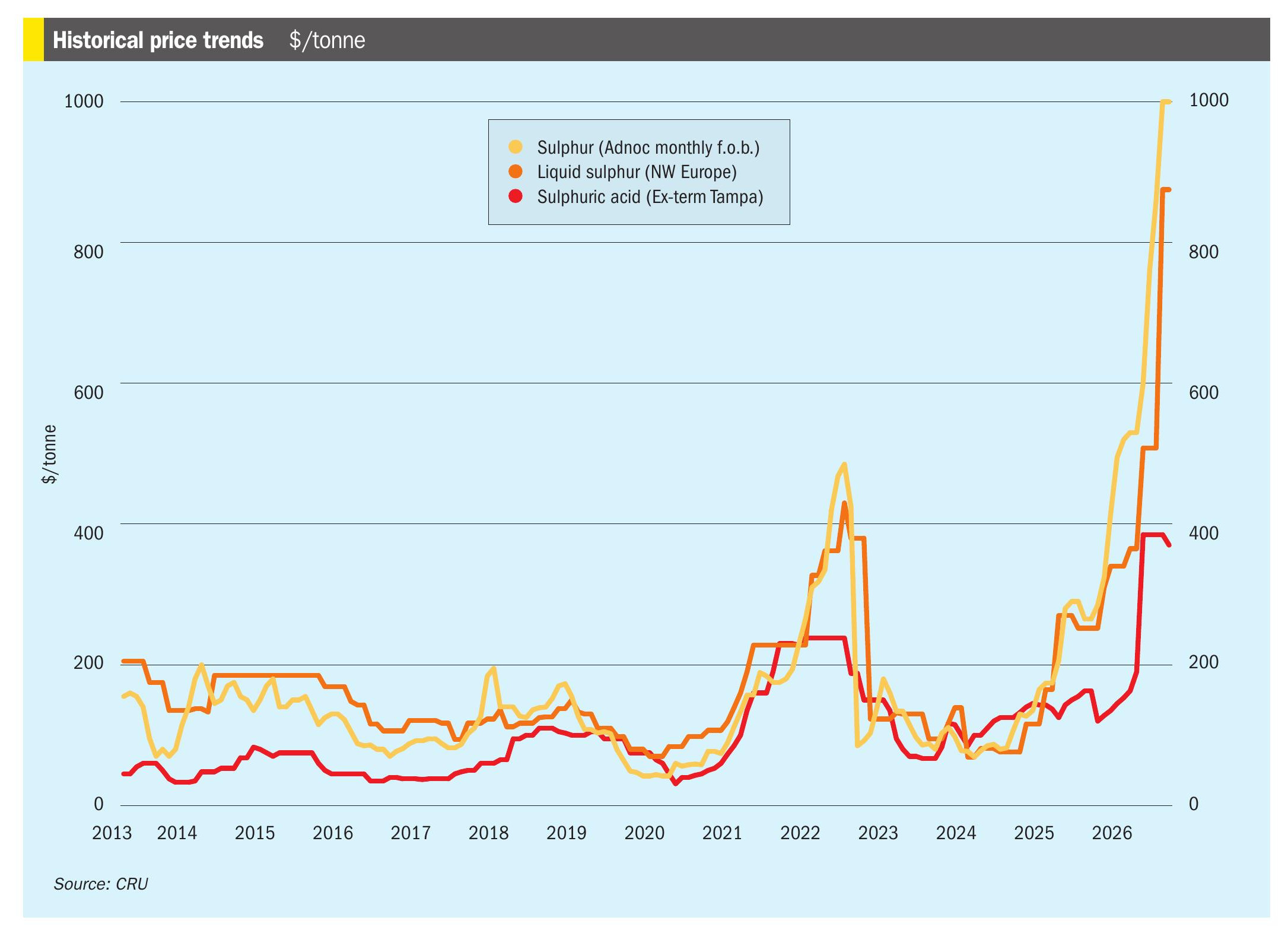
Historical price trends $/tonne

AMMONIA

  • Supply in southeast Asia looks tight for the coming weeks, but further declines in Chinese domestic prices could alter the supply/demand balance in the region in August.
  • Prices in Europe look stable for now, but the possibility of further gas price spikes poses a potential upside risk to market prices. For the moment however falling natural gas prices and lower summer demand have allowed ammonia prices to drift downwards. Increased supply from Europe would allow for lower import prices into the continent.
  • However, the recent hits on the Togliatti pipeline and lack of prospect of a deal to allow exports of Russian ammonia from the Black Sea also weighs on market sentiment.
  • The US ammonia application season closed at the end of May, with traders offloading stock, leading to falling prices in the Mid-West.

UREA

  • Farm-level demand is set to reach its weakest point over the next few weeks, and several factories are due to return from planned and unplanned shutdowns, but bouts of short-covering and the risk of rising energy prices could reverse the trend.
  • India’s June RCF urea tender attracted only 560,000 tonnes out of a target 800,000 tonnes and spot availability out of the Middle East appeared to be limited, pushing prices upwards. Lack of availability from Petronas and Brunei also affected markets east of Suez.
  • Cargoes have been seen from China but a large scale return to Chinese exports appears limited at the moment due to export restrictions. However, if China did return to the market it could cool the market still further.
  • The reintroduction of European import duties may lift prices there in the short term but gas prices remain the major variable.

METHANOL

  • Falling gas prices, especially in Europe, are also having an effect on methanol prices. Methanol prices have fallen by 25% so far this year.
  • Ready availability from Iran is also leading to a bearish market for methanol. Iran remains the world’s fourth largest producer of methanol and is still able to find export markets, mainly in China, in spite of international sanctions.
  • Other factors weighing on the methanol market include falling Chinese coal prices, pulling down the floor price for methanol. The Chinese economy has also been performing more weakly than expected, leading to lower demand expectations. At the same time, MTO margins have also been poor, again affecting merchant demand.
  • Spot rates for methanol are considerably lower than contract rates, and this disconnect is expected to pull down prices offered by major producers such as Methanex.

Latest in Outlook & Reviews

CRU Phosphates+Potash conference focuses on sulphur

CRU’s Phosphates+Potash Expoconference was held in Paris in mid-April, with the Iran crisis uppermost in everyone’s mind. Margins are under pressure, sulphur has become a strategic constraint, and the phosphates investment pipeline is thin. CRU Principal Consultant Humphrey Knight examined the fallout from the closure of the Strait of Hormuz, noting that fertilizers have been hit harder than most bulk commodities. A large share of exportable sulphur and traded urea normally originates in, or passes through, Gulf producers. The effective closure of the strait has squeezed the traded part of these markets, where international prices are set, and pushed benchmarks up sharply. The global phosphate market is structurally tight, and the combination of Chinese export policy and Middle East logistics has pushed the traded segment into a much more fragile state.

Supply crisis worsens

It is two months on from our previous issue, and almost none of the news has been good from sulphur and downstream markets. Only three sulphur cargoes are confirmed to have transited the Strait of Hormuz since the US and Israeli strikes on Iran began, all loaded at Ruwais, with destinations in India, Tanzania and Morocco, carrying a total of 160,000 tonnes. It is believed that a couple of Iranian vessels with a total of 75,000 tonnes may also have left covertly. But in spite of some Middle Eastern sulphur making its way to Saudi Red Sea ports or Duqm on Oman’s Indian Ocean coast, around 700,000 tonnes is still trapped on ships stranded in the Gulf, and coupled with production cuts in the region, it is estimated that over 1.2 million tonnes has so far been removed from the market.