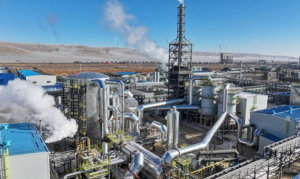
EuroChem starts up major sulphuric acid plant in Kazakhstan
Russia’s EuroChem has brought online a new sulphuric acid plant in Kazakhstan’s Zhambyl Region, creating one of the country’s largest sulphuric units with a design capacity of 800,000 t/y.


Russia’s EuroChem has brought online a new sulphuric acid plant in Kazakhstan’s Zhambyl Region, creating one of the country’s largest sulphuric units with a design capacity of 800,000 t/y.
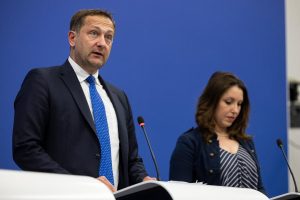
Brussels has put Europe’s gas‑exposed fertilizer industry at the centre of its new Fertilizer Action Plan, warning that high energy costs and plant closures threaten the region’s nitrogen capacity and long‑term food security.
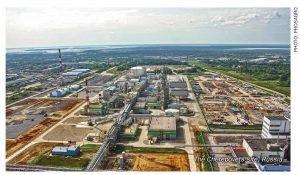
Multiple drone strikes have hit the industrial city of Cherepovets in Russia's Vologda Oblast region, according to Russian news agency TASS. The area contains PhosAgro's largest phosphate fertilizer production site. Cherepovets has a production capacity of around 700,000 t/a NPK and around 814,000 t/year DAP/MAP, according to CRU data, making it the largest phosphate fertilizer production site across Europe and the CIS. The site also contains several sulphuric acid plants with a combined capacity of 4.5 million t/a, making it Russia's largest production hub for the acid. This entire volume is consumed domestically.

Russia has again extended its ban on the export of industrial sulphur, with the latest decree prolonging the restriction until 30 June 2026. The announcement was made via the government’s press service on 31 March. This decision is aimed at stabilising the supply of raw materials for the domestic market to support the production of phosphate-based fertilizers. The restriction covers the export of liquid, granulated, and lump sulphur.

We speak with Ilya Motorygin, Managing Partner and Co-founder of GG Trading DMCC.

Ukrainian drones struck a chemical plant at Cherepovets, Vologda Oblast, on 13 April, with videos circulating on social media platform Telegram...
The European Commission (EC) officially proposed to suspend, for one year, the most favoured nation (MFN) duties on imports of several key nitrogen-containing fertilizers and inputs for their production, including ammonia and urea, officials said 24 February. The tariff suspension will be implemented for all countries, except Russia and Belarus, through duty-free tariff rate quotas, the Commission noted. Imports beyond these quotas will be subject to standard MFN duties, it added.

A Ukrainian drone attack hit the Dorogobuzh nitrogen fertilizer plant, around 140 km east of the border with Belarus in the western Smolensk region, according to local press reports. At least seven people were killed and another 10 injured, according to Russian authorities. It appears that the nitric acid and ammonium nitrate plants were targeted, as well as facilities involved in the storage and transportation of ammonium nitrate, leading to extensive damage. The strike is part of an ongoing campaign by Ukraine against Russia’s oil, gas and chemical facilities.
At the end of December, the Russian government extended its ban on the export of technical sulphur until at least the end of March 2026. The move prolongs the initial restrictions, which were first reported on 4 November and which were set to expire at the end of 2025. The initial ban was widely expected and followed early September drone strikes on the Astrakhan and Orenburg natural-gas plants. The official justification for the extension remains to “stabilise shipments of raw materials to the domestic market” and maintain production volumes for mineral fertilizers, according to the government’s press service Interfax.
The start of the new year has shown that 2026 is already proving to be a very eventful one, beginning with the US abduction of Venezuela’s president Nicolas Maduro, which has prompted questions over production at the country’s ailing nitrogen assets, as well as the potential for a future boost to gas supplies to Trinidad. Meanwhile the Iranian government faces its most sustained public challenge since the 1979 revolution, and possible US military intervention, threatening continued exports from the country. In Europe, the future of fertilizers’ inclusion in the Carbon Border Adjustment Mechanism (CBAM) has been thrown into doubt barely a week after the new regulations came into force, as France and Italy pushed for an exemption for crop nutrient imports.