
Nitrogen + Syngas 2020
This year’s Nitrogen + Syngas conference was held from 17-19 February in The Hague, Netherlands.


This year’s Nitrogen + Syngas conference was held from 17-19 February in The Hague, Netherlands.
The Ma’aden Wa’ad Al Shamal Phosphate Company (MWSPC) has signed a service agreement for a period of three years with DuPont Clean Technologies for its sulphuric acid plant at Sirhan. The service programme will include activity testing of catalyst samples, evaluation of catalyst performance, plant optimisation, troubleshooting and management of catalyst replacement. DuPont says that it will also track plant performance and assess its overall health using pre-agreed metrics and its proprietary PeGASyS™ gas chromatography system, which can be used to detect possible leaks in gas-gas heat exchangers, identify SO2 gas bypassing and measure overall plant conversion in order to optimise plant operation, reduce SO 2 emissions, increase production and improve converter performance.
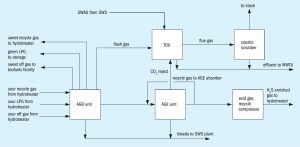
M. van Son and S. Sreejit of Comprimo present a case study involving the design and potential integration of the sour water and acid gas treatment units for a renewable diesel facility with an existing refinery sulphur complex. The case study evaluates the potential for operating cost reduction by integrating an enrichment loop in the acid gas treatment plant as well as for using the existing infrastructure of the refinery to limit emissions.
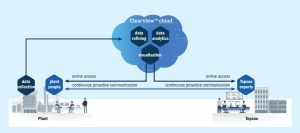
Sulphuric acid plant operators juggle multiple issues trying to keep their plants running efficiently and reliably. With the revolutionary ClearView™ process health monitoring solution, as well the DynSOx™ software for simulating dynamic operation, Haldor Topsoe strives to bring digital services with real and tangible operational benefits to the sulphuric acid industry. P. Szafran and M. Granroth discuss how together these digital services can help acid plant operators meet their daily targets.
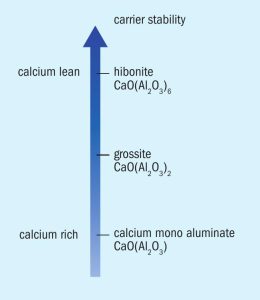
The increased severity of operating conditions in modern steam methane reformers requires catalysts with high catalyst activity and good mechanical stability to avoid premature replacements or unplanned shutdowns. F. Morales Cano, M. Stenseng and M. Feddersen of Haldor Topsoe describe a new catalyst formulation with a very homogenous and stable carrier material delivering the high activity and high mechanical strength required for long time operation.

‘Green’ methanol means many things to different people. It encompasses low carbon emissions methanol manufacture at scale, recovery of material through waste gasification and conversion to methanol and power to liquid (e-fuel) methanol via electrochemistry and sometimes a combination of all of the above. Each route has a place in reducing the overall carbon footprint of production and subsequent use of methanol, driven by both governmental incentives or societal demand. In this article Andrew Fenwick of Johnson Matthey reviews the various routes to manufacture.
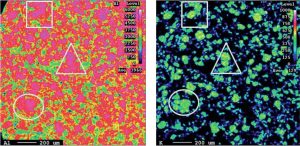
M. Wilson, J. Brightling and M. Carlsson of Johnson Matthey detail the development of steam reforming catalyst, with a focus on an operating case study, where Johnson Matthey has combined pelleted and structured reforming catalysts to deliver additional value from an existing asset.
The different flame velocities of reactants in the combustion space of a secondary reformer have a significant impact on the gas inlet temperature of the catalyst and the methane conversion in front of the catalyst. Based on this fact, Hanno Tautz Engineering introduces an alternative secondary reformer design. Compared with the state-of-the-art-technology, the alternative design shows advantages for hydrogen production efficiency and product capacity.