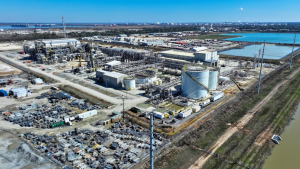
The outlook for low carbon hydrogen
The scale up of low carbon hydrogen has proved slower, more selective and more geographically concentrated than the ambitious plans announced earlier in the decade had anticipated.


The scale up of low carbon hydrogen has proved slower, more selective and more geographically concentrated than the ambitious plans announced earlier in the decade had anticipated.
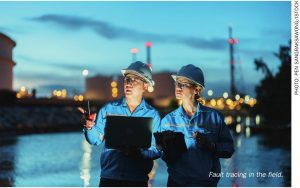
Digitalisation brings with it a fresh set of issues as well as opportunities for safety management.
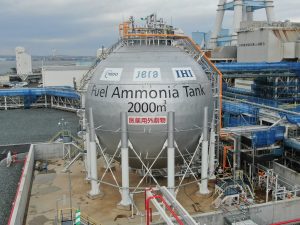
While the power sector has been advanced as a major long term source of demand for emerging low carbon ammonia projects, the pace of development in leading proponents such as Japan and South Korea remains patchy.
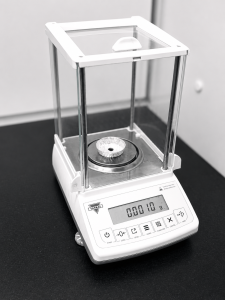
Graham Roeber, CEO, Orono Spectral Solutions, looks at how to test the oil content limit in anhydrous ammonia specifications.
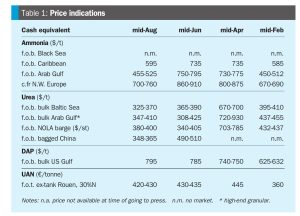
The ammonia market continues be divided on a regional basis during August. In northwest Europe, prices remained high, holding above the $700/t CFR mark, underpinned by high Dutch TTF gas prices, which stood at €63.93/ MWh ($21.5/MMBtu) as of 20 August. The spot market was active, with two cargoes destined for CF Fertilisers in the UK, one an ex-Trinidad cargo supplied by Koch and the other an ex-Algeria cargo supplied by Trammo. Trammo was also linked to a separate, unconfirmed, sale into Poland for Grupa Azoty.
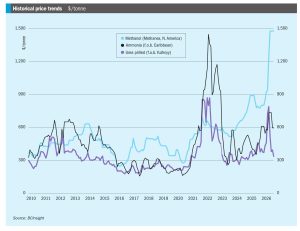
• Prices are expected to hold firm in Europe, though values elsewhere could well undergo further pressure, with Tampa also expected to decline for September.

ControlRooms deployed an AI troubleshooting system at a world-scale ammonia plant, identifying early issues missed by existing alarms.

Toyo Engineering Corporation combines its its PMOS™ digital twin platform with AI-tools to improve urea plant monitoring, issue detection, and technical advisory services.
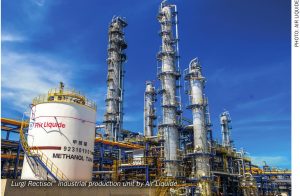
Air Liquide examines how its Lurgi™ ATR and Recticap™ carbon-capture technologies can support scalable, cost-effective low-carbon ammonia production.

KPI explains why steam and power balances must be assessed early to ensure low-carbon ammonia and methanol project feasibility.