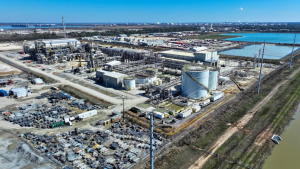
The outlook for low carbon hydrogen
The scale up of low carbon hydrogen has proved slower, more selective and more geographically concentrated than the ambitious plans announced earlier in the decade had anticipated.


The scale up of low carbon hydrogen has proved slower, more selective and more geographically concentrated than the ambitious plans announced earlier in the decade had anticipated.

Digitalisation brings with it a fresh set of issues as well as opportunities for safety management.
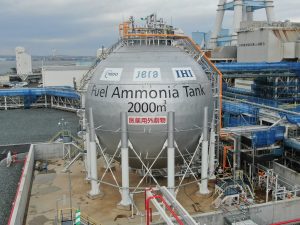
While the power sector has been advanced as a major long term source of demand for emerging low carbon ammonia projects, the pace of development in leading proponents such as Japan and South Korea remains patchy.
The August deadline for talks between the US and Iran came and went, as expected, with no resolution to the conflict. At time of writing, both sides were exchanging tit for tat attacks on ships in the Strait of Hormuz, with Iran claiming that it would be instituting a new ‘exclusion zone’, and no sign of a diplomatic resolution in sight. With the flow of ammonia, urea and other commodities like oil, LNG and sulphur from the Gulf still slowed to a trickle, the summer of high prices and demand destruction looks set to extend well into autumn at least.

Graham Roeber, CEO, Orono Spectral Solutions, looks at how to test the oil content limit in anhydrous ammonia specifications.
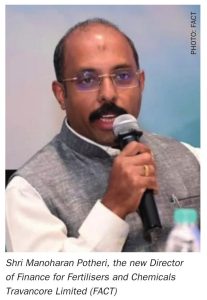
India’s Public Enterprises Selection Board (PESB) has recommended Shri Manoharan Potheri as the new Director of Finance for state-owned Fertilisers and Chemicals Travancore Limited (FACT). Shri Potheri currently serves as Chief General Manager (Finance), Northern Region and Delhi State Office, for the Indian Oil Corporation Ltd. Since February 2026, the Director (Finance) position at FACT has been held by Shri S. Sakthimani, who is also Chairman and Managing Director.
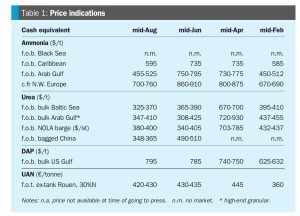
The ammonia market continues be divided on a regional basis during August. In northwest Europe, prices remained high, holding above the $700/t CFR mark, underpinned by high Dutch TTF gas prices, which stood at €63.93/ MWh ($21.5/MMBtu) as of 20 August. The spot market was active, with two cargoes destined for CF Fertilisers in the UK, one an ex-Trinidad cargo supplied by Koch and the other an ex-Algeria cargo supplied by Trammo. Trammo was also linked to a separate, unconfirmed, sale into Poland for Grupa Azoty.
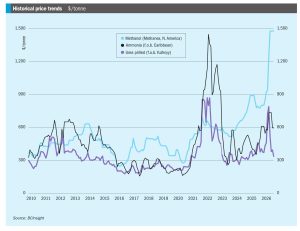
• Prices are expected to hold firm in Europe, though values elsewhere could well undergo further pressure, with Tampa also expected to decline for September.

Coal India Limited (CIL) says that it has executed a non-binding memorandum of understanding (MoU) with ArcelorMittal Nippon Steel India Private Limited (AMNS), to examine the use of syngas from a gasification facility which CIL would set up next to the ArcelorMittal’s Paradip pellet plant in Odisha state. The company says that it will be “exploring the possibility of utilising syngas produced from a coal gasification facility… coupled with CCUS.” The focus of the MoU will initially be to assess the technical, commercial, and implementation aspects of the project and to facilitate preparation of a preliminary feasibility report for evaluating project viability.

Maire Group subsidiary Tecnimont has been awarded a contract by Fértil Pampa SAU, a wholly owned subsidiary of Pampa Energia SA, for a large-scale fertilizer complex in Argentina. The facility will include a large-scale ammonia plant and two parallel ultra-low energy urea trains, each with its own granulation unit, with a combined capacity of 6,000 t/d (2.1 million t/a), making it the largest urea plant in Latin America by production. It will occupy an 80-hectare site within the Bahía Blanca Industrial Complex, in Buenos Aires province. The location is adjacent to Pampa’s existing power generation assets, benefiting from direct access to key infrastructure, including gas pipelines, high-voltage transmission lines, water intake systems, and a deep-water export port, enabling efficient logistics.